
Share
Panhandle Turtle Project
About the Panhandle Turtle Project
Update: We’ve reached $3,445—bringing us to 9% of our goal!
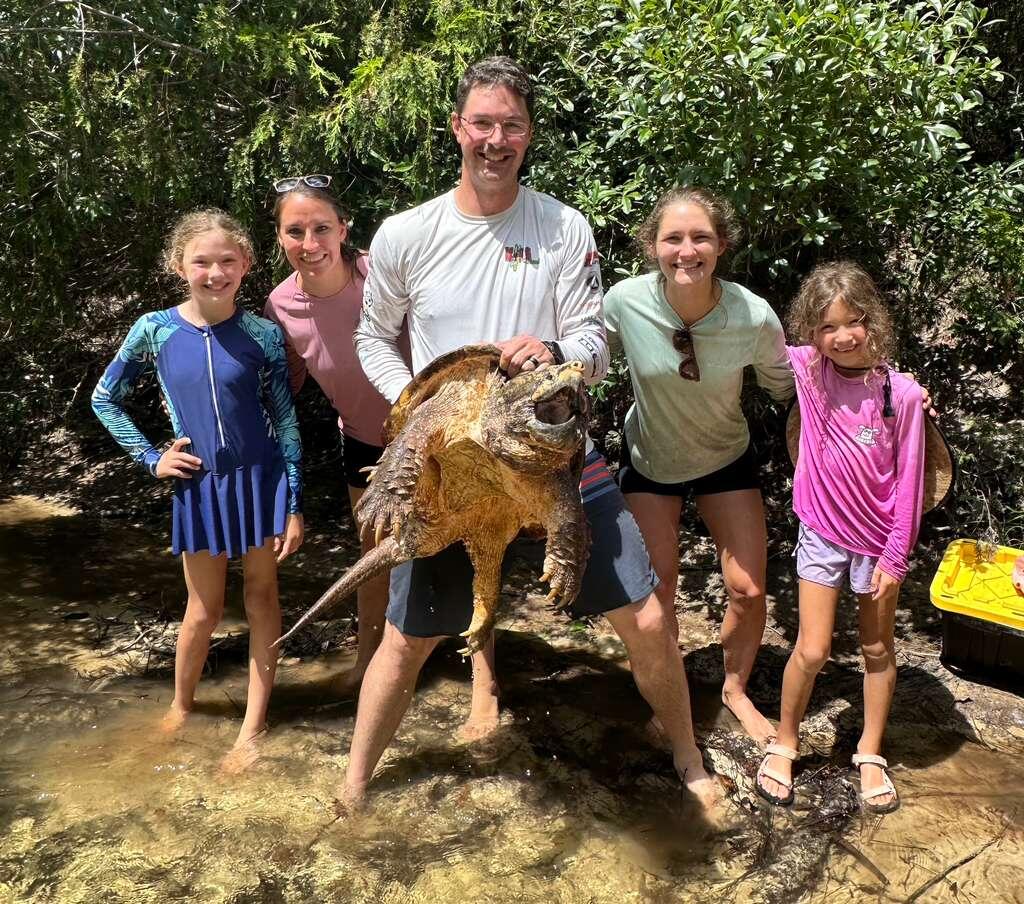
We are leading urgently needed research and conservation efforts for the Western Alligator Snapping Turtle and Escambia Map Turtle in the understudied western Florida Panhandle, and we are raising funds for a dedicated research boat, help us protect these vulnerable river turtles by giving us the tools we need to reach them and secure their future.🐢
Turtle Island is proud to collaborate on this effort, working together to secure the resources needed to expand river surveys, protect critical populations, and safeguard more vulnerable turtles for generations to come.
Background:
Very little research has been conducted on freshwater turtles in the western Florida Panhandle (Escambia, Santa Rosa, and Okaloosa Counties), despite the region lying within the Southeastern United States Turtle Priority Area, the most turtle taxa-rich region in the world. Two of the least studied species there are the Western Alligator Snapping Turtle and the Escambia Map Turtle, both restricted to major river drainages in the area.
The Western Alligator Snapping Turtle has experienced significant declines due to historic overharvest and ongoing illegal exploitation, and its slow maturation makes populations highly vulnerable to adult mortality. The Escambia Map Turtle only exists in the Escambia and Yellow River drainages and has been listed as Threatened under the United States Endangered Species Act. It has not been thoroughly studied in Florida with most existing knowledge stemming from a single detailed study conducted nearly 50 years ago, leaving critical gaps in population and conservation data.
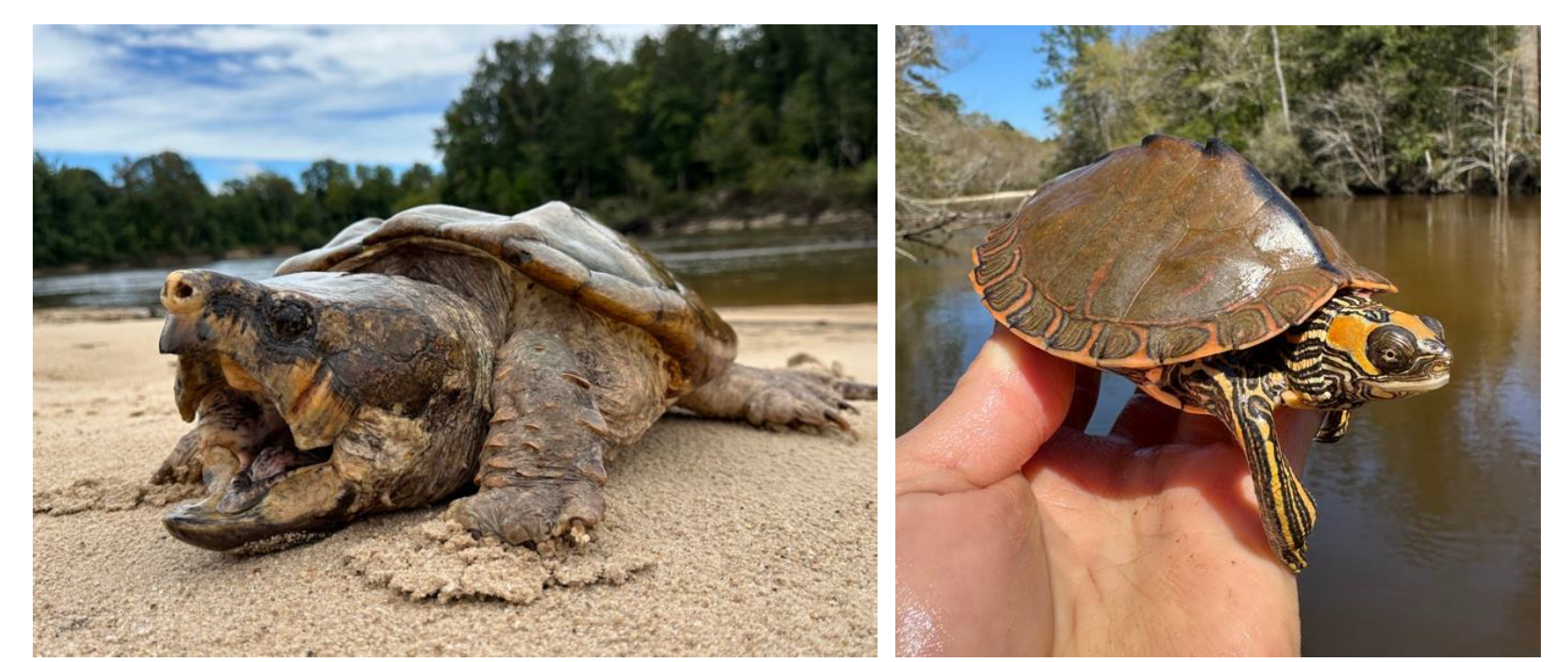 Left: Female Western Alligator Snapping Turtle from the Escambia River. Right: Male Escambia Map Turtle from the Yellow River.
Our Goal
Given the persistent threats of illegal harvest for human consumption (Alligator Snapping Turtle) and collection for the pet trade (The Escambia Map Turtle), the lack of information about population biology and insufficient conservation efforts for these species are a tremendous concern. In response to this dire situation, the Panhandle Turtle Project has mobilized a team of professional biologists, university students, and citizen scientists focused on filling the large gaps in our understanding of the biology of these two freshwater turtle species in the Escambia, Blackwater, and Yellow rivers. We are dedicated to conserving the freshwater turtle species in our local region, and to better understanding how they can serve as barometers for the overall health of the ecosystem.
Remaining Project Cost
A reliable boat is essential for safely and efficiently surveying rivers in the western Florida Panhandle. Our canoe and small boat are inadequate for operating 14–21 large turtle traps and safely transporting both personnel and captured turtles. After working alongside USFWS colleagues, we identified the SeaArk 1872MV as the ideal vessel, given its durability, shallow-water capability, and suitability for navigating deadwood and shoals. Its lifetime hull warranty and rugged design make it a long-term investment for this project and future conservationists.
In 2025, generous donors enabled us to fund trapping equipment, and we have since documented 123 Western Alligator Snapping Turtle and 137 Escambia Map Turtle individuals. We are now seeking support to secure a boat that will ensure safe, effective continuation and expansion of our river surveys.
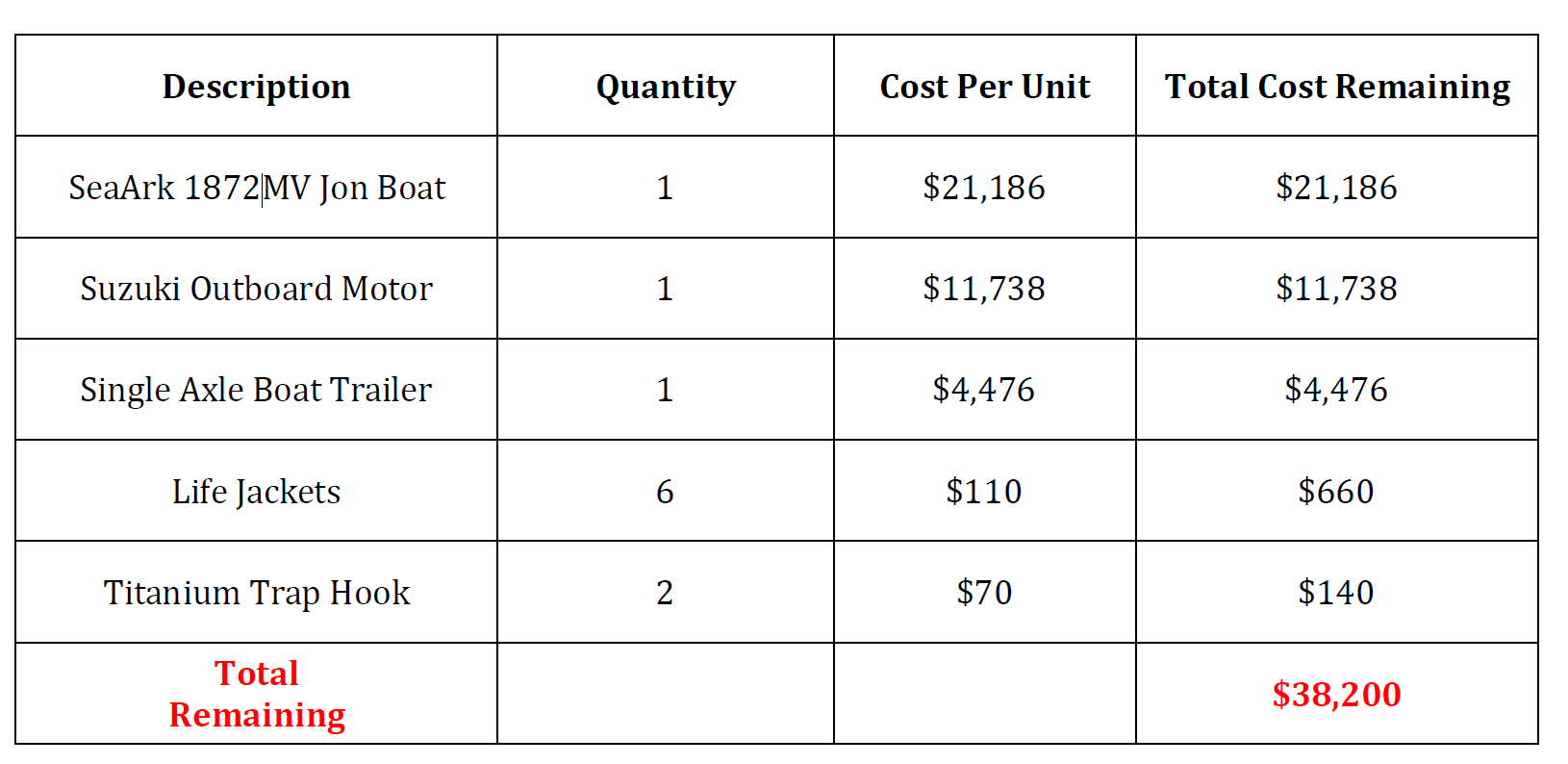
Click here to view the full project proposal.
Project Description:
The Panhandle Turtle Project will obtain and analyze data related to the population biology, morphometrics, and genetics of Western Alligator Snapping Turtles and Escambia Map Turtles across the Escambia, Blackwater and Yellow River drainages. We will also educate residents and FWC personnel in the area and continue to build a community that is interested in learning about and protecting turtles.
Building a dataset for Western Alligator Snapping Turtles and Escambia Map Turtles across the Escambia, Blackwater, and Yellow river systems will allow us to obtain population parameters such as apparent survivorship, sex ratio, size structure, population density/biomass measures, recapture rates, migration rates, and population growth rates for both species. These data are critical to better understand the impact of past harvest and to assess the current health of the Western Alligator Snapping Turtle population in the major western Florida Panhandle drainages. With detailed morphometric data for each species from each river system, we will compile morphometric data that will serve as a baseline for the species as well as a point of comparison across drainages. For example, data on body size structure will help us assess whether large reproductive adults are present in a population, and whether recruitment of juveniles is happening. Based on our preliminary sampling in 2025, there are statistically significant differences in relative head size, carapace length, and body mass among populations of Western Alligator Snapping turtles in the Escambia, Blackwater, and Yellow rivers. This is particularly interesting as the populations are genetically closely related, yet they have very different resource availability and cranial morphology. In addition to our morphometric dataset, genetic samples will be taken from every turtle in the study and will be held by the Auburn University Museum of Natural History. There, they will be made available to help us answer questions related to genetic diversity and to generate pedigrees to better understand Western Alligator Snapping Turtle nesting ecology. All of our data will be shared with FWC in accordance with the terms of our permit, and they can be used to inform future conservation decisions. In addition to our collaboration with government agencies, we are actively building a community of local turtle conservationists who are on the ground making an immediate difference.
Education is critically important in order to implement change. We are currently working with our local FWC Law Enforcement to get signage put at all public boat ramps and to cut down on illegal limb lines. We have held multiple region-wide meetings to help better educate residents, other biologists and law enforcement about our local turtle species and the protections that they need. Before our meetings, some attendees were not aware that Western Alligator Snapping Turtles and Escambia Map Turtles were present in these drainages. There was no signage at any of the boat ramps aiding in education, and there was nobody in this area studying or protecting these two species. From the conversations that we have had with locals who have harvested these turtles for generations, we have had a positive and supportive response to brief education on their ecology, but the work is not done. In order to conserve the turtles in these river systems, it is crucial that we engage the local community with our project and grow our pool of Panhandle Turtle Project volunteers. Because several members of our team, especially Jeremy Thompson, are local citizens, we have more credibility with our fellow citizens.
Detailed Methods/Plan of Action:
•We survey, monitor, hand capture, and trap Western Alligator Snapping Turtles and Escambia Map Turtles.
•We trap via boat or canoe with 14-21 4’ diameter by 7’ long hoop traps set in the evening and checked the next morning. Hours of trap setting are generally between 4–8pm and trap checking starts at daylight, in accordance with standard practices. We collect all data, and we safely return all turtles to their site of capture.
•We conduct hand-capture surveys with a snorkel team supported by canoes for safe and thorough collection. We survey one kilometer at a time with a team of up to 10 snorkelers, take all turtles to shore for data collection, and safely return them to their site of capture.
•We mark, measure, photograph, and fit turtles with PIT tags.
•We take genetic samples from all individuals.
•We mark our traps with our Florida Fish and Wildlife Conservation Commission permit number for identification. FWC Permit # LSSC-10-00039G
•We provide all genetic samples to our colleagues associated with Santa Fe College and Auburn University.
•We recruit local volunteers to assist the Panhandle Turtle Project team in surveys and data collection (47 different volunteers to date, and counting).
•We support FWC in their removal of illegal limb lines and distribution of signage at boat ramps.
•We educate the local community about the turtles and river
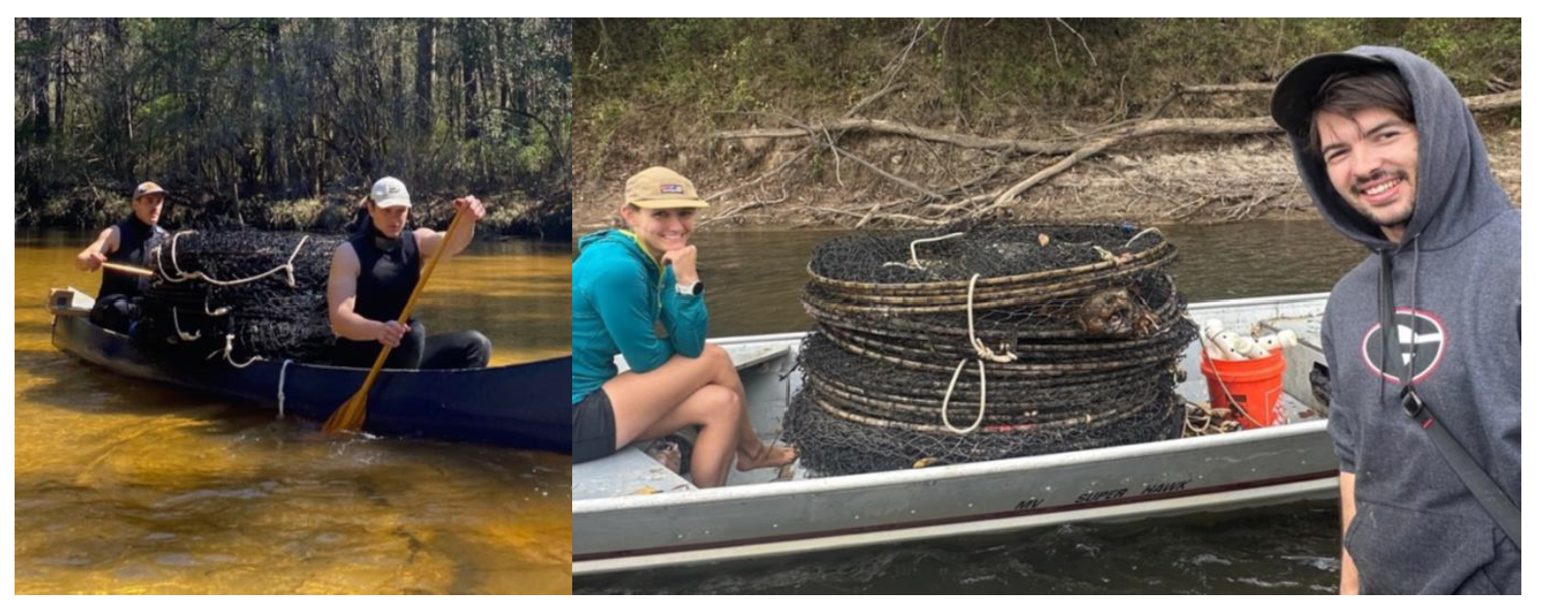 Our 2025 turtle surveys were conducted using a donated canoe and a borrowed Jon boat. Our dedicated team persevered and collected important data on a shoestring budget.
Join us in safeguarding the future of the Western Alligator Snapping Turtle and Escambia Map Turtle. Your support today puts us on the water tomorrow and brings these vulnerable river turtles one step closer to survival.
Principal Investigators
Jeremy Thompson
Panhandle Turtle Project Founder / Milton, FL Resident
Dr. Jerry Johnston
Santa Fe River Turtle Project Founder / Santa Fe College Professor of Biology
Collaboration Partners
Michael Skibsted - University of Georgia Ecology Student / CheloniaCast Podcast Director
Jack Thompson - Santa Fe College Wildlife Ecology Student
Paul Cuneo - Syracuse University Conservation Biology Student
Dr. Peter Praschag and Dr. Shannon DiRuzzo - Turtle Island Founders
Jim Godwin - Auburn University / Alabama Natural Heritage Program Zoologist
Dr. Cody Godwin - Santa Fe College Assistant Professor of Biology
Dr. Robert Shealy - Consultant (retired) / Doctor of Zoology and Vertebrate Ecology
Marissa Thompson - Milton, FL Resident / Field Biologist
Justin Meeker - Panhandle Turtle Project Co-Founder / Milton, FL Resident / Field Biologist
Bill Tate - United States Fish and Wildlife Service
Matthew Smith - Florida Fish and Wildlife Conservation Commission
Craig Iversen - Blackwater State Forest
Jason Borque and Dr. Coleman Sheehy - The Florida Museum of Natural History
Organized by Turtle Island
501(c)(3) Public Charity · EIN 83-1706767
[email protected]