.png)


.svg)
.svg)
.svg)
.svg)
.svg)
.svg)
.svg)
.svg)
.svg)


.svg)
.svg)
.svg)
.svg)
.svg)
.svg)
.svg)
.svg)

.svg)
.svg)
.svg)

.svg)

.svg)
.svg)
.svg)
.svg)
.svg)


.svg)
.svg)
.svg)
.svg)
.svg)
.svg)
.svg)





.svg)



%20(1).png)

⚖️ Disclaimer: Banking products, fees, and features change frequently. The information in this guide reflects our research as of February 2026 and may not capture recent updates. Always confirm current terms directly with each institution before opening an account.
Running a nonprofit takes heart, hustle, and a surprisingly long list of financial decisions. Choosing the right bank might not feel urgent, but it shapes how quickly you can put donations to work, how much you lose to fees, and how clearly you can see where your money is at any given moment.
In a Givebutter survey of 81 nonprofit professionals, nearly half said it typically takes three or more days to access donated funds. The right banking setup can help close that gap and keep more of your resources where they belong: powering your mission.
In this guide, we'll walk through the best banks for nonprofits, informed by real nonprofit feedback and research, so you can find the right fit for your organization's size, needs, and goals. You'll also learn how Givebutter Wallet can serve as a financial home base for funds raised on Givebutter, giving you faster access and clearer visibility from day one.
The best banks for nonprofits & alternatives at a glance
1. Givebutter Wallet: Best for faster access to funds
Givebutter Wallet can function as the financial hub for any funds you raise on the platform. Any settled donations move into Wallet daily, so there’s less delay between receiving donations and putting them to use.
This setup is ideal for small nonprofits that want faster access to funds, fewer fees or minimums, and a clearer way to connect donations received to your fundraising activity.
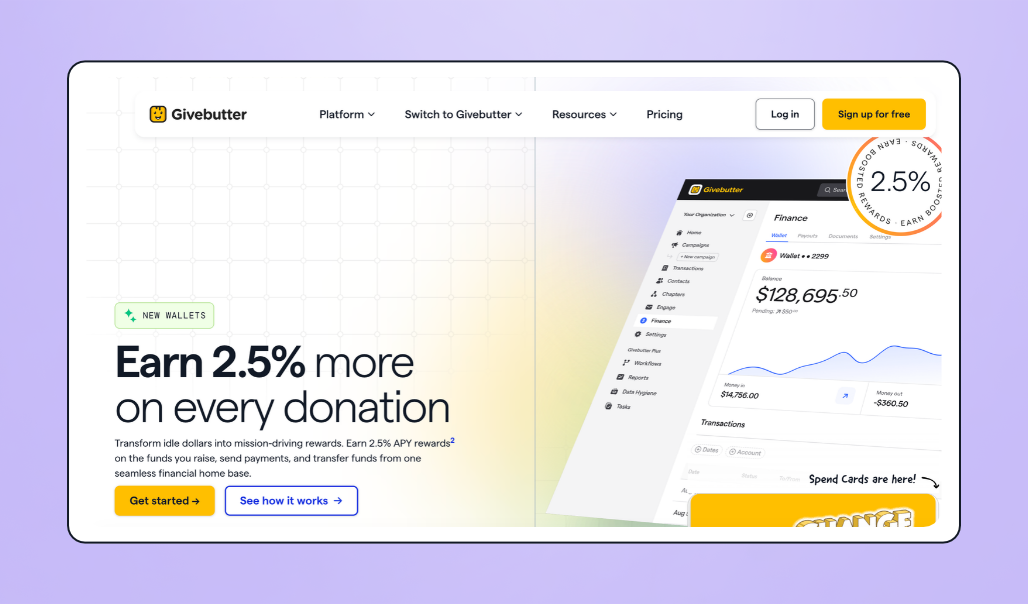
💼 What it is: Built-in financial account for nonprofits
🌱 Best fit for: Small nonprofit organizations that want faster access to funds, fewer fees, and clearer visibility tied to fundraising activity
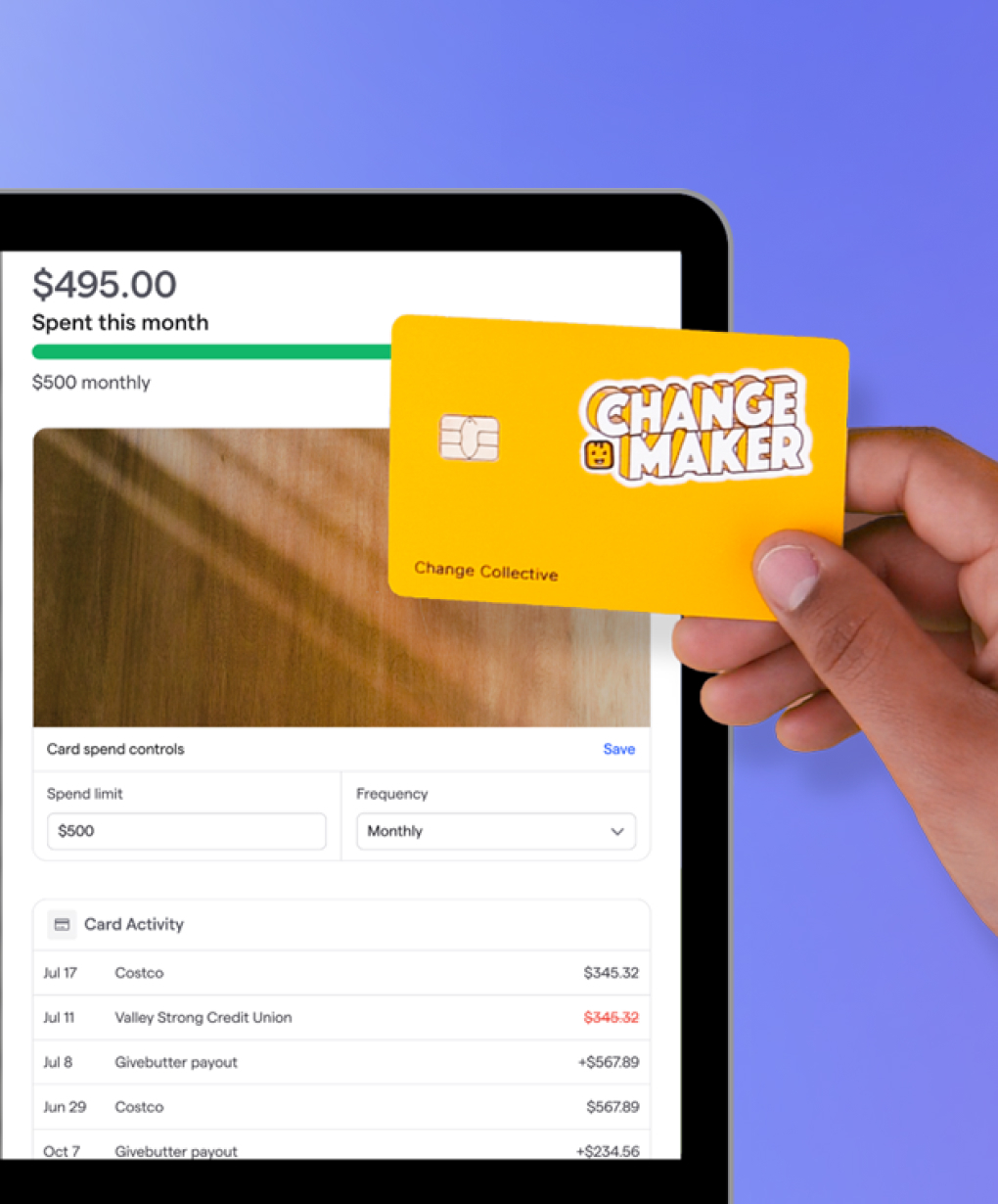
⚡ Why nonprofits choose it: Fewer fees, quicker access to donations raised on Givebutter, and greater visibility over fundraising activity—plus mobile check acceptance, Spend Cards, and seamless connection to Givebutter's donor management CRM and donation tracking tools.
💸 Fees & minimums: No monthly or hidden fees, no minimum balance
🔒 Security & compliance: Powered by Stripe Financial Accounts. Wallet funds are eligible for pass-through FDIC insurance up to $250K through Fifth Third Bank N.A., Member FDIC, if requirements are met. Givebutter uses best-in-class security practices and verifies organizational and authorized representative information during setup to keep accounts secure.

Improve access to funds with Givebutter Wallet
2. U.S. Bank: For in-person banking
With branches across the country, U.S. Bank is a popular choice for organizations that prefer in-person banking. Nonprofits can start with a simple NPO bank account or access additional features like payment tools, credit cards, and cash management services.
Nonprofits can earn interest on collected donations, and there are no monthly maintenance or balance fees. In addition to in-person services, U.S. Bank’s nonprofit checking accounts can be accessed through online or mobile banking.
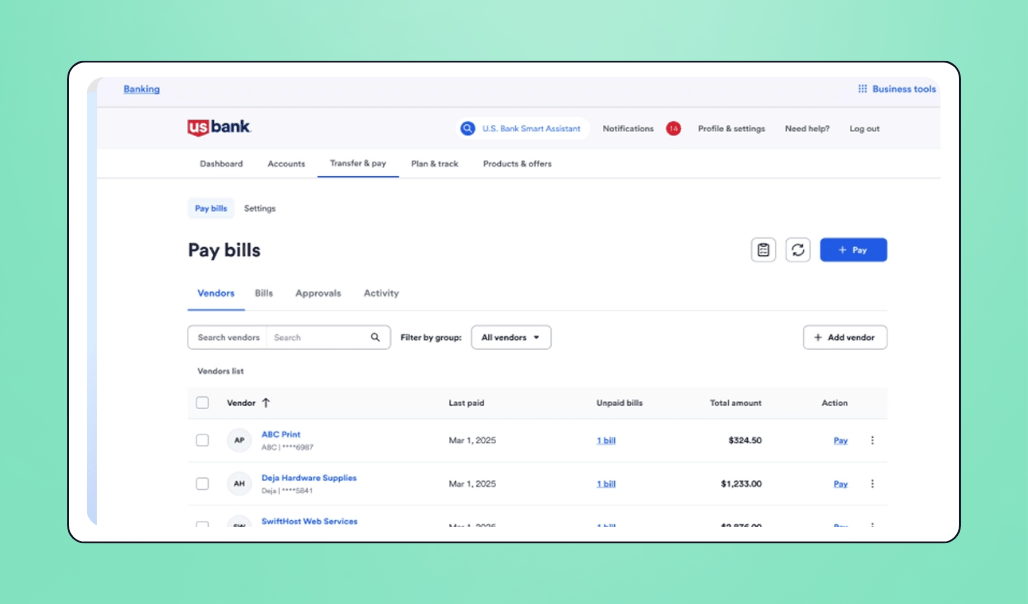
💼 What it is: Nonprofit checking account
🌱 Best fit for: Nonprofits that prefer in-person banking at a local branch
⚡ Why nonprofits choose it: Familiarity, access to local banking locations, and additional financial tools that support cash flow (credit cards, loans, lines of credit)
💸 Fees & minimums: Requires $100 to open an account, no monthly maintenance fees, no minimum balance requirement, 1,800 free transactions annually
🔒 Security & compliance: U.S. Bank is an FDIC-insured bank, so eligible deposits are insured for up to $250K. Account holders are covered with zero fraud liability for any unauthorized transactions (T&Cs apply).
3. Relay: For online-first nonprofits
Relay is a financial technology company that offers nonprofits an alternative to traditional checking accounts. Eligible organizations can open and manage their Relay account entirely online, with mobile banking also available.
Nonprofits can receive funds through ACH, wire transfer, and mobile check deposits. Cash deposits can also be made at select ATMs. Relay accounts have no minimum balance requirements, maintenance fees, or overdraft fees, and nonprofits can access savings accounts alongside their checking accounts.
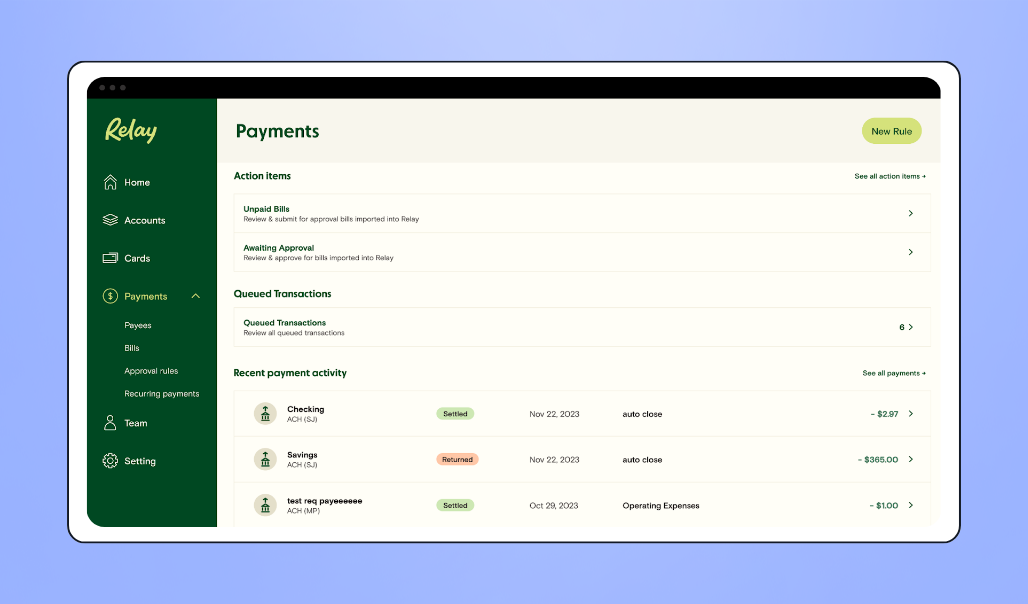
💼 What it is: Online financial technology platform
🌱 Best fit for: Small to medium-sized nonprofits that prefer an online bank with debit cards
⚡ Why nonprofits choose it: Simplified payments, consolidated donation methods in one place, and integrations with accounting tools like QuickBooks
💸 Fees & minimums: No monthly maintenance fees or overdraft fees, no minimum balance requirements, fees apply to some transfer methods, including same-day ACH and wire transfers
🔒 Security & compliance: Eligible deposits are FDIC insured up to $3M through Thread Bank and an insured cash sweep program that automatically moves funds over $250K to network banks. Visa® Zero liability protection applies.

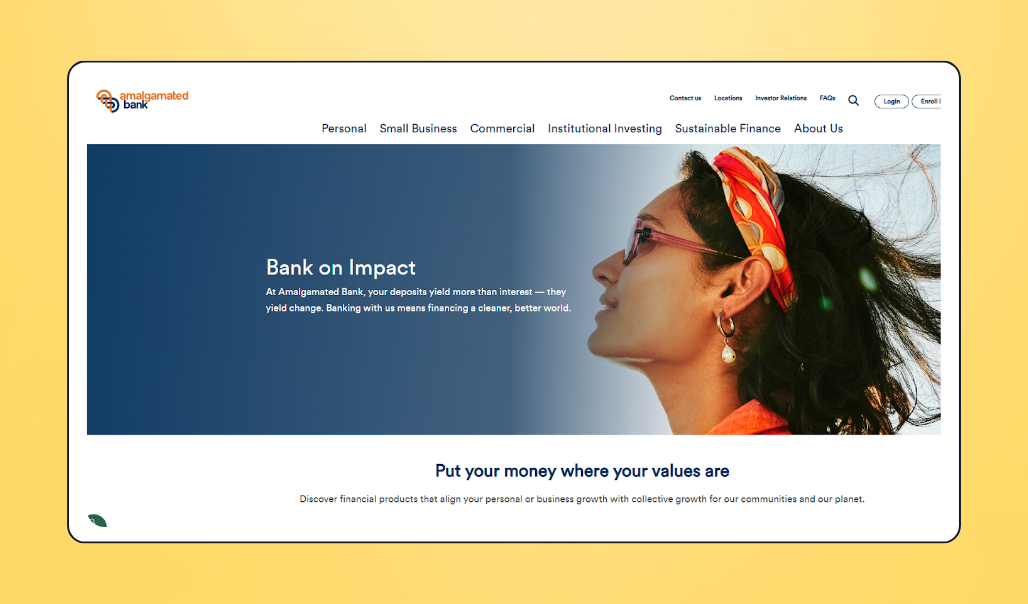
4. Amalgamated Bank: For nonprofit-specialized banking
Amalgamated Bank acts as a financial partner for nonprofits and offers cash management services, access to capital, and socially responsible investment management. It’s a strong choice for organizations looking for a banking partner with deep nonprofit experience.
Amalgamated’s online banking system offers checking and savings accounts. Deposits can be made through online banking, the mobile app, external transfer, or at a physical branch, although there are only a limited number of branches in the U.S.
💼 What it is: Nonprofit checking account
🌱 Best fit for: Organizations that favor socially responsible banking or would benefit from a dedicated nonprofit banking partner
⚡ Why nonprofits choose it: Nonprofit financial expertise, socially-conscious practices, and a wide range of banking and investment services
💸 Fees & minimums: No maintenance fees for business checking accounts; other account types may have fees or balance requirements, transfer fees may apply for certain transfer types like wire transfers and ACH, a $5K transfer limit applies
🔒 Security & compliance: Eligible deposits at Amalgamated Bank are FDIC insured up to $250K. Organizations may qualify for higher coverage when funds are distributed across multiple accounts.
5. Truist: For frequent cash deposits
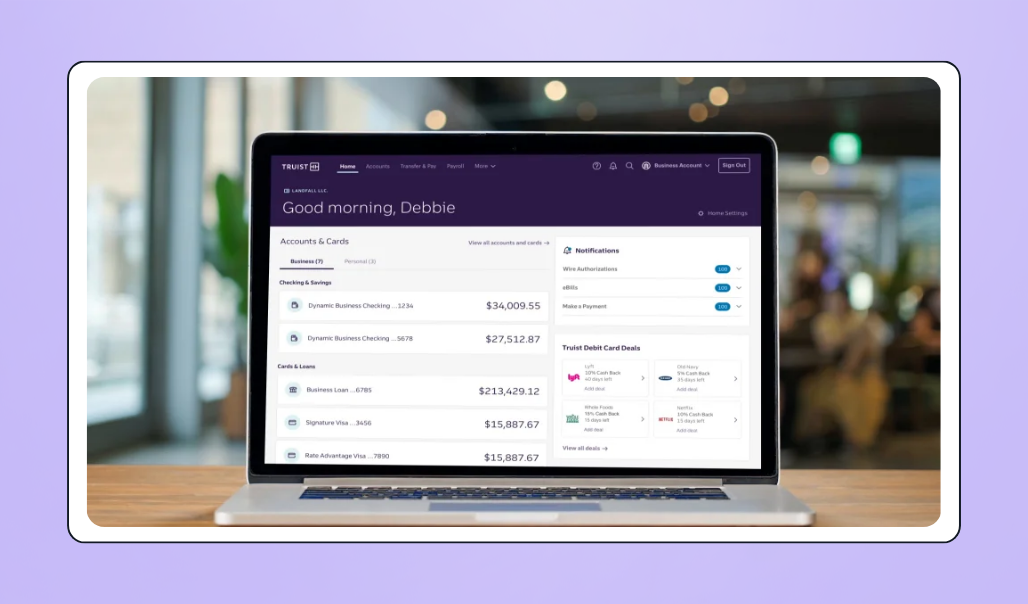
Truist offers a dedicated community checking account for nonprofit organizations. Nonprofits can access the account online or through mobile banking to receive funds and pay bills, and there’s no monthly maintenance fee.
Truist’s nonprofit checking account allows organizations to deposit up to $25K in cash each month at no charge, making it a strong option for churches, community groups, and small nonprofits that receive a large amount of cash donations.
💼 What it is: Nonprofit checking account
🌱 Best fit for: Nonprofits and community groups that make frequent cash deposits
⚡ Why nonprofits choose it: Generous free cash deposit limits, no maintenance fees, Zelle® integration
💸 Fees & minimums: Requires a $100 deposit to open the account, no maintenance fees, no monthly transaction fees for the first 225 combined transactions or for the first $25K of cash deposits
🔒 Security & compliance: Truist is an FDIC member bank, so eligible deposits are insured up to the standard limit of $250K per depositor.
6. Local credit unions: For low fees and personalized service
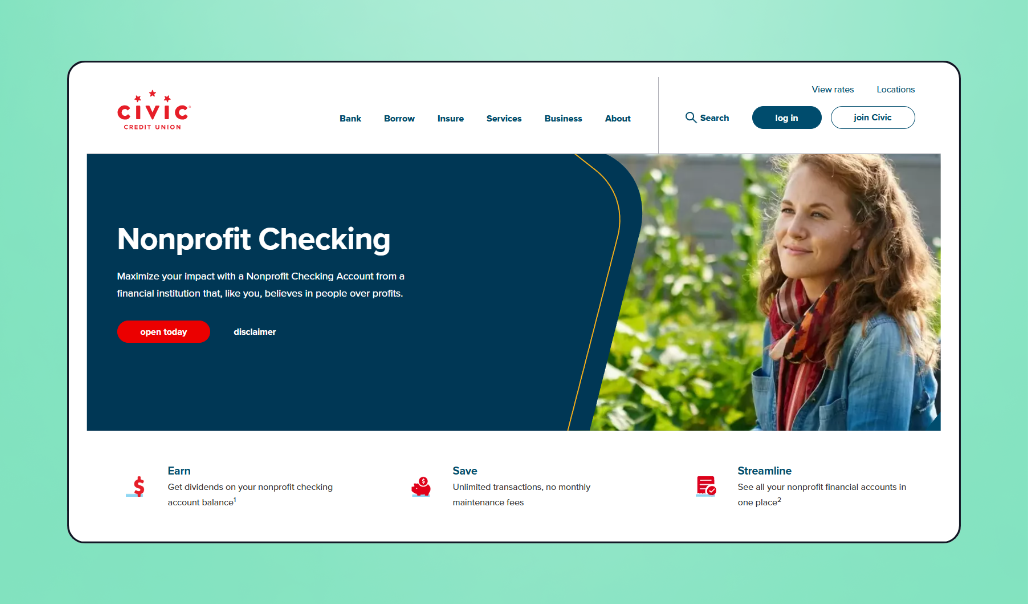
Credit unions are not-for-profit financial institutions that provide financial services to their members, including nonprofit organizations. Because they are member-owned and operate in the interest of their members, they’re often an attractive financial partner for nonprofits.
Credit unions typically serve members within a defined geographic area. Services vary, but checking and nonprofit savings accounts are common, often with lower loan rates and higher savings rates than traditional banks. There are more than 4,700 federally insured credit unions in the U.S., with some of the largest credit unions serving millions of members.
💼 What it is: Credit union
🌱 Best fit for: Small to mid-sized nonprofits with simple banking needs
⚡ Why nonprofits choose it: Personalized service, lower fees, and strong support for local nonprofit organizations
💸 Fees & minimums: Fees and minimum balances depend on the credit union, but many offer free banking for nonprofit organizations or lower fees than a traditional bank
🔒 Security & compliance: Eligible deposits made into credit unions are NCUSIF insured for at least $250K, sometimes more, depending on the credit union, number of accounts, and other terms.
7. Local community banks: For community-focused banking
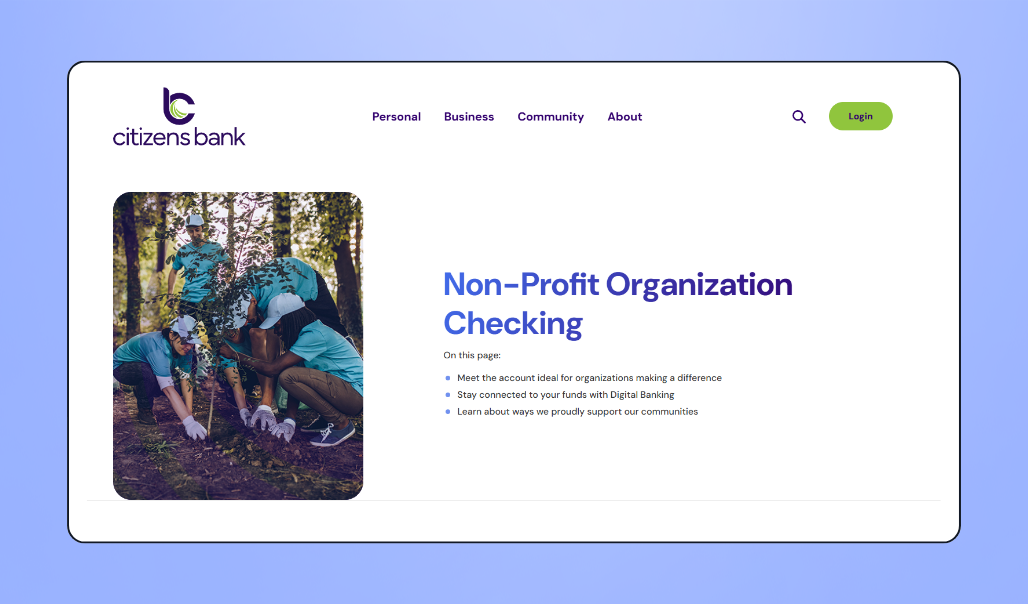
Local community banks offer an alternative to large national banks. These financial institutions typically serve a specific geographic area and often reinvest in the local community, making them a good values match for nonprofits.
Community banks can offer checking, savings, and other financial services tailored to nonprofits. Organizations that choose this option often benefit from local expertise and additional support through relationship-based banking. Fees, services, and product access vary depending on the bank.
💼 What it is: Nonprofit checking account
🌱 Best fit for: Small nonprofits, churches, and community groups
⚡ Why nonprofits choose it: Easy access, local community support, alignment with community values, and nonprofit-friendly fee structures
💸 Fees & minimums: Minimum balances, monthly fees, and maintenance fees may apply depending on nonprofit bank account requirements. Some community banks offer to waive ACH or check-deposit fees for nonprofits.
🔒 Security & compliance: Eligible deposits are FDIC insured up to the standard limit of $250K. Additional insurances may apply depending on the bank.

Find your financial home base with Givebutter
Every bank on this list does something well. The right choice comes down to how your nonprofit moves money, where your team is based, and what level of service you need.
But even the best bank account is just one piece of the puzzle. Most nonprofit financial friction happens in the gap between donations received, funds accessed, and activity tracked.
Sign up for Givebutter for free and start building a financial setup that works as hard as your mission does.
FAQs about the best banks for nonprofit organizations
How do I open a bank account for a nonprofit organization?
To open a nonprofit bank account, refer to the requirements of your chosen bank or credit union. Most banks will require specific documentation, like your Employer Identification Number (EIN), proof of identification, and governing documents for your organization. Some banks also require an initial deposit, typically around $100.
Can I use a personal bank account for my nonprofit?
Using a personal account for nonprofit activities is not recommended, as it can create legal or tax complications. Donors are generally more comfortable contributing to accounts held in an organization’s name.
Should nonprofits use a bank, a credit union, or another financial tool?
Traditional banks and credit unions both work well for nonprofit organizations, especially for day-to-day banking. Large organizations with complex financial needs may benefit from the broader services of a traditional bank. For others, a credit union is ideal because of the higher savings rates and reduced fees.
Regardless of which institution you choose, tools like Givebutter Wallet can complement your banking setup by providing faster access to funds and greater visibility into fundraising activity.
Is Givebutter Wallet a bank?
No, Givebutter Wallet is not a bank. It’s a built-in financial account for nonprofits powered by Stripe Financial Accounts. Funds are held securely with Fifth Third Bank and are eligible for FDIC pass-through insurance up to $250K.
Is Bank of America good for nonprofits?
Bank of America offers nonprofit and business checking accounts with branch access, online banking tools, and additional services like credit cards and lending. It's a solid option for larger nonprofits or those with an existing relationship with the bank. Smaller nonprofits may find community banks, credit unions, or online-first options like Givebutter Wallet more competitive on fees. We didn't include it in our main list because those options tend to be a better fit for small to mid-sized nonprofits.
Share this article






.svg)
.svg)


%201.webp)