










This article is published by Givebutter, Inc., a product in this category. Descriptions of third-party products are based on their publicly available materials and do not reflect independent testing by Givebutter, Inc.
The Donorbox vs Bloomerang decision gets easier once you name the job you’re hiring for. These two platforms were built to help in different ways.
- Donorbox leads with fundraising. Donation forms, recurring giving, and quick setup sit at its core.
- Bloomerang leads with donor retention. Its CRM helps nonprofits track relationships and keep donors giving, and fundraising tools came later.
Neither is simply better. What matters is the problem you most need to fix.
Some teams just want donations flowing this week. Others want to stop losing donors after the first gift. Many want both, in one place.
Below, we compare Donorbox vs Bloomerang on the things that shape that choice: features, setup, cost, and support.
You’ll also see whether a third option may suit your team better.
Donorbox vs Bloomerang overview
The table below compares Donorbox and Bloomerang on what each platform is built for, how each handles donor management and fundraising, and what each costs.
Donorbox at a glance 🔍
Donorbox launched in 2014 as a way to make online giving simple. Its main product is a donation form that nonprofits can embed on their website or share through a Donorbox campaign page.
The platform also supports crowdfunding, peer-to-peer campaigns, events, memberships, and recurring gifts. Donors can manage their recurring plans through a self-service portal.
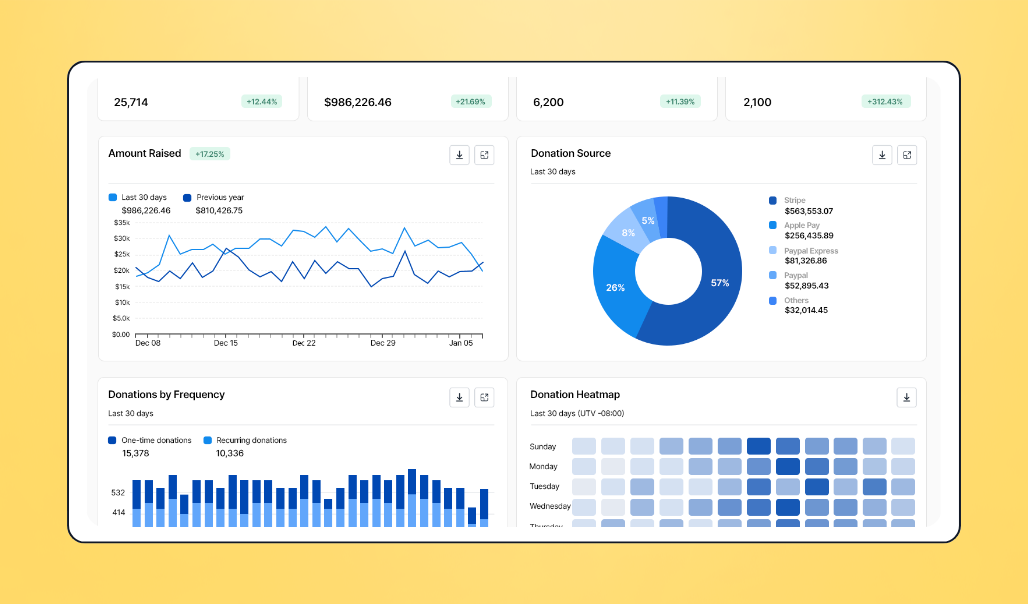
Payment flexibility is also a real strength here. Through Stripe and PayPal, Donorbox accepts cards, ACH bank transfers, PayPal, Apple Pay, Google Pay, and Venmo, across dozens of currencies. That range helps nonprofits meet donors wherever they prefer to give.
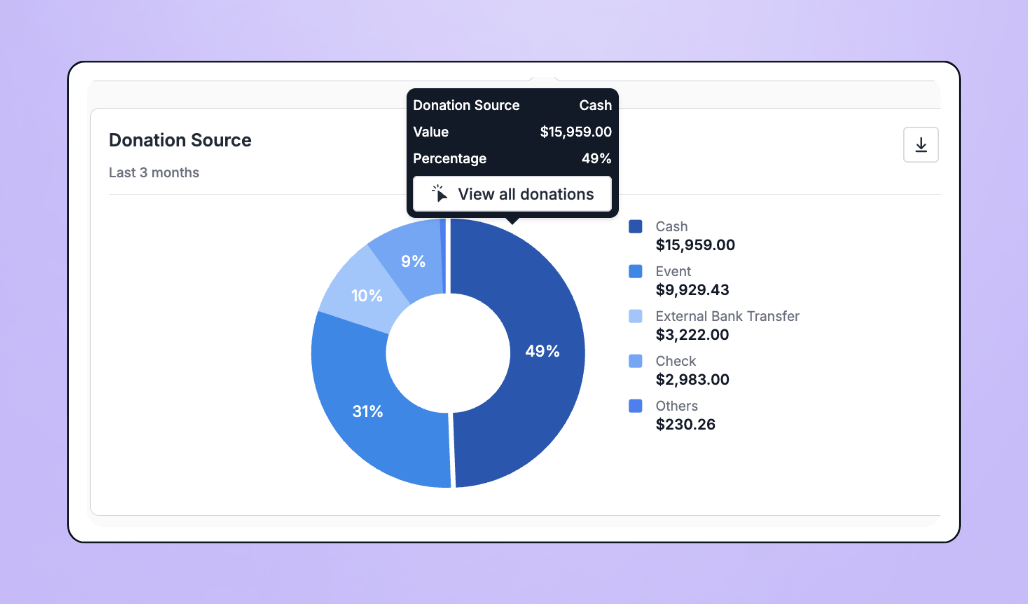
In addition, Donorbox serves nonprofits, charities, churches, schools, social groups, and individual fundraisers around the world. Teams can use the platform without building or managing a full donor CRM.
📝 Note: The Standard plan has no monthly fee, but platform and payment fees apply to each gift. Pro costs $150 per month and offers added tools and lower platform fees.
Premium uses custom pricing and adds more support, onboarding, and lower transaction rates.

Bloomerang at a glance 🔍
Bloomerang launched earlier, in 2012, as a donor management CRM. The platform puts donor retention and relationship tracking at the center of its product.
Each donor profile includes a timeline of gifts, emails, notes, and other activities. Engagement Levels and Generosity Scores can also help teams spot loyal donors, possible major-gift prospects, and people who may need more attention.
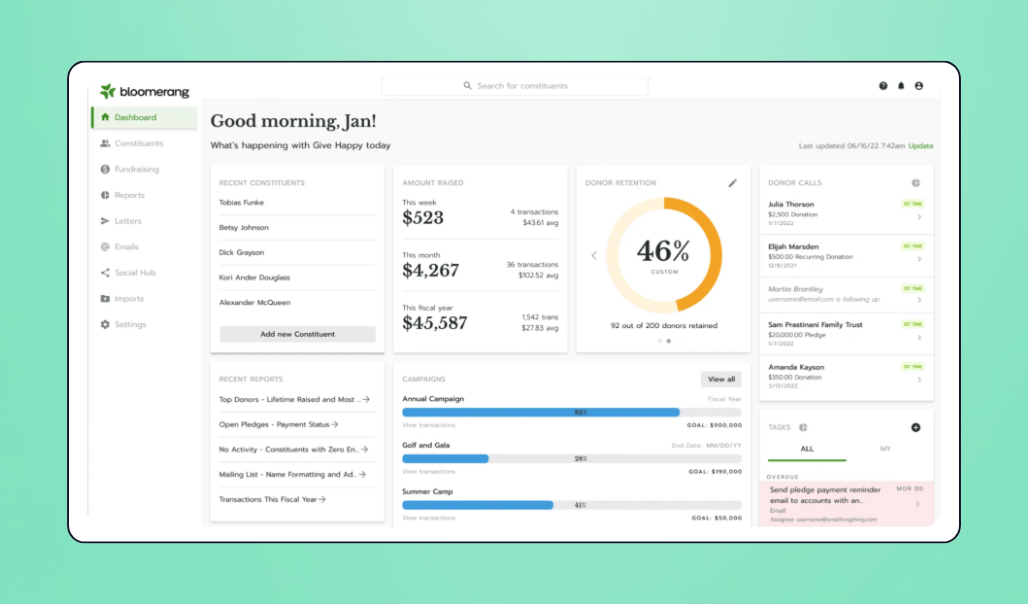
Over time, Bloomerang has grown beyond its original CRM through several purchases. The company acquired Kindful in 2021, which added more online giving tools and integrations. Bloomerang also bought InitLive in 2023 and later renamed it Bloomerang Volunteer.
The 2024 purchase of Qgiv added donation forms, events, auctions, peer-to-peer fundraising, and text giving. These products now form the Bloomerang Giving Platform.
📝 Note: Nonprofits can buy Bloomerang CRM and Bloomerang Volunteer on their own, while Bloomerang Fundraising is sold with the CRM.
Teams can also bundle them when they need donor management, fundraising, and volunteer tools in one wider system.
Donorbox vs Bloomerang: Feature-by-feature comparison
At the time of research in August 2026, Capterra listed 625 Donorbox reviews and 1,287 Bloomerang reviews. G2 listed 1,501 Donorbox reviews and 914 Bloomerang CRM reviews.
Since the samples differ, the figures below show patterns within each product’s reviews, not a direct score between them.
Donation forms & fundraising pages 🎯
Donation forms are central to Donorbox. Teams can embed a form on their website, add it as a pop-up, or send donors to a hosted campaign page.
Forms support custom questions, suggested gift amounts, recurring giving, digital wallets, and branded content. Nonprofits can also turn a campaign into a peer-to-peer fundraiser.
Review data supports Donorbox’s focus on forms and campaigns. On Capterra, 259 reviewers rated Campaign Management 4.6 out of 5. Another 197 rated Fundraising Management 4.7 out of 5.
Michael S., an owner reviewing Donorbox on G2, found the campaign builder easy to use. He could copy a past campaign rather than rebuild it, and the forms loaded well on his custom website.
Sadoki Y., a nonprofit executive director on G2, also found the forms easy to set up and connect to his organization’s site.
Bloomerang offers forms through Bloomerang Fundraising, which grew from the Qgiv product. This sits beside Bloomerang CRM within the wider Giving Platform.
The fundraising product includes embeddable forms, campaign pages, peer-to-peer tools, events, auctions, abandoned gift reminders, and suggested gift amounts. Bloomerang Fundraising must be bought as part of a bundle with its CRM.
Bloomerang also earns solid scores for online fundraising. On Capterra, 106 reviewers rated Online Giving 4.5 out of 5. Payment Processing received the same score from 120 reviewers.
Jennifer R., a director of fund development on G2, found Bloomerang’s forms simple to create and use online. Her team also valued the option for donors to cover processing fees after moving to Bloomerang Fundraising.
- Choose Donorbox if: You want donation forms and campaign pages to be the main part of your setup.
- Choose Bloomerang if: You want online fundraising tied to a wider donor management system.
Donor management & CRM depth 🗂️
Donorbox creates donor records from the gifts people make. Teams can view giving history, manage recurring plans, filter donors, and run basic reports from the fundraising account.
A separate Donorbox CRM now adds deeper donor management. Still, the main Donorbox product remains focused on collecting and tracking gifts.
Donorbox users still value its supporter records. On Capterra, 278 reviewers rated Donor Management 4.6 out of 5 as of Aug. 3, 2026.
Christine E., a general director on G2, found that Donorbox saved staff time through forms, campaign tracking, and quick reports. Her review also noted that the donor management tools did not yet match the depth her team wanted from a full CRM.
Bloomerang CRM starts with the donor record. Each profile can show gifts, emails, notes, tasks, volunteer work, and other activities on a constituent timeline.
The platform also includes an Engagement Level based on past contact and a Generosity Score based on public wealth data.
These signals can help teams spot loyal supporters, lapsed donors, and possible major-gift prospects.
Angeleah O., an engagement services manager on G2, found that the timeline and dashboards gave her team a clear view of each donor’s giving and contact history.
Another user, Jessica A., a director of donor and alumni relations on Capterra, found Bloomerang easy to use for donor management. She also valued its contact-based pricing, though she noted some limits in custom fields and report filters.
- Choose Donorbox if: You need supporter records that support your online fundraising work.
- Choose Bloomerang if: Detailed donor history, engagement, and retention are your main needs.
Recurring giving 🔁
Donorbox builds recurring giving into its forms. Donors can choose from one-time, daily, weekly, biweekly, twice-monthly, monthly, quarterly, and yearly gifts.
Teams can also set a preferred schedule or create a form that focuses only on recurring donations.
Supporters also receive access to a donor portal, where they can pause, change, or cancel a plan and update payment details. This can reduce the follow-up work placed on staff.
One caution shows up in reviews, though. Brenda B., an executive director on Capterra, noted that some donors struggled to make a one-time gift without landing on the recurring option, which led to follow-up fixes.
Bloomerang Fundraising also supports one-time and recurring gifts. Teams can set gift schedules, use upgrade prompts, add start and end dates, and give donors an account for managing their plans.
Gifts then move into the CRM, where staff can view them with the rest of the donor’s history.
- Choose Donorbox if: You want recurring gifts inside a simple online donation process.
- Choose Bloomerang if: You want recurring-gift data to guide wider donor retention and outreach.
Ease of use & setup 🖥️
Ease of use is a repeated strength for both products. G2 counted 442 positive Donorbox mentions for ease of use and 349 for easy setup. For Bloomerang, G2 counted 31 ease-of-use mentions and 13 tied to its intuitive interface.
For Donorbox, Danielle C., an executive director on G2, found it easy to embed forms, build campaigns, and connect other tools. Daniel B., a nonprofit founder on Capterra, also found that he could set up forms without outside help.
With Bloomerang, the setup can involve more work because teams may need to clean and move an existing donor database. Once that work is done, reviewers often find the system easy to manage.
Erika S., a marketing and communications director on Capterra, found that a new development leader could learn the platform with little coaching. Scott W., an operations manager on Capterra, also found the interface and reporting tools easy to use.
- Choose Donorbox if: You want to launch fundraising pages with little setup.
- Choose Bloomerang if: You can spend more time preparing your CRM but still want simple daily use.
Reporting & analytics 📊
Donorbox reporting focuses on money raised through the platform. Teams can track gifts, donors, campaigns, recurring plans, and payouts. Paid plans also add tools for connecting forms and pages to Google Analytics, Google Ads, and Meta Pixel.
This level of reporting can answer common campaign questions. It can show which page raised the most, how much recurring income came in, and which gifts belong to each fund.
Donorbox’s review pattern is positive overall, but reporting depth remains a common limit. Capterra’s Donorbox summary, based on 447 reviews, says some teams find its reporting and advanced fundraising tools less suited to complex needs.
Nicole W., a director of revenue on Capterra, found the core reports useful but wanted a more flexible dashboard and deeper analysis.
Bloomerang reporting starts with the donor rather than the payment. Teams can report on retention, lapsed donors, giving trends, campaigns, groups, tasks, and contact history.
The CRM includes report templates, filters, dashboards, scheduled reports, and donor segments.
Reporting has one of Bloomerang’s largest feature samples on Capterra. A total of 431 reviewers rated Reporting and Analytics 4.5 out of 5. G2 also counted 15 positive reporting mentions and 15 tied to report generation.
ME H., an executive director on G2, used these tools to guide campaign plans and target donor messages.
- Choose Donorbox if: You need clear reports on donations, campaigns, and online income.
- Choose Bloomerang if: You need to study donor retention, behavior, and long-term giving.
Customer support 💬
Donorbox offers support through email, chat, guides, webinars, and other learning resources.
Adam V., a nonprofit employee reviewing Donorbox on Software Advice, said support responded well during setup and helped his team work through questions. Shane H. on Capterra also found the support team helpful when his organization needed assistance.
Support is also one of Bloomerang’s most repeated strengths. Capterra gives customer service an average score of 4.8 out of 5 across more than 1,200 reviews. Users often mention patient help with setup, reports, imports, and daily problems.
Autumn Z., a marketing director on Capterra, praised the chat team, training, and help her organization received during onboarding.
- Choose Donorbox if: You want responsive support for a lighter, form-first tool.
- Choose Bloomerang if: You want hands-on support and training as you run a full CRM.
Donorbox vs Bloomerang: Pricing breakdown
Donorbox and Bloomerang charge in different ways. Donorbox ties more of its cost to each gift, while Bloomerang charges an annual software fee based on your products and database size.
Donorbox pricing
Donorbox pricing has three tiers:
- Standard: $0 per month. Platform fees range from 2.95% to 3.95% per transaction.
- Pro: $150 per month. Platform fees fall between 1.75% and 2%.
- Premium: Custom pricing. Platform fees range from 1.6% to 2%.
Payment processing fees sit on top of these platform fees. For eligible US nonprofits using Stripe, card payments cost 2.2% plus $0.30, while ACH costs 0.8%, capped at $5.
Rates can vary by country, currency, and processor. This model can suit teams that want to start without an annual contract.
However, the total cost rises with donation volume unless donors cover the fees.
Bloomerang pricing
Bloomerang sells three main products:
- Bloomerang CRM: Starts at $125 per month.
- Bloomerang Fundraising: Starts at $40 per month.
- Bloomerang Volunteer: Starts at $119 per month.
Bloomerang Fundraising must be bought with the CRM. Based on the listed starting prices, a nonprofit that needs both donor management and advanced fundraising tools would start at $165 per month, billed annually.
Your final price may rise with your contact count, onboarding needs, or added products. Payment processing fees also apply to online gifts.
Bloomerang does not publish the price of its full Giving Platform bundle, which combines CRM, Fundraising, Volunteer, and added intelligence tools. You must contact sales for that quote.
🧈 Note: For a fair comparison, decide which jobs you need done. Donorbox can cover online fundraising on its own.
To match both fundraising and deeper donor management in Bloomerang, compare Donorbox with the combined cost of Bloomerang CRM and Fundraising, not the $40 fundraising price alone.
Donorbox vs Bloomerang: Which should you choose?
The right platform depends on what your nonprofit needs most right now.
Choose Donorbox if:
- Online fundraising is your main goal. Donorbox is built around donation forms, campaign pages, recurring gifts, events, and payment collection.
- You want to launch quickly. Teams can add forms to a website or share hosted pages without setting up a full donor CRM.
- You do not need deep donor tracking yet. Donorbox can store donor and gift data, but retention scoring and long-term relationship work are not the main focus.
- You want a free plan to start. The Standard plan has no monthly fee, though platform and payment fees apply to each gift.
Choose Bloomerang if:
- Donor retention is your top priority. Bloomerang centers on donor history, engagement, generosity, follow-up, and long-term relationship tracking.
- You want a CRM-first system. Fundraising tools sit around the donor database, rather than the other way around.
- You need stronger donor reports. Bloomerang gives teams more depth around retention, lapsed donors, giving trends, and outreach.
- You are comfortable buying a bundle. Advanced fundraising tools come through Bloomerang Fundraising, which is sold with the CRM.
🧈 Pro tip: Most nonprofits lean clearly one way once they name their main goal. Match the platform to the problem you have, whether that’s collecting gifts or building lasting donor relationships.
Throw another option into the mix with Givebutter
The choice gets harder when your nonprofit needs both sides of the work.
Donorbox can help you collect gifts, but you may need another system for deeper donor management. Bloomerang puts the CRM first, but its wider fundraising tools come through a separate product bundle.
Givebutter brings both jobs into one platform, with core fundraising and CRM tools that are free to use. Your team can create donation forms, run fundraising and peer-to-peer campaigns, manage events and auctions, send emails, and keep donor records in one place.
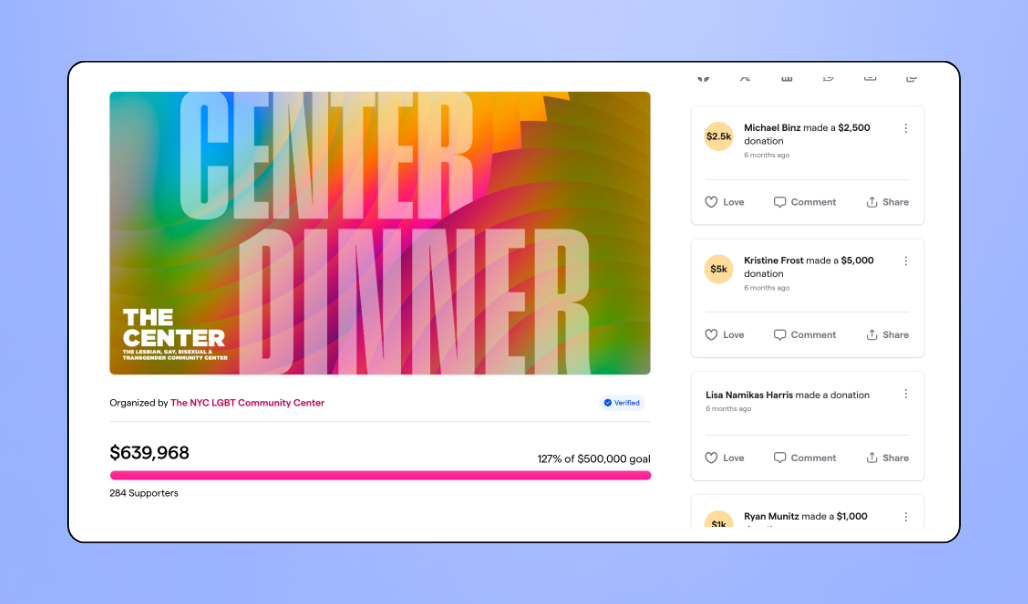
The Givebutter Guarantee can also lower the cost of collecting gifts. When optional donor tips are enabled, your nonprofit pays $0 in platform and processing fees. If you turn tips off, a flat 3% platform fee applies, along with standard payment processing fees.
This setup may suit nonprofits that want fewer tools to manage without giving up the main features needed to raise funds and build donor relationships.
Plus, your donor history can move with you. Givebutter supports imports from Donorbox and Bloomerang. Active recurring gifts may also move when the payment setup supports a secure transfer.

Get started with Givebutter for free
Get started today with a free Givebutter account
FAQs
What is the main difference between Donorbox & Bloomerang?
Donorbox is a fundraising-first platform built around donation forms, campaign pages, events, and recurring gifts.
Bloomerang is a nonprofit CRM built around donor records, engagement, reporting, and retention.
Donorbox may suit teams focused on raising money online, while Bloomerang may fit organizations that need deeper donor tracking alongside their fundraising tools.
Is Donorbox a full nonprofit CRM?
Donorbox includes supporter profiles, gift history, recurring donation records, and campaign reports. It also offers a separate CRM product for teams that need more donor management tools.
Still, fundraising remains the platform’s main focus.
Nonprofits that need deep retention tracking, detailed contact histories, and broad donor reports may find a CRM-first platform such as Bloomerang better suited to that work.
Is Donorbox or Bloomerang better for a small nonprofit?
Donorbox may be easier for a small nonprofit that needs forms and campaign pages without a monthly software bill.
Its Standard plan has no monthly fee, though platform and payment fees apply to each gift.
Bloomerang may be a better fit when the nonprofit needs a full donor database, retention tools, and more detailed reports.
The best fit depends on whether fundraising or donor management comes first.
Is Donorbox cheaper than Bloomerang?
Donorbox has a lower entry cost because its Standard plan costs $0 per month. Platform fees of 2.95% to 3.95%, plus payment processing fees, apply when donations are made.
Bloomerang uses paid plans based on the products and the number of donor records selected.
Compare the full cost of forms, CRM access, payment fees, onboarding, and add-ons before deciding which option costs less for your nonprofit.
Do Donorbox & Bloomerang support recurring donations?
Yes. Donorbox lets supporters give on daily, weekly, monthly, quarterly, or yearly schedules. Donors can also manage their plans through a self-service portal.
Bloomerang Fundraising supports recurring giving prompts and connects repeat gifts with donor records in the CRM.
Donorbox offers more control within the donation form, while Bloomerang links recurring giving more closely with donor retention work.
Can Donorbox & Bloomerang integrate with other nonprofit tools?
Yes. Donorbox offers Zapier and API access on its paid plans, which can connect fundraising data with many outside tools.
Bloomerang supports integrations with services such as QuickBooks Online, Mailchimp, Constant Contact, Zapier, and matching-gift tools.
Some integrations may require a certain plan or an added subscription, so confirm the full cost and data flow before choosing a platform.
Share this article