.svg)
.svg)
.svg)
.svg)
.svg)
.svg)
.svg)
.svg)
.svg)


.svg)
.svg)
.svg)
.svg)
.svg)
.svg)
.svg)
.svg)

.svg)
.svg)
.svg)

.svg)

.svg)
.svg)
.svg)
.svg)
.svg)


.svg)
.svg)
.svg)
.svg)
.svg)
.svg)
.svg)




.svg)


%20(1).png)

If your nonprofit started with PayPal for online donations, there’s a good chance your fundraising stack has grown a little messy over time.
And before long, processing fees, disconnected tools, and manual admin work can start adding up, too, especially for smaller nonprofits trying to do more with limited time and resources behind the scenes.
Between donor management, events, campaigns, recurring giving, and supporter engagement, many organizations eventually realize they need more than basic payment processing.
In this guide, we’ll compare five alternatives to PayPal for nonprofits based on different fundraising needs, whether you care most about lower fees, better donor experiences, AI-powered optimization, or managing everything from one connected platform.
We’ll cover:
- Givebutter for all-in-one fundraising and donor management
- Stripe for developer-friendly payment customization
- Square for in-person fundraising and events
- Fundraise Up for AI-powered donation optimization
- The Giving Block for crypto donations
Why nonprofits like yours look for alternatives to PayPal
PayPal may be one of the biggest names in online payments, but many nonprofits eventually realize they need a little more.
Here are some of the biggest reasons organizations start looking elsewhere based on themes across 2,744 reviews on G2:
Fees add up quickly 💸
Many nonprofits mention transaction fees as a major drawback, especially as donation volume grows or fundraising budgets stay tight.
On G2, pricing was mentioned as a con across 638 reviews.
Some users also report long hold times on donations, making it harder for smaller organizations to access funds quickly when they need them.
Limited customization 🎨
Depending on how PayPal is set up, donors may be redirected to PayPal-hosted checkout pages with limited branding and customization options.
Reviews from some users suggest that those limitations become more noticeable as organizations look for more personalized donor and payment experiences similar to those offered by modern peer-to-peer platforms.
Customer support frustrations ⏳
Customer support is another area that comes up in some PayPal reviews, especially for nonprofits that need faster or more helpful responses when questions come up.
Some users point to inconsistent support experiences and say customer service can feel slow or overly reliant on automated responses. There were 109 reviews on G2 that listed poor support as a drawback of using the PayPal platform.
For busy teams, even small delays can add significant friction when campaigns, donor communications, and fundraising efforts are already moving quickly.
More fundraising tools = more tabs 🧩
Since PayPal mainly handles payment processing, nonprofits often need separate tools for campaigns, events, donor management, auctions, and email marketing.
More nonprofit-first tools exist today 🤝
Newer fundraising platforms are increasingly built specifically around nonprofit workflows and supporter engagement.
Long story short? Sometimes nonprofits outgrow simple donation buttons and start looking for a more complete fundraising platform.
5 PayPal alternatives for nonprofits (& the use case they work best for)
Nonprofits have more options than ever today. Here are the best five PayPal alternatives that stand out for different fundraising needs, budgets, and use cases:
1. Givebutter: A free PayPal alternative for managing donor data & raising more
If PayPal works well for simple, one-off payments, Givebutter is built for nonprofits running ongoing campaigns, events, and donor relationships.
Instead of acting as “just” a payment processor, Givebutter combines payment processing, campaigns, events, email marketing, and a CRM that keeps donor data connected in one place.
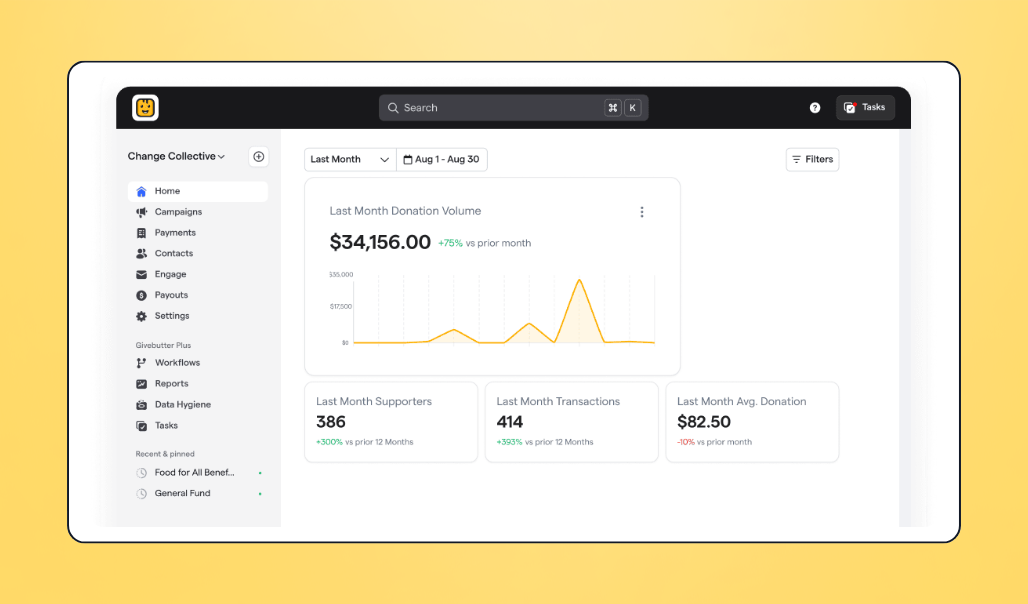
As supporters donate, register for events, buy tickets, or engage with campaigns, their activity is automatically captured without teams having to piece data together manually.

Try Givebutter’s FREE donor management & CRM software
For many nonprofits, that simplicity turns into serious momentum.
For example, after replacing a patchwork of disconnected fundraising tools with Givebutter, Unless U raised more than $111K online in less than a year.
As Marye Grace Sauermann, Marketing and Development Director at Unless U, shared:
“Before, we were paying for a donor database with Bloomerang, an email tool with MailChimp, and then for any events, we would also have to pay to outsource ticketing. We ultimately chose Givebutter over other CRMs because it could do everything all in one.” — Marye Grace Sauermann, Marketing and Development Director, Unless U
Beyond consolidating their fundraising stack, she also emphasized how easy Givebutter was for the team to adopt:
“Givebutter is so user-friendly that I know anyone on our team can pick it up. Plus, the customer service has been incredible, from onboarding to today.”
And yes, supporters can still pay with PayPal if they want to. Givebutter supports PayPal directly across donation forms, fundraising campaigns, and event pages, alongside Apple Pay, Venmo, ACH, cards, and more.
The even butter part? Funded by optional donor tips, Givebutter stays free for nonprofits, making it easy to continue accepting PayPal donations without adding extra processing fees into the mix.
PayPal vs Givebutter at a glance
Here’s a quick overview of how Givebutter compares to PayPal:
Why Givebutter is a good alternative to PayPal for nonprofits ✅
Givebutter helps nonprofits replace disconnected fundraising tools with one modern, easy-to-use system that saves time, keeps donor data organized automatically, and creates customizable donation experiences that supporters actually enjoy.
Givebutter’s standout features 🔥
- Customizable donation forms that convert 47% of potential donors — 4x the industry average
- Donor management tools that automatically organize supporter data and campaign activity
- Campaigns, peer-to-peer fundraising, auctions, ticketing, and event management all in one place
- Interactive fundraising features like comments, supporter feeds, and live displays
- Mobile-friendly donation forms with PayPal, Venmo, ACH, Apple Pay, and cards
- A free mobile fundraising app with Tap to Pay, event check-ins, auctions, and mobile giving
- Integrations with a wide range of nonprofit, marketing, and reporting tools, including Salesforce, Mailchimp, QuickBooks, Zapier, and Meta
- 24/7 support with a 98%+ customer satisfaction rating
Pricing 💰
Givebutter is free. Yes, free! All thanks to optional donor tips. And with the Givebutter Guarantee, nonprofits can keep every dollar raised even if donors skip the tip entirely.
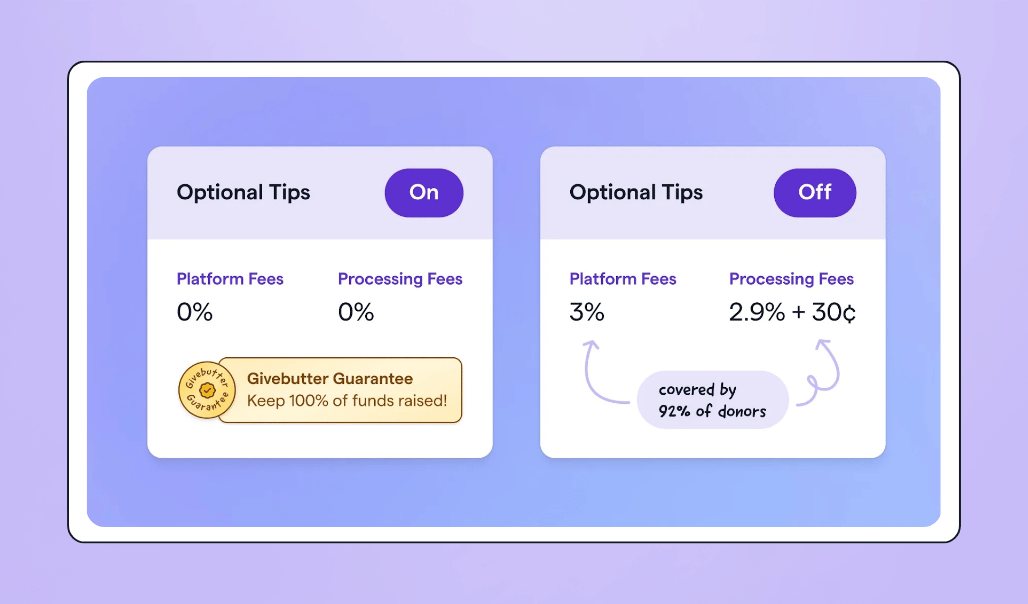
For nonprofits that want to level up their outreach and engagement even further, Givebutter Plus unlocks additional marketing and automation features.
Meanwhile, more of your fundraising dollars stay right where they belong: with your mission.
Our take 👉
For nonprofits tired of juggling disconnected fundraising tools, Givebutter brings everything under one roof and makes it easy to create fundraising experiences that supporters actually enjoy coming back to. All for free.

2. Stripe: Best for developer-friendly payment customization
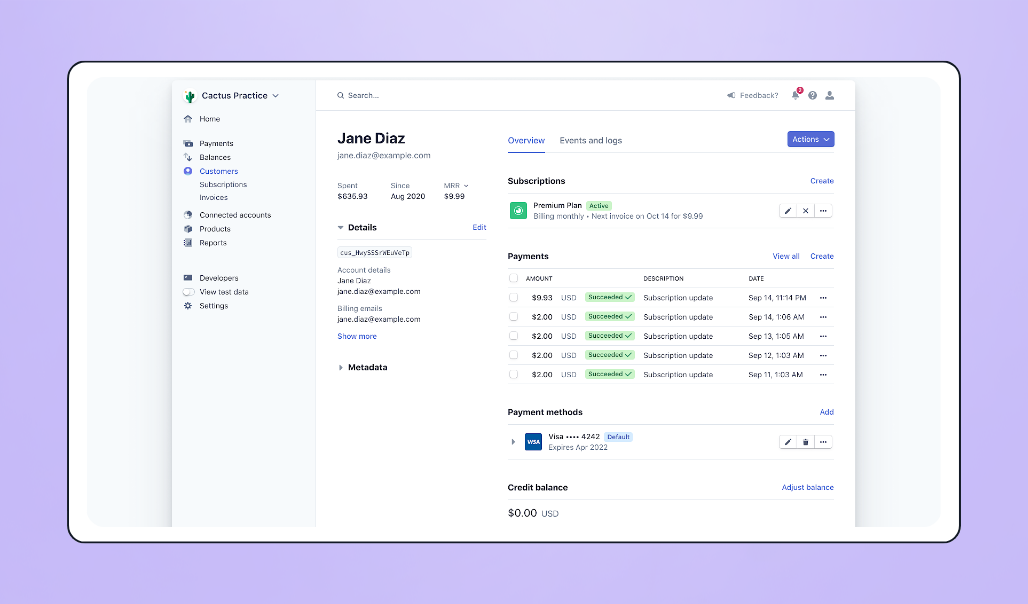
If PayPal is the quick “add a donation button and go” option, Stripe is for nonprofits that want more control over the donation experience.
Why Stripe is a good alternative to PayPal for nonprofits ✅
Depending on how PayPal is implemented, donors may be redirected to a PayPal-hosted checkout page to complete their gift, leaving no room for customization. Stripe, on the other hand, gives nonprofits much more control over how donation flows look and function.
Stripe’s standout features 🔥
- Embedded checkout forms
- Customizable payment pages
- Branded fonts and colors
- Custom fields
- Payment links
- Modular checkout components
- Advanced recurring billing infrastructure
In true build-it-your-way fashion, these features work especially well for nonprofits with technical resources or developer support that want to fully tailor the donation experience.
Pricing 💰
Eligible 501(c)(3) nonprofits can apply for Stripe's discounted nonprofit pricing, while Stripe's standard published rate is 2.9% + 30¢ per successful card transaction.
Our take 👉
Stripe is purpose-built for secure payment processing, and it does that exceptionally well. Givebutter is built on Stripe's payment infrastructure, giving nonprofits Stripe's trusted payment processing alongside donation forms, donor management, fundraising campaigns, events, and more—all in one platform.
Organizations that want extensive developer control over their payment experience will appreciate Stripe's flexibility. Nonprofits looking for those same trusted Stripe-powered payments alongside built-in fundraising tools can get both through Givebutter.
3. Square: Best for in-person payments & event fundraising
If your nonprofit regularly collects donations face to face, Square is one of the strongest PayPal alternatives out there.
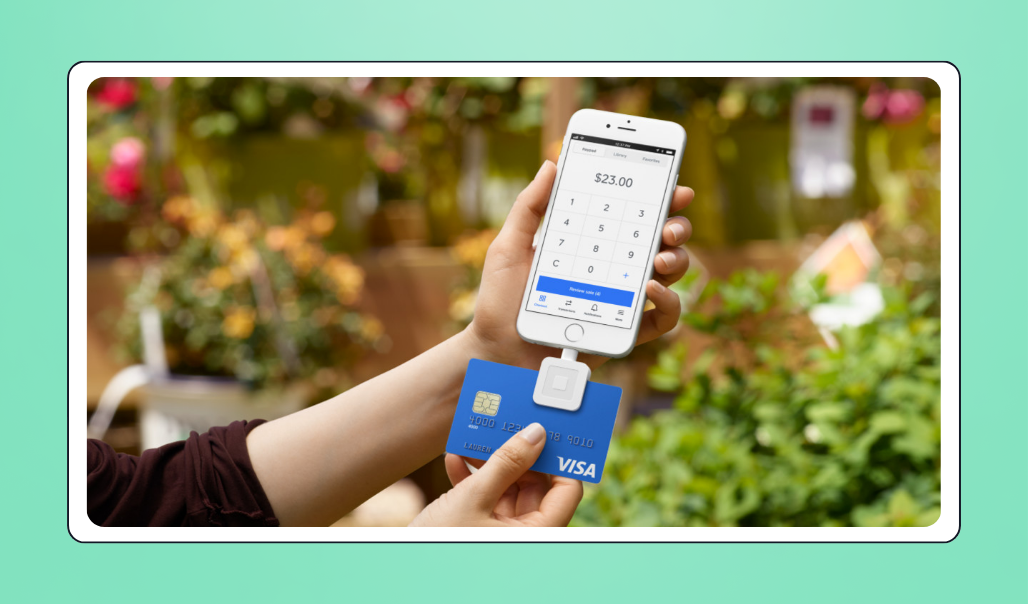
Square is built for organizations that run events, sell merch, collect payments on the go, or need multiple staff and volunteers taking donations at the same time. Think schools, churches, sports teams, festivals, conferences, concession stands, and community fundraisers.
Why Square is a good alternative to PayPal for nonprofits ✅
Its biggest strength is portability. Unlike PayPal, Square is heavily designed around in-person payments and mobile fundraising experiences.
Square’s standout features 🔥
- Tap, dip, and swipe payments from a phone or tablet
- Mobile card readers and handheld payment devices
- Offline payment support
- Free Point of Sale app
- Built-in receipts, reporting, and analytics
- Apple Pay and Google Pay support
Square also gives nonprofits their first basic card reader for free, which lowers the barrier to entry for smaller organizations.
Pricing 💰
Square’s standard in-person payment processing fee is 2.6% + 15¢ per transaction, which is fairly comparable to Stripe’s standard pricing. Lower processing rates are generally tied to paid subscription plans or custom pricing setups.
Our take 👉
Square is a great fit for nonprofits that do a lot of fundraising in the real world, not just online. But while it’s excellent for payments and point-of-sale operations, it’s not a nonprofit-first fundraising platform.
For nonprofits that want similar in-person fundraising tools tied directly into campaigns and donor management, Givebutter also offers a free mobile fundraising app with Tap to Pay and mobile card readers. Nonprofits only pay for optional hardware if they choose to use it.

4. Fundraise Up: Best for AI-powered donation optimization
Fundraise Up is built for nonprofits that want to squeeze every possible conversion out of their online donation flow.

It’s less about managing every part of fundraising and more about fine-tuning the donation experience itself to help nonprofits raise more online.
Why Fundraise Up is a good alternative to PayPal for nonprofits ✅
Unlike basic donation buttons or standard checkout flows, Fundraise Up uses AI-powered optimization throughout the donation experience to help improve conversions and recurring giving.
Fundraise Up’s standout features 🔥
- Personalized donation amount suggestions
- AI-powered recurring giving prompts
- Fee coverage optimization
- Automatic failed-payment recovery
- Fraud prevention tools
- Multilingual donation forms
- Global fundraising support
According to Fundraise Up, these AI-powered tools have helped nonprofits increase average gift size by 30%, improve fee coverage, and grow recurring donor acquisition substantially.
Pricing 💰
Fundraise Up’s transaction fees start at 4%, which can eat into your dough pretty quickly, especially for smaller nonprofits.
Our take 👉
Fundraise Up is especially appealing for larger nonprofits raising serious dough online across multiple countries. But for small and mid-sized nonprofits trying to stretch every fundraising dollar a little further, Givebutter offers a free alternative.
And with donation forms that convert 47% of potential donors, 4x the industry average, you don’t need enterprise-level AI to keep the fundraising momentum going.
5. The Giving Block: Best for crypto, stock, & DAF donations
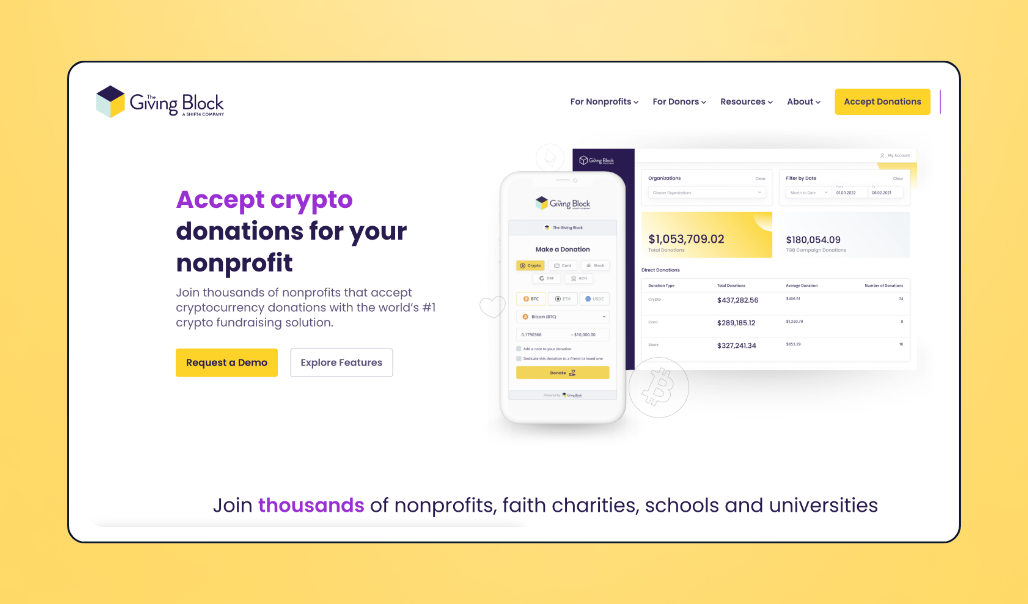
For supporters who prefer non-cash giving options, The Giving Block gives nonprofits a way to accept cryptocurrency, stock, and donor-advised fund (DAF) donations.
Why The Giving Block is a good alternative to PayPal for nonprofits ✅
PayPal helps with traditional online payments. The Giving Block unlocks entirely new types of donations.
The platform supports automatic conversion of crypto donations into cash, so nonprofits don't have to worry about managing wallets, price swings, or crypto complexity behind the scenes.
The Giving Block's standout features 🔥
- Cryptocurrency donations
- Stock donations
- DAF donations
- Instant crypto-to-cash conversion
- Embedded donation forms
- CRM integrations
- 5,000+ integrations
- Donation reporting dashboard
- The Giving Marketplace donor directory
- Crypto fundraising campaigns
According to The Giving Block, organizations have raised more than $300M through the platform, and the average crypto donation exceeds $11K.
Pricing 💰
The Giving Block uses custom pricing, so nonprofits need to contact the company directly for a quote.
Organizations can choose between Simplify, which includes the platform's core fundraising tools and donor marketplace access, and Accelerate, which layers on dedicated fundraising strategy sessions, expert support, and long-term planning for growing crypto, stock, and DAF donations.
Our take 👉
For many nonprofits, crypto fundraising won't be a top priority. But for organizations looking to diversify revenue streams or connect with high-capacity donors, The Giving Block can be a valuable addition to your fundraising strategy.
How can I determine which PayPal alternative is right for my nonprofit?
Not every nonprofit needs the same fundraising setup. A small volunteer-led organization running community events has very different needs than a large nonprofit managing global online campaigns.
The trick is finding a platform that fits the way your team already works instead of creating more fundraising chaos behind the scenes.
Here are a few helpful questions to ask before choosing a platform:
Do you mainly care about lowering fundraising fees? 💸
If keeping as much donation revenue as possible is the top priority, pay close attention to transaction fees, platform fees, payout timelines, and pricing structures.
Some platforms prioritize minimizing costs, while others prioritize helping nonprofits raise more overall through donor engagement and optimization tools.
How important is donor management to your team? 📇
If donor information currently lives across spreadsheets, inboxes, event tools, and payment processors, a platform with donor management can save a huge amount of time and manual work.
Does your fundraising happen mostly online or in person? 🎟️
Some platforms shine at online donation optimization and recurring giving, while others are built for live events, mobile payments, auctions, and in-person fundraising experiences.
How customizable do you need the donation experience to be? 🎨
If branding, checkout design, or tailored donor journeys matter to your organization, look closely at how much flexibility each platform actually gives you.
How much complexity can your team realistically manage? ⏱️
Some fundraising platforms work best with technical resources or dedicated admins. Others are designed to feel intuitive from day one.
Give better with Givebutter
If your nonprofit feels stuck juggling PayPal, spreadsheets, event tools, donor lists, and five different fundraising tabs at once, all while transaction and platform fees slowly nibble away at donations, it may be time for a simpler way forward.
Instead of piecing together separate tools for donations, donor management, events, campaigns, auctions, and communications, Givebutter keeps everything connected in one free platform built for modern nonprofit fundraising.
Supporters get smoother donation experiences. Teams spend less time wrestling with disconnected reports. And nonprofits keep more of their hard-earned bread focused on impact instead of software costs and extra platform fees.
The bottom line? Givebutter still supports PayPal directly, but because Givebutter itself is free, nonprofits don’t have to layer additional processing fees on top just to keep PayPal available.
That's a win worth telling other nonprofits about. 💛
Sign up for Givebutter today →
FAQs about PayPal alternatives for nonprofits
What’s the biggest difference between PayPal and nonprofit fundraising platforms?
PayPal mainly focuses on payment processing. Modern nonprofit fundraising platforms are usually built around the entire donor journey. This includes campaigns, recurring giving, donor management, events, engagement, and supporter experiences designed to help nonprofits raise more over time.
Can nonprofits still accept PayPal donations without using PayPal alone?
Absolutely. A platform like Givebutter supports PayPal directly across donation forms, campaigns, and event pages, so nonprofits can continue accepting PayPal donations while also offering Venmo, Apple Pay, ACH, cards, and other payment options.
In other words, you can keep the PayPal convenience without building your entire fundraising stack around it.
And the big win? Because Givebutter itself is free, nonprofits can often keep more of those donations instead of stacking additional processing fees on top.
When might PayPal still make sense for nonprofits?
If a simple donate button is genuinely all your nonprofit needs, PayPal can work fine on its own.
But most nonprofits using PayPal alongside Givebutter are really just keeping an old habit around, not because it's adding anything. If you're already managing donors, running campaigns, or hosting events elsewhere, that separate PayPal button usually means fragmented donor data and an extra fee layer for no real benefit. At that point, it's worth asking whether it's time to consolidate everything, including that button, into one platform.
Share this article







.svg)
.svg)