








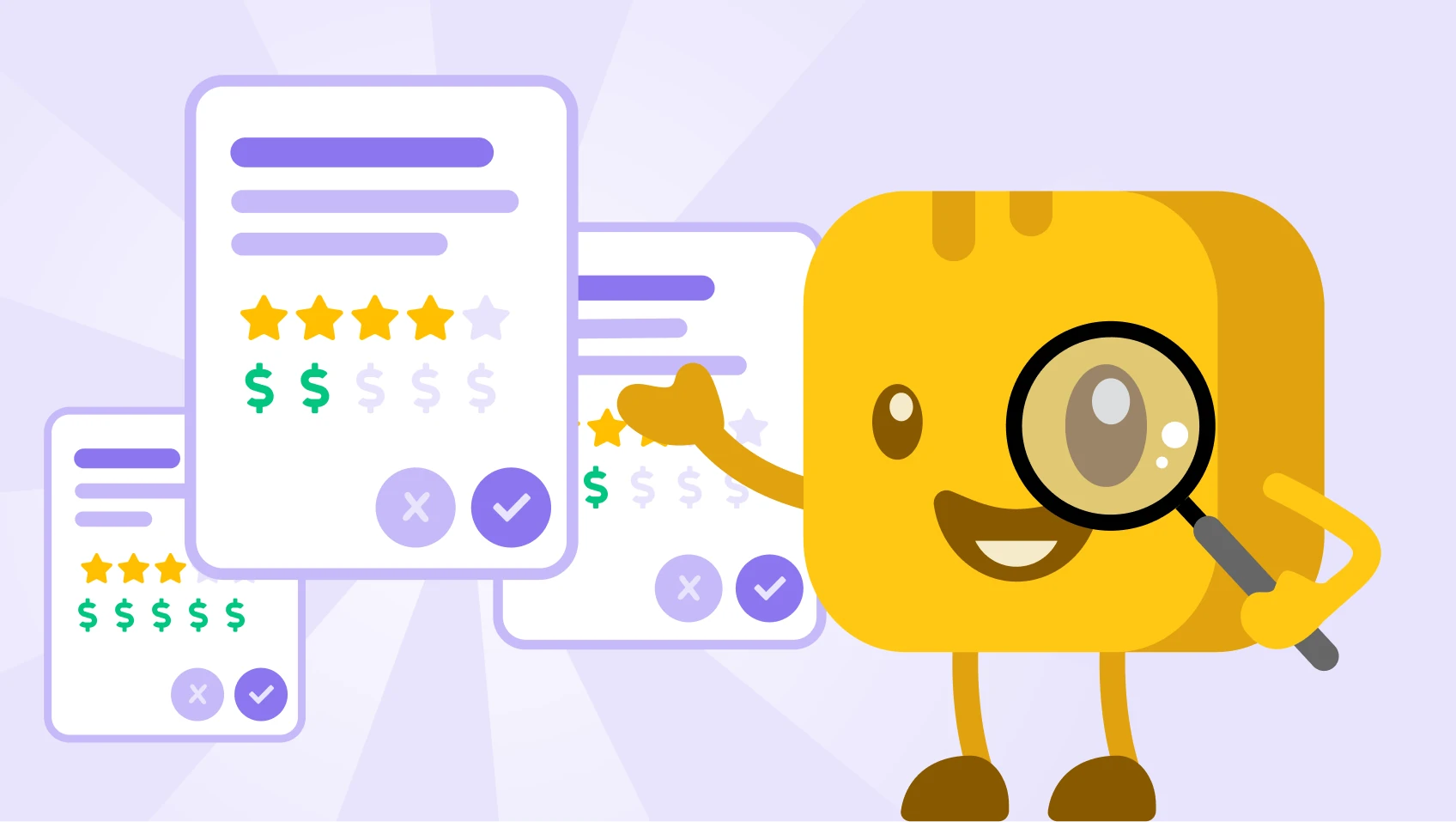


Your nonprofit needs a new vendor, but the team isn’t sure how many quotes to gather, who should approve the purchase, or what records to keep. A procurement policy gives everyone the same process for evaluating vendors and documenting decisions.
This guide walks through the key parts of a nonprofit procurement policy and includes a free template you can adapt for your organization.
⚖️ Disclaimer: This article is general information, not tax, accounting, or legal advice. Check with a qualified professional about the requirements that apply to your organization.
Key takeaways
- Use a procurement policy as an efficiency tool 💪 A procurement policy speeds up purchasing by outlining how your nonprofit identifies, evaluates, selects, and pays vendors for goods and services.
- Understand legal requirements 🤔 For federal grantees, a written procurement policy is legally required under 2 CFR 200 (Uniform Guidance).
- Include the right core components ✨ Scope and authority, dollar thresholds, vendor requirements, conflict of interest disclosures, and documentation standards.
- Identify approval thresholds 👍 Thresholds protect staff from uncomfortable judgment calls and make purchasing expectations clear.
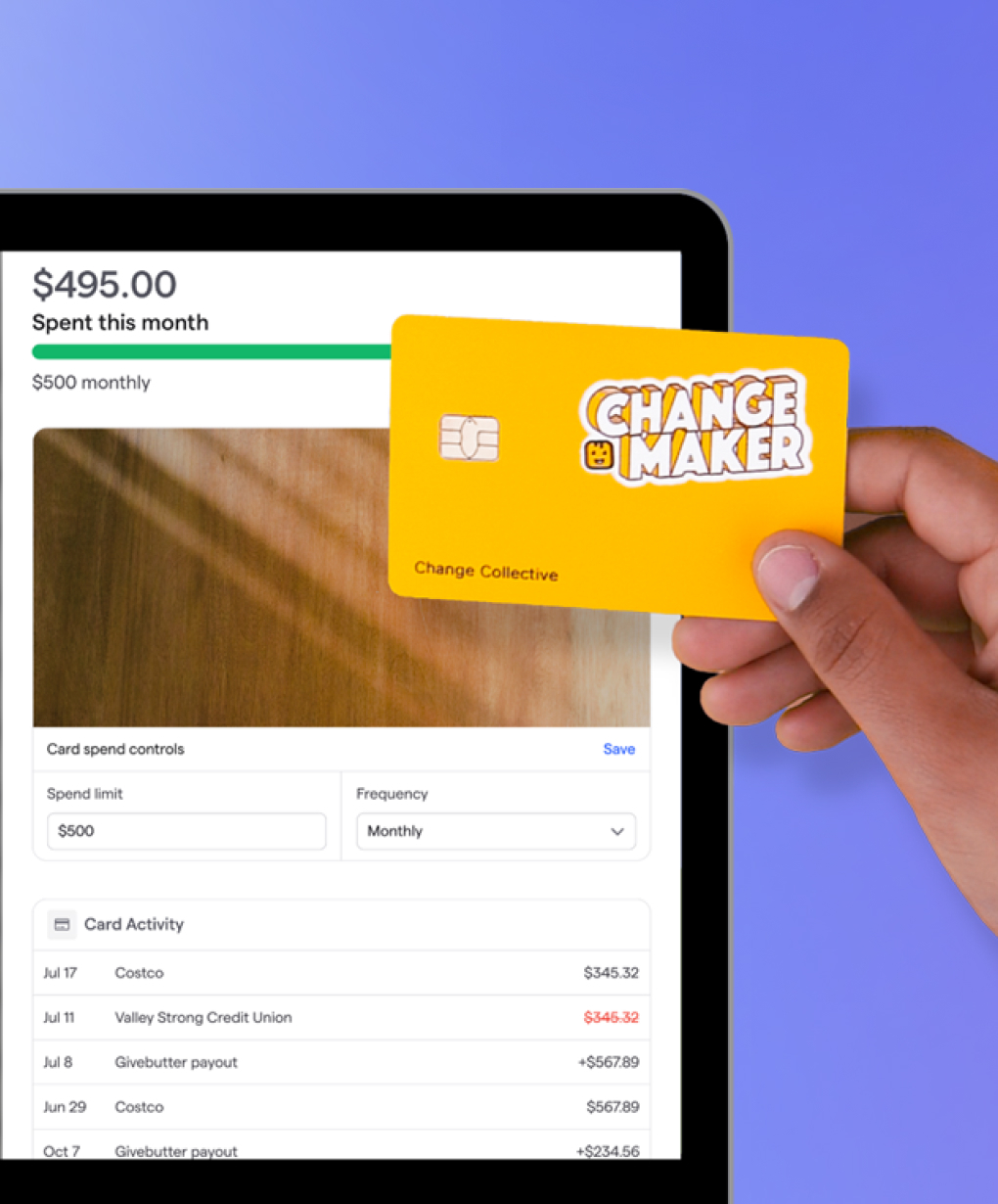
- Put your policy into action 🧈 Givebutter Spend Cards can enforce dollar limits at the card level, so your policy stops being just a document and becomes a usable system.
What is a nonprofit procurement policy?
A nonprofit procurement policy governs how a nonprofit identifies, evaluates, selects, and pays vendors for goods and services.
Unlike an expense reimbursement policy, which repays staff for out-of-pocket costs, a procurement policy covers purchases the nonprofit makes directly. It applies to anyone buying on the organization's behalf, including staff, board members, and volunteers.

Centralized vs. delegated purchasing models
When it comes to procurement for nonprofits, there are two common models: a centralized purchasing model, where an admin approves and executes purchases, or a delegated model, in which department leads spend within limits.
While small nonprofits tend to use a centralized purchasing model because it’s easier to audit, choose the model that best fits your organization's needs.
How to write a nonprofit procurement policy: Step by step
A written procurement policy for nonprofits protects against audit findings, satisfies board and funder requirements, and eliminates the constant back-and-forth over who needs to approve each purchase.
This 5-step procurement guide for nonprofits brings yours to life, with practical guidance on dollar thresholds, approval chains, and vendor requirements. Plus, a template you can adapt so you don’t have to start from scratch.
Step 1: Audit your current purchasing practices 🔎
Before drafting your new policy, review how your nonprofit currently makes purchases.
Pull three to six months of transactions and consider who buys what, at what amounts, and with whose approval. Some patterns worth addressing might include:
- Purchases made without documentation
- Vendors paid without W-9s
- Decisions made via text or verbal approval
Step 2: Set your dollar thresholds & approvals 💰
Define your dollar thresholds and approval tiers. These will differ from one organization to another based on budget and grant requirements. Still, it’s best practice to use round numbers and get input from your finance lead or executive director before finalizing your thresholds.
Here’s an example threshold structure to help you get started:
Many grant-funded expenses have their own rules. Some funders set approval thresholds or require specific documentation, so check grant agreements before finalizing your internal tiers.

Step 3: Draft vendor requirements ✅
Clearly outline the rules of working with vendors. Typically, nonprofits require:
- W-9
- Signed contract or purchase order
- For federally funded purchases, quotes from multiple vendors above the micro-purchase threshold ($15K) and formal procurement methods above the simplified acquisition threshold ($350K), effective Oct. 1, 2025
- Conflict of interest disclosure
- Sole-source justification if only one vendor is used, outlining price, specialized expertise, or emergency circumstances at the time of selection
It’s important to note that federal awards require records to be kept at least three years under 2 CFR 200.334.
Step 4: Get board approval 👍
After you’ve determined your requirements and written a draft, get your policy formally ratified by the board.
To do that, present the policy at a board meeting, record the vote in meeting minutes, and include the approval date and version number in the policy document. This makes the policy official and gives auditors a clear record of when it took effect.
Step 5: Communicate & train 📣
A policy buried in a shared drive doesn’t protect anyone. That’s why active training and communication about the policy matter.
To ensure everyone is informed, be sure to:
- Hold a staff meeting: Invite everyone to sit down for a half hour to review the document. Offer mock scenarios and show flowcharts if helpful.
- Create supporting documentation: Write a one-page summary that covers the highlights or an FAQ doc for easy reference.
- Make review annual: Just as you would refresh staff on HR policies every year, ask everyone on your team to review your procurement policy annually.
- Offer a point of contact: Let your staff know who owns and maintains the document, and who they can reach out to with questions or concerns.
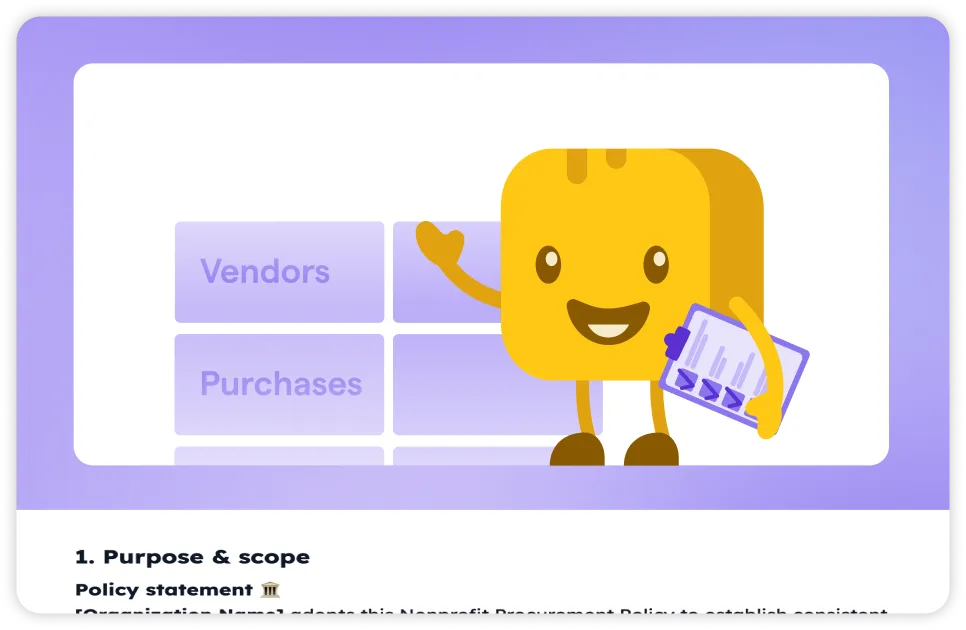
Download your free nonprofit procurement policy template
If you’re ready to get started, we’ve got just the thing. Use this customizable sample procurement policy for nonprofits to build your own from scratch or update an existing one.
With editable sections for spending thresholds by dollar tier, approval chain mapping, vendor qualification requirements, and conflict of interest disclosures, this template will help any finance leader quickly create a board- and audit-ready policy document.
How Givebutter supports financial controls
An effective procurement policy sets clear approval thresholds, explains how to compare vendors, and records decisions, conflicts, and supporting documents. If you receive federal funds, check the policy against applicable Uniform Guidance requirements; review it when funding rules or purchasing needs change.
To make those rules workable day to day, finance leaders need visibility into purchases and reliable records. Givebutter Wallet’s Spend Cards let admins set card limits, and receipts and memos can stay with each transaction. That gives finance leaders a clearer view of purchases and makes it easier to follow up when spending falls outside the policy.

Take control of nonprofit spending with Givebutter
Sign up for Givebutter today and put your procurement policy into practice.
FAQs about procurement policies
What should a nonprofit procurement policy include?
A nonprofit procurement policy should include five core components:
- Policy scope and who holds purchasing authority
- Dollar thresholds that set approval tiers
- Vendor requirements, such as W-9s and competitive quotes
- A conflict of interest disclosure process
- Documentation and record-retention standards
Federal grantees must also follow the procurement standards in 2 CFR 200.
What is the difference between a procurement policy & an expense reimbursement policy?
A procurement policy governs how an organization buys goods/services directly. A reimbursement policy governs how staff and volunteers are repaid for out-of-pocket expenses.
Do small nonprofits need a procurement policy?
Yes. For federal grantees, it’s legally required under 2 CFR 200 (Uniform Guidance). Even without federal grants, it helps protect the board by demonstrating clear oversight of spending, satisfying auditor and donor expectations, and preventing informal purchasing decisions from becoming governance problems.
What are typical approval thresholds in a nonprofit procurement policy?
There’s no universal standard. Thresholds vary by budget and grant requirements. Current federal benchmarks include $15K for micro-purchases and $350K for simplified acquisitions. Nonprofits should consult their CPA or grant administrator for benchmarks.
How often should a nonprofit update its procurement policy?
At minimum, nonprofits should update their procurement policy annually, or when funding sources change. Federal grant requirements, such as the Uniform Guidance, are periodically updated.
Share this article