












For many nonprofits, expense reimbursement feels overly complicated. Volunteers submit expenses months after the event, receipts are unclear, and some expenses are questionable. These situations leave finance leaders unsure what counts as an allowable expense and how volunteer reimbursements should differ from employee ones.
The right policy closes that gap. Here’s what a nonprofit expense reimbursement policy includes, how to write one, and a free template to get you started.
⚖️ Disclaimer: This article is general information, not tax, accounting, or legal advice. Check with a qualified professional about the requirements that apply to your organization.
Key takeaways
- Understand reimbursement policy vs. spending policy 💸 A reimbursement policy pays staff and volunteers back for purchases they made, while a spending policy outlines the organization’s own direct purchases.
- Reimburse the right things ✈️ Typically, travel and lodging for approved trips, conference or training fees, supplies purchased on the org’s behalf, and reasonable meals while traveling are among the reimbursable expenses.
- Make it an accountable plan ✏️ Require a business purpose, receipts within a set window, and the return of any excess to keep reimbursements non-taxable.
- Outline approval chains and receipt requirements ✅ Determine who approves reimbursement requests and in what order, and ensure everyone knows what documentation is needed.
- Put your policy to work with the right system 🧈 Givebutter Wallet and Spend Cards are free features that can help you put your policy into practice. Givebutter Plus adds expense management and reporting tools to give you a fuller view of spending.
What is a nonprofit expense reimbursement policy?
A reimbursement policy sets the rules for repaying staff, board members, or volunteers for out-of-pocket expenses incurred on behalf of the organization.
Unlike a procurement or spending policy (both of which govern direct nonprofit spending), a reimbursement policy outlines how a nonprofit will reimburse someone for money they have already spent.

How to write a nonprofit expense reimbursement policy: Step by step
A formal expense reimbursement policy helps nonprofits streamline month-end reconciliation, keep grant reporting organized, and maintain clear documentation for audits.
Here’s how to write yours, what to include, and how to build a policy that simplifies your reimbursement process.
Step 1: Define covered expenses 💰
The first step in creating a reimbursement policy is to clearly state which 501(c)(3) allowable expenses are covered and which are not, and to outline the rates for each.
Here are the most common allowable expenses for nonprofit organizations, plus the ones that usually aren’t covered.
Some categories are only reimbursable up to a certain rate or limit. For example, many nonprofits reimburse mileage at the IRS business standard mileage rate, which the IRS updates at least once a year. Volunteers who aren’t reimbursed may be eligible to deduct 14 cents per mile on their own taxes instead. Check the IRS standard mileage rates page for current rates before you set yours.
Step 2: Set your approval chain 👥
Outline who approves reimbursement requests and the order in which they are approved. While every nonprofit is different, a common approval chain looks something like this:
Expense is submitted → direct supervisor approves → executive director approves → finance/bookkeeper processes payment.
Some nonprofits also create chains for purchases above a certain threshold or when the executive director makes a purchase. In that case, the approval chain might look something like this:
Expense is submitted → board treasurer approves → designated board member approves → finance/bookkeeper processes payment.
💡 Pro tip: Include a reimbursement processing schedule in the policy so employees know when to expect repayment.

Step 3: Establish receipt requirements 🧾
Next, you’ll want to outline guidelines and rules around receipts.
While every organization is different, most nonprofits include information on:
- Cost threshold: IRS rules for nonprofit expenses generally don’t require receipts for business costs under $75 (except lodging), but you still need a record of the amount, date, place, and business purpose. Many nonprofits set a stricter limit, such as $25, because grant funders often expect receipts for every charge.
- Receipts: Many nonprofits prefer an original receipt. But if the original is lost, they often accept copies, too.
- Submission window: A common submission deadline is within 30 days of purchase.
- Late submissions: While there’s no universal rule regarding late-receipt submissions, many nonprofits state that expenses submitted after 30 days either require additional sign-off or can’t be reimbursed at all.
Step 4: Handle volunteer reimbursements 💪
Volunteers can be reimbursed for out-of-pocket expenses, too. While the same documentation standards apply, the workflow and tax implications differ:
- Approval: Volunteer reimbursements are often processed faster because the person leading the event or activity is authorized to approve the expense, rather than going through an approval chain.
- Taxes: Reimbursements to volunteers may be treated as taxable income for personal tax purposes. Your organization may also have reporting obligations. Check with your CPA to confirm how the rules apply.
When reimbursing volunteers, maintain the same documentation process you use for employee expenses to support proper recordkeeping and tax compliance.
Download your free nonprofit expense reimbursement policy template
With an approved list of expense categories, a reimbursement request form, a receipt documentation checklist, and a mileage log, this template can help any finance director or controller build a grant-audit-ready policy right away.

Empower your nonprofit reimbursement policy with the right tools
A written expense reimbursement policy and the right tools turn receipt chaos into a clean, audit-ready process. When staff and volunteers know the rules and submit receipts on time, reconciliation goes faster and grant reporting gets cleaner. That leaves your team more time for its mission.
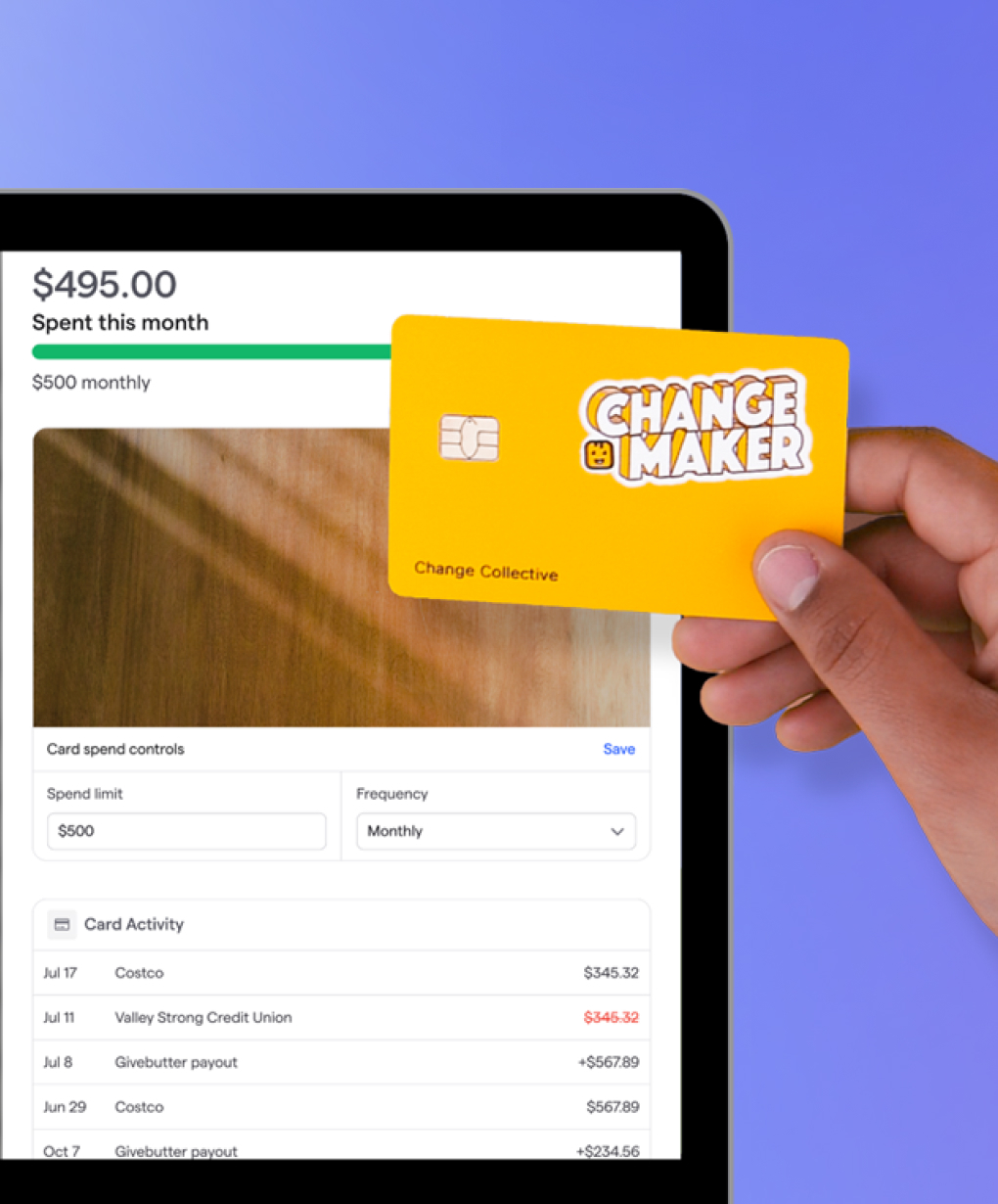
With Givebutter, nonprofits can create and allocate Spend Cards, receive alerts about transactions and cards approaching spend limits, and, with Givebutter Plus, get a complete expense management overview so no expense or reimbursement is missed.

Track nonprofit spending with Givebutter Wallet
Sign up for Givebutter today and make managing expense reimbursements as smooth as butter.
FAQs about nonprofit expense reimbursement policies
What should a nonprofit expense reimbursement policy include?
A nonprofit expense reimbursement policy should include covered expense categories, dollar limits, receipt requirements, a submission timeline, an approval chain, and accountable plan language that keeps reimbursements non-taxable.
What is the difference between a spending policy and an expense reimbursement policy?
A spending policy governs direct organizational expenditures, while a reimbursement policy governs reimbursing staff, board members, or volunteers for personal funds spent on behalf of the organization. Most nonprofits need both, since each covers a different kind of spending.
Does a nonprofit need an accountable plan?
Not legally, but most nonprofits find it helpful. Without an accountable plan, reimbursements to employees are treated as taxable wages. To qualify, expenses must have a clear business connection, substantiation (receipts), and a return of any excess amounts.
How quickly should nonprofits reimburse employees?
There’s no universal legal requirement, but best practice is to do so within 30 days of a complete submission. Because delays can erode trust, we recommend building a reimbursement processing schedule into the policy so everyone is on the same page.
Can a nonprofit refuse to reimburse an expense?
Yes. If an expense isn’t pre-approved, lacks documentation, falls outside covered categories, or is submitted outside the policy’s time window, a nonprofit can refuse to reimburse it. A clear written policy makes refusals defensible and removes the personal element.
Share this article