












A staff member needs to make a purchase, but no one knows whether the executive director, finance lead, or board needs to approve it. When the rules live in texts or memory, even routine spending can become inconsistent.
A written spending policy sets approval limits and expectations so staff know what they can buy and finance leaders can track how funds are used. This guide shows you what to include and how to put the policy into practice.
Key takeaways
- Understand what a spending policy is 🤔 Unlike an expense reimbursement policy, which repays staff who spend their own money, a spending policy sets the rules for how the organization spends its own money.
- Include key elements in your policy ✨ Your policy should define approval authority levels, thresholds, covered expense categories, documentation requirements, and consequences for violations.
- Create tiered approvals 👥 Send small purchases to department heads for approval and route larger or unbudgeted purchases to the ED or board.
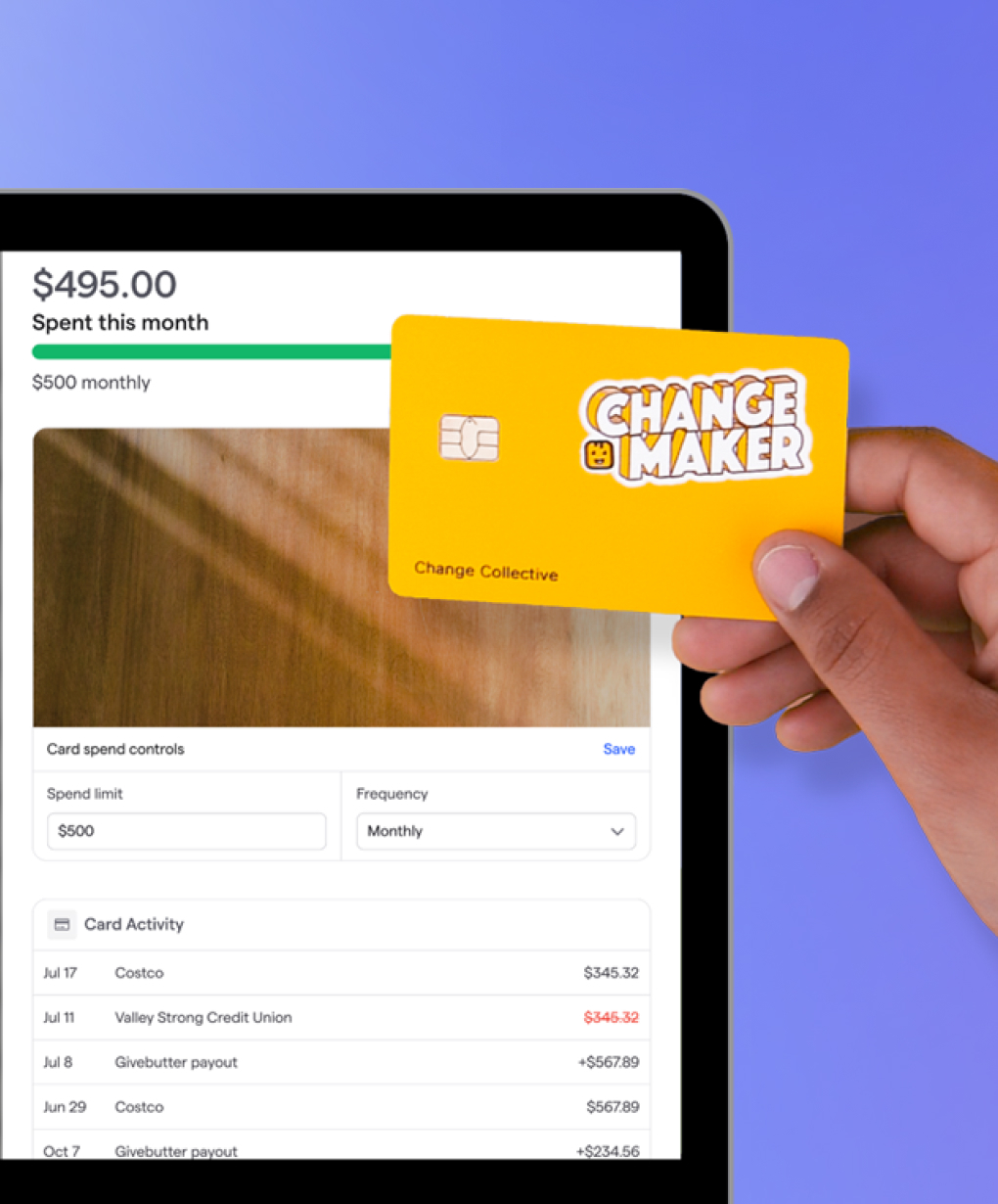
- Support your policy automatically 🧈 Givebutter Spend Cards back up your policy with customizable spending limits and real-time transaction tracking, so fewer purchases slip past your approval tiers.
What is a nonprofit spending policy?
A spending policy (sometimes called a nonprofit purchase policy) sets the rules for how the organization authorizes, documents, and controls expenditures. It typically governs staff, board members, and anyone making purchases with organization funds. Think of it as your organization’s nonprofit spending rules, written down and board-approved.
For many small nonprofits, spending decisions happen informally until a formal policy is implemented. A written policy is how nonprofit organizations control spending as they grow.

How to write a nonprofit spending policy: Step by step
Plenty of finance leaders know they need a spending policy. They just don’t have the time or bandwidth to create one. If that sounds like you, we’re here to help.
Follow the six steps below to get your nonprofit spending policy in place.
Step 1: Map your current spending patterns 👀
Before you jump into creating a policy, audit how your organization is actually spending money right now. This will help you identify gaps and practices that might not be audit-friendly and that your policy will address.
To do that, pull three to six months of transactions and look for patterns:
- Who in the organization is spending?
- What are they spending money on?
- How much money are we spending every month?
Step 2: Outline expense types, restrictions, & requirements ✅
Next, specify what the policy covers, what it doesn’t, and what staff are required to submit when a purchase is made:
- Outline covered expense types: These might include travel, meals, supplies, software subscriptions, contractor fees, and equipment.
- Flag what requires extra justification: This might include alcohol, gifts, personal items, or anything charged to a restricted grant fund.
- Detail documentation needs: Determine what information you’ll need for each purchase, including receipts, invoices, W-9s, or written approval.
- Consider consequences: Define what happens when someone overspends or skips approval (repayment, card suspension, or escalation to the ED or board).
Step 3: Set your approval tiers 👥
Create approval tiers or clear guidelines for who needs to approve a purchase at which price point. When creating yours, start conservatively. It’s easier to loosen thresholds later than to tighten them after staff are used to informal approval.
Make sure your tiers reflect your nonprofit’s total budget. For example, a $500 threshold might work well for an organization with a $300K budget but would likely create a bottleneck at $3M.
Step 4: Draft the policy document ✏️
Turn your spending rules, approval tiers, and documentation requirements into a policy draft. For small nonprofits, two to four pages is perfect.
Write everything in plain language and define every term clearly. Avoid legalese that might confuse staff or discourage them from reading and following the policy, which might lead to a costly spending mistake.
Be sure to include an effective date, version number, and a named policy owner.
Step 5: Get board approval 👍
Once you have a draft of your policy, get it formally ratified by the board, just like any other financial policy for nonprofits. Typically, this happens at a board meeting where minutes are taken, creating a clear record of approval and making the policy easier to audit.
Step 6: Communicate & train 📣
Ensure that all of your staff are well-versed in the policy. Without training and guidance on how to understand it and use it, your document will likely sit in a folder on everyone’s desktop.
Here’s what to do:
- Hold a staff meeting: Invite everyone to sit down for a half hour to review the document. Offer mock scenarios and show flowcharts if helpful.
- Create supporting documentation: Write a one-page summary or an FAQ document for employees to refer to.
- Review annually: Just as you would refresh staff on HR policies, ask everyone on your team to review your spending policy every year.
- Offer a point of contact: Let your staff know who owns the document and who they can reach out to with questions or concerns.

Sample spending approval thresholds
Spending thresholds vary by nonprofit, depending on its leadership and budget.
To help you get started, take a look at the examples below showing purchase amounts and their corresponding approval levels. These tiers are illustrative. Adjust them to your budget size and any grant or funder requirements.
How Givebutter Spend Cards make your policy enforceable
If you’re a finance leader at a nonprofit, you know how stressful a rogue or unauthorized purchase can be. It creates confusion and extra work for everyone involved in keeping the nonprofit compliant.
With the right policy and nonprofit spending controls in place, you can close that governance gap and create a system that makes every approval decision easy to defend at audit time.
That’s where Givebutter comes in.
With Givebutter Spend Cards, you can set customizable spending limits, track every transaction as it happens, freeze a card instantly if needed, and receive receipts matched to each charge. Plus, with financial reports and payout reconciliations, you can make monthly policy reviews and audits faster than ever.

Set spending limits with Givebutter Spend Cards
Create a free Givebutter account today and start managing your nonprofit’s spending.
FAQs about spending policy for nonprofits
What should a nonprofit spending policy include?
A nonprofit spending policy should include approval authority levels, dollar thresholds for each approval tier, covered and restricted expense categories, documentation requirements, and consequences for violations.
What is the difference between a spending policy & an expense reimbursement policy?
A spending policy outlines the rules for how nonprofit funds are spent directly. A reimbursement policy outlines the rules for repaying staff or volunteers who spent their own money.
Does a nonprofit board need to approve a spending policy?
Yes. Board approval is a widely recommended best practice, and auditors and grantmakers often ask to see board-adopted financial policies. It signals fiduciary responsibility and makes the policy binding across the organization.
Share this article