









Grow your community. It sounds simple, right? Only you find yourself staring at a blank calendar, wondering whether that means more events, more social posts, or something else you’ve never tried your hand at before.
These nine community outreach strategies are where you can start. One tip from us at Givebutter before you dive in: Treat community outreach as part of your nonprofit’s mission. Because it’s what spreads your mission to more people.
Key takeaways
- Outreach only works long-term if it’s ongoing. One-off events and campaign pushes don’t build real, lasting community.
- Listening, posting consistently, and following up can be time-consuming, but it is easy to get started quickly.
- Digital communities are the newest layer of nonprofit outreach, and most organizations haven’t built one yet.
- Outreach turns into real fundraising when you can track relationships over time with a nonprofit CRM and fundraising platform in one.
What is community outreach (& why does it matter for fundraising)?
Community outreach is the ongoing work of connecting with the people around your mission. And it happens before you ever make an ask, it goes on after you do, and it continues even if their contributions go cold.
At Givebutter, we like to think of it as the conversations, the local partnerships, the shared meals, and shared feeds that happen when there’s nothing on the table (or the email) to sign up for.
When it’s done well, it’s less a task on your marketing calendar and more a way of being.
Nonprofits often get stuck making community outreach effective because they treat it like a single event or a one-time campaign push. It might work as a one-off to boost sign-ups and donations, but then the well dries up and donor growth stalls. And you’re left wondering why.
It stalls because people don’t build relationships with organizations that only pop up when they need something.
Our friends at We Are For Good (WAFG), now part of the Givebutter family, have built an entire podcast philosophy around one idea. Community is everything.
It’s a reminder that the relationship with donors comes first and fundraising follows. We’ve taken that philosophy forward in this piece so that the nine strategies are ways to build authentic connection before the ask. And when it does come, that ask lands differently, because you’ve already shown up as part of the community.
If you haven’t already, check out the We Are For Good community. It’s a great way to meet fellow changemakers on a mission to do good.
9 community outreach strategies for nonprofits like yours to boost fundraising
The nine strategies that follow work best when done together, but we know how stretched time and resources can be. If you can start with just a few and scale up your community outreach strategy a little further down the road, do that.
Some of the strategies are quicker to start than others, and we will call those out specifically as they come up, so you can prioritize where you begin.
The longer you do each strategy, the more of a habit it will become in how your nonprofit operates year-round. Before you know it, you’ll be checking off each one on the list.
1. Start with listening 👂
📢 Note: This one is quick to start. It will cost you a bit of time but not much budget.
Before you plan a single community event or draft a single post, find out what your community needs. Here are some places you can start:
- Local leaders and long-time volunteers: Ask them directly what’s changed in the community over the past year, and what nobody’s addressing yet
- Recent data or news: You can see what challenges are already making headlines for your audience
- Direct conversations with the people closest to your mission: Program participants and the people you serve can tell you what’s missing better than anyone.
- Feedback from existing committees or focus groups: This is a fast way to check what you’re hearing against what’s already been said
It’s tempting to lead with your own campaign calendar rather than go back to the drawing board, but outreach built on assumptions won’t land the way outreach built on real conversations will.
2. Set super specific, measurable community outreach goals 🎯
📢 Note: This one is quick to start, too. It’s a planning exercise, so no big budget or big team is required to execute.
Vague goals like “grow awareness” or “connect with more people” sound lovely, but what do they give you to work from? Not a whole lot. Specific fundraising goals, on the other hand, are a launch pad into tangible action.
A few frameworks worth borrowing:
- SMART goals: Instead of “increase community engagement,” try “recruit 40 volunteers for our fall food drive by October 1.” SMART = Specific, Measurable, Achievable, Relevant, and Time-bound.
- Benchmarks: Set a baseline first so you can measure improvement. For the same example as above, you should ask how many local volunteers we have today.
- KPIs: Pick 1–2 numbers that matter most to your mission, like event attendance or repeat volunteer rate. Then track them consistently. It’s like a health check on your efforts to achieve the SMART goal you set to begin with.
Specific goals also make it obvious when a tactic isn’t working. You can adjust before you’ve sunk months into it.

3. Host events that cultivate relationships (the money will follow) 🎉
We’re social creatures, and we like to do things with the community we’ve already built and want to expand. So, if your current outreach events all look like scaled-down galas with a program, a speaker, and a check-out table…that’s probably why it’s not building a lasting community around your mission.
People become part of communities by coming together. That can look like packing meal kits, walking a 5K, or working a shift at a cookout. Places where natural, easy conversations around commonalities can take place, and where it’s easy to bring a helping hand at the last minute.
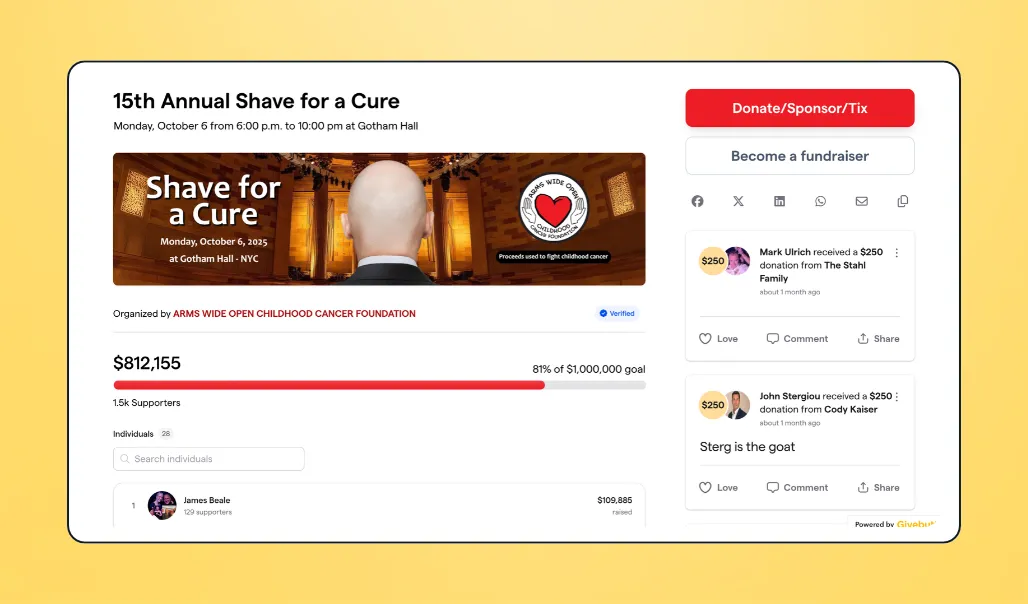
When you go to set up your next event, don’t ask how much it will raise. Ask whether someone would attend if you weren’t asking for money at all. If the answer is no, it’s not really an outreach event.
One additional tip we’d give with this strategy: give people a job when they show up, even a small one. Handing someone a name tag, a table, or a welcoming role does more for making them feel like they belong than a thank-you email ever could.
4. Partner with other nonprofits & civic groups 🤝
There’s probably a Rotary club, a PTA, a faith community, or another nonprofit in your area that’s already spent years earning trust from the exact people you’re trying to reach. And borrowing some of that trust is faster than building your own from zero.
We find that the partnerships that work are focused on long-lasting impact rather than a quick exchange. You can show up to volunteer at their event, ask to co-host a supply drive, or split a table at a community fair.
Start small and start local. Then, as you build your own credibility, you can reach for national alliances.
5. Tap into corporate social responsibility (CSR) opportunities 💼
Somewhere in your donor base, there’s likely someone who works for a company with a matching gift program. The problem is they didn’t know to ask, and you haven’t thought to remind them. Until now.
Corporate social responsibility (CSR) isn’t only about cash. Volunteer grants pay your nonprofit when an employee logs hours with you. Event sponsorships cover a line item you would otherwise pay for yourself.
None of this requires a formal partnership, and it can be accomplished with one email to a company’s community relations contact, or a line on your fundraising page reminding donors to check if their employee matches.
6. Go digital with your community outreach 💻
Email blasts can be a great way to get information out to your community. We believe that so much that we have features as part of the Givebutter platform that make it easier to do and more impactful to deliver.
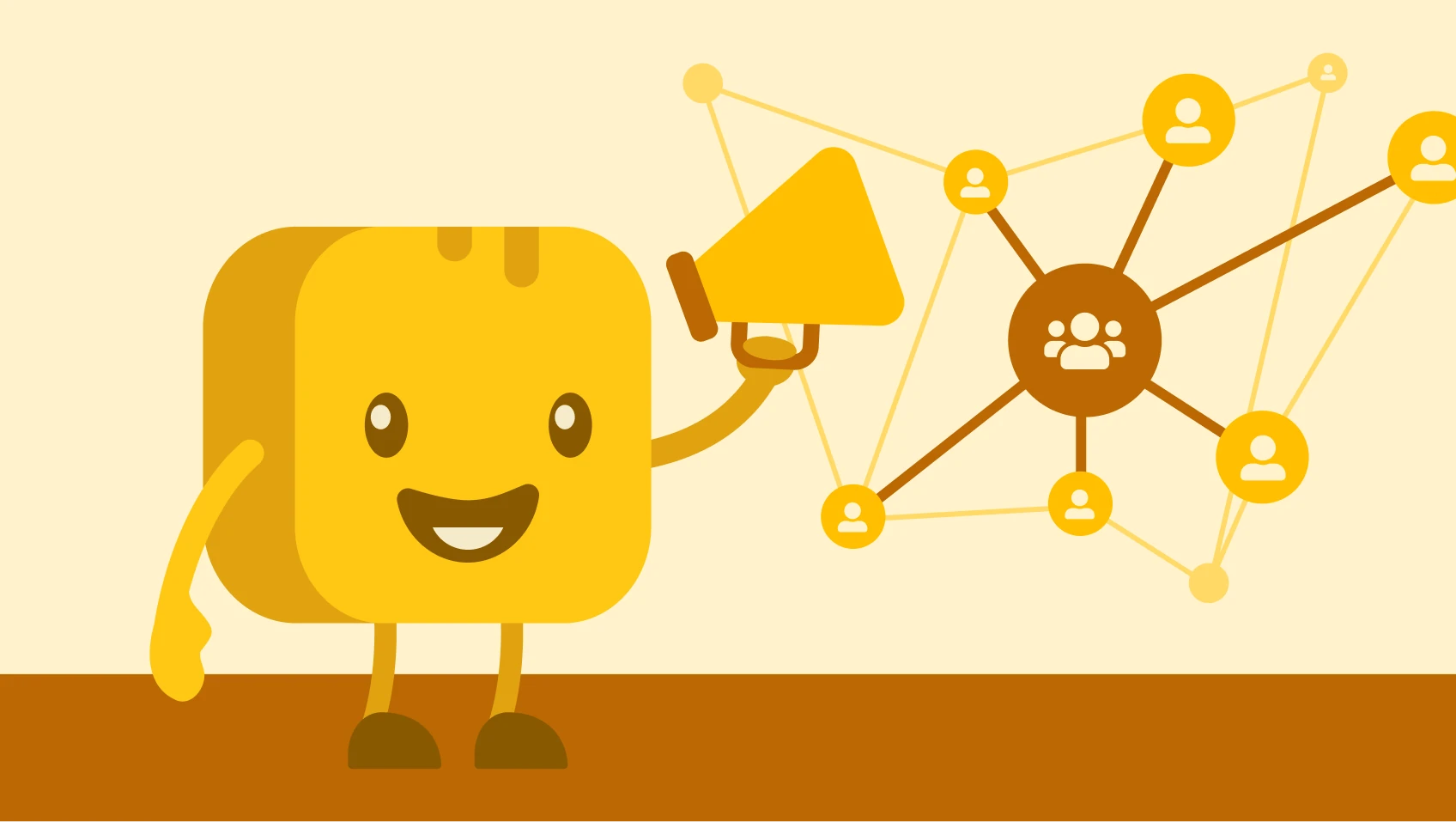
But emailing a mailing list is usually a one-way conversation. Whereas a digital community lets your audience talk back (to you and to each other).
That’s a shift Cameron Ripley, CEO of Community Boost, has watched play out across the nonprofit sector. First came in-person events, then peer-to-peer fundraising, then recurring giving, and now digital communities are the frontier most nonprofits haven’t built yet. “We see it as a revolution,” he says of the shift toward this kind of community-first thinking.
“We envision this transformative horizon of community-first marketing; for us, it isn’t just a strategy; it’s a revolution.” - Cameron Ripley, CEO of Community Boost
It can be as simple as creating a private Facebook group or a space on a platform like Mighty Networks. As long as it’s somewhere your most engaged supporters can communicate between campaigns as well as receive updates, it can work.
7. Use peer-to-peer fundraising to turn supporters into community ambassadors 📣
Your most connected supporters can reach people you never could. Their coworkers, their book club, their extended family at Thanksgiving.
Peer-to-peer fundraising turns their reach into something with structure, where each supporter gets their own fundraising page to share with their network on your nonprofit's behalf.
Value here goes beyond dollars raised. Every person who sets up a page becomes a small extension of your community team. On Givebutter’s fundraising platform, setting up peer-to-peer campaigns is free, with unlimited fundraising pages and real-time leaderboards that keep participants engaged.
8. Show up consistently on social media between asks 📱
📢 Note: Quick to start, especially if you already have the accounts set up.
Making time for posting on socials outside of promoting a campaign doesn’t always make the top of marketing’s to-do list. But that means your audience only associates your presence on accounts across platforms like Instagram and TikTok with monetary asks.
We recommend building your community with engagement between those moments. A volunteer photo, a quick update, a shout-out to a partner can facilitate a feeling of community that draws more people into the fold.
In his podcast episode with We Are For Good, Ripley points to Foster Alliance as an example: after building out a consistent, paid social and search presence, the organization reportedly raised over $125K through those channels with a return on ad spend north of 2,000%.
If more than one person touches your accounts, a lightweight social media policy keeps that consistency intact even as your team changes.
9. Close the loop & share impact 🔁
📢 Note: Quick to start because your very next donor or volunteer touchpoint can be the first.
Community outreach doesn’t have an “end.” It’s not really something you check off and move on from because a community is always changing: it either grows or goes stagnant.
And we know which one is better for recurring donations.
So, to keep that feel-good momentum of community engagement going, tell people what their involvement has accomplished. Then close that with the next step. It could be another event, another way to get involved, really, just another chance to show up.
A supporter who hears back after every contribution is more likely to become one you hear from again.
How community outreach turns into sustainable fundraising
Outreach is the first step in a longer relationship. Every conversation, event, and social post from the nine strategies above is your entry point. What determines whether a person becomes a one-time contact or a long-term supporter is what comes next.
Ripley put it plainly on the We Are For Good podcast: in Community Boost’s own research across thousands of nonprofits, recurring giving was one of the strongest predictors of which organizations hit their fundraising goals. That tracks with everything above. A recurring donor is someone whose relationship with your mission keeps deepening after the first touchpoint. A monthly giving program is one concrete way to invite that deepening on purpose, rather than hoping it happens.
“The ones that were most likely to hit their fundraising goals last year have implemented recurring giving” - Cameron Ripley, CEO of Community Boost
Community outreach won’t work, though, if you lose track of who’s who. A nonprofit CRM and fundraising platform like Givebutter lets you see relationships with each of your community members as they develop instead of losing the thread every time a new campaign starts.
You’ll know who has come to a cookout event before, who is more likely to volunteer again, who joined your digital community, and more.
Your community is out there, so go find them
Somewhere out there is a local leader ready to take your call, a supporter who would bring a friend or two to your next event, and a company that already supports missions like yours.
You just need to reach out consistently with the right strategies in place. You have nine now to get you started.
When you’re ready to bring outreach and fundraising into one place, Givebutter can help.
Givebutter’s core fundraising tools are free thanks to the Givebutter Guarantee. When you enable optional donor tips, your nonprofit pays $0 in platform and processing fees. If donors don’t cover the cost, Givebutter does so that every dollar raised stays with your mission while you build these relationships.

See Givebutter in action
Sign up for a free Givebutter account to get started today.
Community outreach strategy FAQs
What’s the difference between community outreach & marketing?
Marketing promotes something and drives people toward a specific action, like giving or signing up. Outreach builds the relationship that makes people want to say yes when that action comes. Outreach usually comes first.
How do small nonprofits do community outreach without a big budget?
Most of the highest-impact strategies here cost time, not money. Listening to your community, partnering with local groups, and posting consistently on social media are all free. The real investment is consistency, not budget.
How often should nonprofits engage their community?
Aim for at least one non-ask touchpoint a month, outside of any campaign or fundraising push. A social post, a quick update, or a thank-you all count. The goal is for your community to hear from you when you’re not asking for something.
What tools help nonprofits build community online?
Look for tools that combine peer-to-peer fundraising pages, recurring donations, and a CRM in one place. Platforms like Givebutter do this so you can grow your community and track those relationships as they develop, without piecing together separate tools.
Share this article