.svg)
.svg)
.svg)
.svg)
.svg)
.svg)
.svg)
.svg)
.svg)


.svg)
.svg)
.svg)
.svg)
.svg)
.svg)
.svg)
.svg)

.svg)
.svg)
.svg)

.svg)

.svg)
.svg)
.svg)
.svg)
.svg)


.svg)
.svg)
.svg)
.svg)
.svg)
.svg)
.svg)




.svg)


%20(1).png)

You've built a great campaign, set a donation goal, and shared it everywhere you can think of. But the donations are trickling in slowly, and it feels like not enough people are even seeing it.
One way to change that is influencer marketing. By partnering with the right social media creators, you can put your cause in front of thousands of new potential donors.
In this guide, we'll cover:
- What influencer marketing looks like for nonprofits
- Real examples of nonprofit influencer partnerships
- A step-by-step guide to building an influencer marketing strategy
- How to approach an influencer as a nonprofit
- Common mistakes nonprofits make with influencer marketing (and how to avoid them)
Key takeaways
- Influencer marketing works for nonprofits of any size, and you don't need celebrities or a big budget to start. Nano and micro-influencers often drive stronger engagement and cost little to nothing.
- Mission fit matters more than follower count. A smaller creator who genuinely cares about your cause will almost always outperform a larger one who doesn't.
- Your best influencers are often already connected to you. Engaged donors, volunteers, and board members make natural advocates because their support is genuine.
- Everything starts with your goal. Knowing whether you want to raise awareness, increase donations, recruit volunteers, or boost event attendance helps you choose the right influencer and platform.
- When you reach out to influencers, lead with the mission and give them room to use their own voice. Authentic content from a trusted creator is what moves people to act.
- Givebutter lets you create fundraising pages and peer-to-peer campaigns for free, so the attention your influencers drive can convert into donations.
What is influencer marketing for nonprofits?
Influencer marketing for nonprofits is a strategy where your organization partners with social media creators to promote your mission. Instead of selling products, influencers leverage their trusted voices to inspire their communities to donate, volunteer, or advocate for your cause.
Many nonprofits assume that achieving the best results with influencer marketing requires paying celebrities or influencers with millions of followers. But that’s not true. Nonprofits work with a whole spectrum of creators, from paid macro-influencers to unpaid micro-influencers, community ambassadors, and donor advocates who already support their work.
The influencer spectrum 🎯
Influencers range from megastars with millions of followers down to everyday supporters with just a few hundred. Here's a breakdown of the main types of influencers and what each one offers.
⭐ The takeaway: As you move up the spectrum, reach grows. But as you move down, trust and affordability tend to grow instead.
Why influencer marketing works differently for nonprofits 💛
Nonprofits have a built-in advantage that most brands don't: a mission. People love to share causes they believe in, which means your donors, volunteers, and board members are already natural influencers. The key is to activate them intentionally rather than hoping they post about your causes on their own.
Trust plays a part too. A lot of people are put off by influencer marketing that feels gimmicky, like a paid post that's clearly just a paycheck. When an influencer promotes a cause they actually care about, that post doesn't feel that way, because the motivation is genuine.
Feeling a bit overwhelmed by the pace of change with influencer marketing? Our Senior Social Media Manager, David, has a tip or two you may want to steal:
"Social media moves incredibly fast, and what works today might look different a few months from now. For busy nonprofit teams, you don't need to follow every trend—you just need a few trusted sources that help you stay informed. I regularly recommend Social Media Today, Social Media Examiner, Instagram Head Adam Mosseri's updates, and the blogs from Sprout Social and Hootsuite. They're great ways to keep up with creator trends and best practices that you can put into practice." — David Bier, Senior Social Media Manager at Givebutter
6 types of nonprofit influencer campaigns (with examples)
There's more than one way to run an influencer marketing campaign. Some rely on celebrities, others on volunteers or everyday supporters, while some are led by the founder themself.
Here are six types of nonprofit influencer campaigns with real-life examples:
1. Donor ambassador campaigns 🎗️
A donor ambassador campaign turns your most passionate existing donors into advocates who promote your cause across their own personal and professional networks. They use their own methods and resources to reach new people and raise money, so the work doesn't fall entirely on your team.
Take Phoebe Melikidse, a photographer who donates to the Tyler Robinson Foundation (TRF), a nonprofit founded by the band Imagine Dragons to support families dealing with pediatric cancer.
.webp)
On their Instagram page, TRF spotlighted Phoebe as a donor ambassador who sets up donation-based photo booths at events, where guests pose for photos and give what they can. All proceeds go to the foundation, and over the years, Phoebe and her family have raised more than $20K for the families it supports.
⭐ Why this method works
Donors usually aren't paid to advocate, so people tend to trust what they say. They've already put their own money behind the cause, which makes their endorsement carry weight.
Activating donors as ambassadors also deepens their connection to your organization and builds long-term loyalty. And since they're driven by the mission rather than a fee, they're a great fit for small nonprofits working with a tight budget or none at all.
2. Volunteer-as-creator campaigns 🎥
If you have volunteers, you can ask them to make videos documenting their experience working with your organization and share them on social media to reach new people. This kind of content feels honest because it comes from someone actually doing the work, rather than from your marketing team.
.webp)
A great example is the Peace Corps. While federally funded, this organization relies heavily on its active volunteers as the primary engine of recruitment and awareness. Volunteers create "Day In The Life" vlogs on YouTube, TikTok, and Instagram, covering everything from teaching local communities to navigating rural infrastructure.
Here’s one such video from Campbell Martin, a Peace Corps volunteer in the Gambia, documenting the restart of a school term. He takes viewers into his community to rally students, works alongside local teachers, and checks on his main project, a solar-powered community well.
⭐ Why this method works
With volunteer content, people can see your work in action rather than just hearing about it. Viewers get a window into what your organization actually does day-to-day, which builds trust far more effectively than a polished promotional post.
It also doubles as recruitment. People watching a volunteer do meaningful work can picture themselves in that role, and that's often what gets them to apply.

3. Local micro-influencer partnerships 📍
Some nonprofits partner with micro-influencers in a specific city or region. These creators have smaller but highly engaged followings, and because they're rooted in the local community, their audience tends to trust them and share their interests.
For example, in May 2026, Amnesty International Nigeria put out a call for young micro-influencers passionate about using their platforms to promote human rights, civic engagement, and ethical storytelling. Eligible applicants had to be based in Lagos, Abuja, or Enugu and have between 10,000 and 25,000 followers on at least one social media platform.
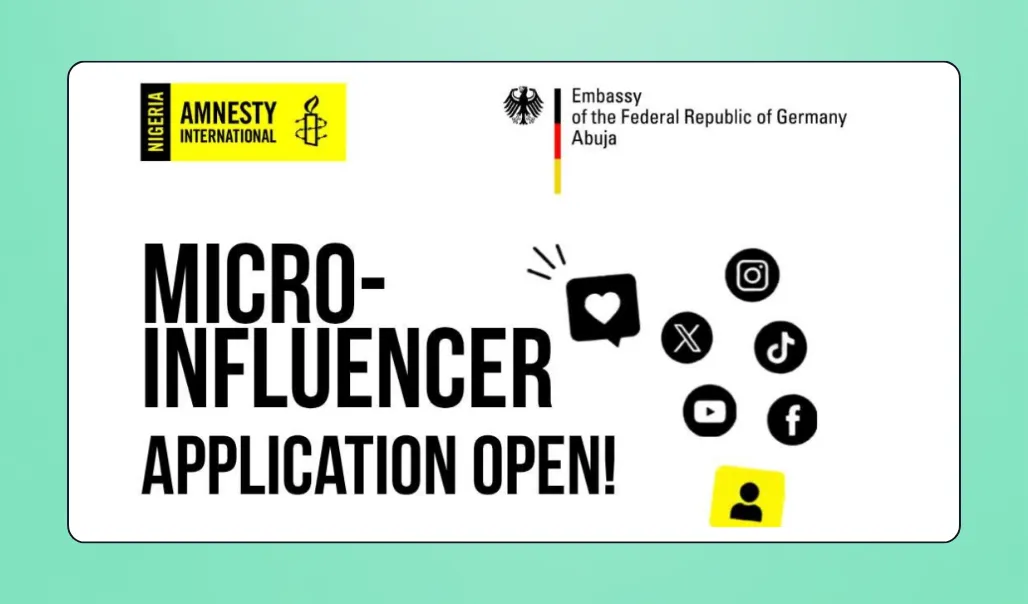
The selected creators joined a cohort that received advocacy training and mentorship, equipping them to create content that drives civic participation in their own communities.
⭐ Why this method works
Local micro-influencers speak directly to the people a nonprofit most wants to reach. Their followers are often in the same city or region, so the message lands with an audience that can actually show up, volunteer, or give locally.
These partnerships also tend to be affordable. Micro-influencers usually charge little or nothing compared to larger creators, which makes this a practical option for nonprofits working with a limited budget.
4. Cause-aligned creator collaborations 🤝
Some nonprofits partner with social media creators who already post about topics related to their cause (e.g., environmentalists, educators, or community advocates). The creator's existing interest does much of the work, since their audience already cares about the subject.
A great example is the #TeamSeas campaign. In 2021, The Ocean Cleanup and Ocean Conservancy teamed up with YouTubers Mark Rober (a former NASA engineer turned science creator) and MrBeast (Jimmy Donaldson, known for his large-scale philanthropy) to raise $30M to remove 30 million pounds of trash from the world's oceans, rivers, and beaches.
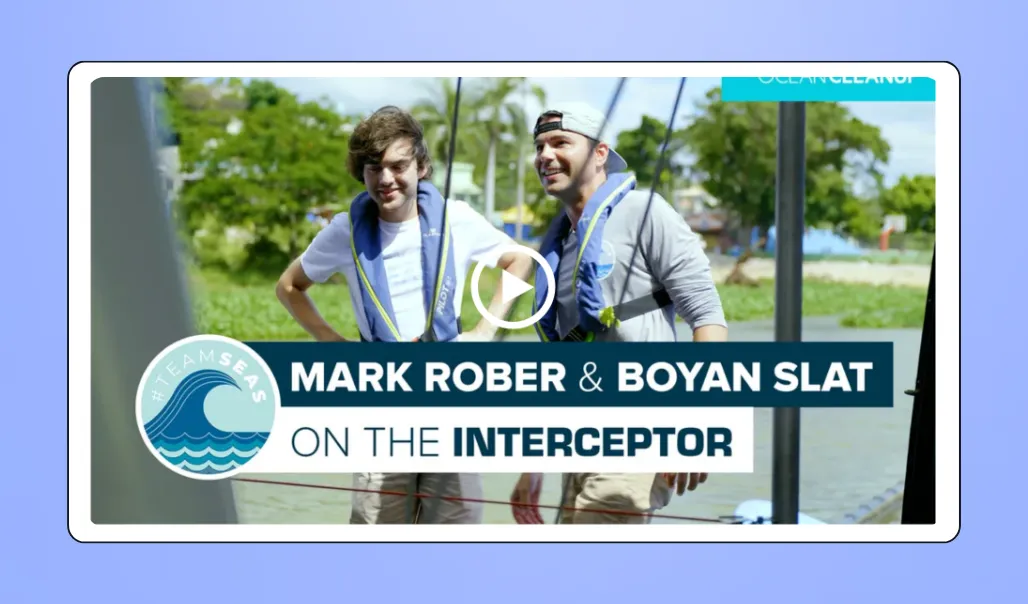
The execution matched each creator's brand. Mark Rober leaned into the engineering side, spotlighting The Ocean Cleanup's Interceptor, a solar-powered system that pulls trash from rivers before it reaches the ocean. MrBeast focused on mobilizing massive volunteer beach cleanups, which fit naturally with his reputation for big, hands-on philanthropy.
The campaign blew past its goal, raising over $33M and removing more than 34 million pounds of trash worldwide.
⭐ Why this method works
When you partner with creators who already align with your cause, the collaboration doesn't feel out of place to their followers. That shared interest is likely what drew people to the creator in the first place.
Rather than feeling like an ad, the campaign catches their attention and makes them more willing to give once they see they can make a tangible difference.
5. Peer-to-peer fundraising with influencer kickoff 🚀
Peer-to-peer (P2P) fundraising is an effective way to raise money because it mobilizes your supporters to reach people in their own circles. It works even better when an influencer kicks things off, since their following gives the campaign instant momentum.
.webp)
Take St. Jude Children's Research Hospital and its gaming initiative, St. Jude PLAY LIVE, as an example. In 2021, the hospital partnered with lilsimsie (Kayla Sims), a popular Twitch and YouTube creator known for streaming The Sims 4. They ran a fundraising campaign on Tiltify, a platform built for large, team-based P2P fundraising.
Rather than asking her audience for donations during a single stream, Kayla rallied her community, the "Simsie Squad," to launch their own team campaigns and fundraise alongside her, with each member reaching out to their own friends and followers. That year, her community raised over $369K.
Kayla now runs this month-long charity stream for St. Jude every year. As of June 2025, she'd raised over $3M in total.
⭐ Why this method works
A P2P campaign naturally multiplies your reach. Instead of one person asking their network, you have dozens or hundreds of supporters each sharing the cause with the people they know.
Having an influencer start things off gives the campaign momentum. Their audience already cares about what they have to say, so when the influencer rallies behind a cause, supporters are happy to pitch in and spread the word.
6. Celebrity-backed campaigns ⭐
Nonprofits without a large following of their own can partner with a celebrity to draw attention to their cause and raise money for their campaigns.
In 2016, Lin-Manuel Miranda, the creator of the Broadway musical Hamilton, partnered with Prizeo, a digital fundraising sweepstakes platform, to raise money for nonprofits like the Hispanic Federation, Planned Parenthood, and the Natural Resources Defense Council. Fans who donated online, starting at $10, were entered into a sweepstakes for a chance to win VIP tickets to see Hamilton.
.webp)
The campaigns targeted Miranda's large social media following, as well as Hamilton fans, Broadway fans, Latinos, and supporters of the various causes involved. Over the years, Miranda and his family have raised more than $7M through this effort.
⭐ Why this method works
A celebrity brings instant reach to a cause. Their fans are already paying attention, so a single post or campaign can put your nonprofit in front of millions of people in no time.
The pairing works even better when the celebrity has a clear connection to the cause. For instance, Miranda's Latino heritage aligns directly with the Hispanic Federation's mission, so supporting the organization made sense for him and gave fans a stronger reason to donate.
How to build a nonprofit influencer marketing strategy in 6 steps
The influencer marketing campaigns that raise money and bring in new supporters are the ones with a strategy behind them. Here are 6 steps to build an influencer marketing strategy that gets results.
Step 1: Define your campaign goal 🎯
Before you start looking for influencers to reach out to, you need to know exactly which goal you're trying to achieve. Are you trying to:
- Raise awareness for your cause or an upcoming initiative?
- Bring in donations?
- Get people to attend your event?
- Recruit new volunteers?
Your goal determines the type of influencer you should work with and the platform your campaign should run on.
💡 Pro tip: Pick one primary goal to keep the campaign focused. When a single campaign tries to raise awareness, drive donations, and fill an event all at once, the messaging gets muddled, which can negatively affect results.
Step 2: Identify your existing advocates 🔍
Once you've defined your goal, open up your CRM to find your most engaged donors.
Starting with people who've already supported you is a smart move, because they don't need convincing to care. They know your work and believe in it, which comes through when they share it with their own networks.
Take Phoebe with the Tyler Robinson Foundation, who used her photo booths to raise $20k for the cause. She wasn't a celebrity with millions of followers. She was just someone close to the mission who used what she had to support it.
Givebutter's free donor CRM makes it easy to identify your advocates. You can see all your donors at a glance and spot which ones have given the most or shown the most interest over time. Make a note of those people because they’re your starting lineup.
Step 3: Find the right external creators 🔎
Now it's time to find the actual influencers to reach out to. If you already know a couple of people on the social media platforms you use, jot down their names and handles. If you don't know anyone yet, or you just want more options, here are a few things to try:
- Search hashtags relevant to your cause on Instagram and TikTok to see who's already posting about issues your nonprofit solves
- Use Meta Creator Marketplace, an official matchmaking tool that connects brands with eligible creators on Instagram and Facebook. It's built for brands, but nonprofits can use it too
- Look through your own followers and tagged posts to see who's already engaging with your content
- Check who follows and interacts with similar nonprofits in your space
- Ask your team and board members if they know any social media creators who care about your cause
By the end, you should have a list of people who could be a good fit.
💡 Pro tip: When deciding who to actually reach out to, don't stop at follower count. Look at how well their followers engage with their posts, since that's what tells you whether people care about what they have to say.
For example, someone with 700k followers might average fewer than 1k likes per post, while someone with 50k followers might average 3-4k likes per post. The second creator has a smaller audience but a far more engaged one, and that's what drives action.
Step 4: Make outreach personal & mission-first 💬
By now, you likely have a final list of influencers to reach out to. When you contact them, lead with the cause. Your message should include:
- What your nonprofit does
- Your impact numbers, like the number of people, families, communities, animals, etc., you've helped
- What your campaign is about
- A working link to the donation page
- What you need from them and why they're a good fit for it
Keep it genuine and specific because creators get partnership offers all the time, and they (or their teams) can usually tell the difference between a thoughtful message about your mission and a copy-paste request blasted out to 50 people.
Step 5: Give them what they need to succeed 🤝
After sending your initial DM or email, you'll likely get some positive responses. When you do, follow up with everything the influencer needs to make compelling content about your cause, including:
- A working campaign link (if you use Givebutter, share your Givebutter campaign page link)
- Key stats about your mission/the problem you're working to solve
- 2-3 content ideas they can run with
- Any photos, videos, or branding assets they can use in their posts
- A few key messages or facts you want them to get right
💡 Pro tip: While you want the content to accurately represent your organization and your work, give the influencer space to use their own voice. Their personality is what endears them to their audience, and that authenticity drives conversions.
Step 6: Track, celebrate & build relationships 📈
Once the content goes live, monitor your referral traffic to see how many people are clicking through to your campaign and donating from the influencer's content. You can do this with unique campaign links, or if you're using Givebutter, with Givebutter's UTM parameters.
At the end of the campaign, send a personal thank-you note to each influencer you worked with, along with their pay (if this applies). Share the impact of the content they made, whether that's the donations received, the volunteers recruited, the new followers you gained, or the people who showed up to your event.
💡 Pro tip: If you worked with multiple influencers, this is a good time to compare how each one performed. Focus your energy and future partnerships on the creators who drove the most impact, and you'll build a roster of advocates worth coming back to.
How to approach an influencer as a nonprofit
Reaching out to an influencer can feel intimidating, especially if they have a large following and you're a small team. But creators partner with causes all the time, and a thoughtful approach goes a long way. Here's how to do it right.
Before you reach out, do your homework 🔍
Doing a little due diligence into each influencer increases your chances of getting a yes. Before you send anything, take time to:
- Confirm they've engaged with content related to your cause before (IG reposts are a great place to look)
- Know their audience demographics and whether they overlap with your donor base
- Have a specific ask ready, like a campaign share, an event mention, or co-hosting a fundraiser
- Check how they've worked with other organizations or brands to get a feel for their style
- Make sure their values and public image align with your mission
How to write your outreach message ✍️
The exact message you send will vary based on what your organization does and what you want from the partnership, but these guidelines apply across the board:
- Lead with the mission, not your organization’s name. Explain why they should care about your cause.
- Be specific with your goal. "We're raising $20K to provide 1,000 meals in [City] this winter" beats "We're a local food bank."
- Keep it short. A DM or email, 3–5 sentences long, is enough. If they're interested, they'll ask for more information.
- Be transparent about what you're asking for and what, if anything, you can offer in return.
- Avoid legal-sounding language, an overly formal tone, or implying they owe you because it's for charity.
What to offer in return 💛
If you're a small nonprofit, you probably don't have a big budget for an influencer campaign. That's okay. There are still things you can offer, and you should be upfront and creative about them:
- Recognition: A public shoutout, campaign credit, or a feature in your newsletter or on your social channels.
- Access: A behind-the-scenes tour, impact stories, or an intro to the people you help (with their consent).
- Experience: A VIP invite to your gala, an event host opportunity, or an exclusive volunteer day.
- Payment: If there is a budget, be transparent about it. Don't hint at pay and then walk it back
What to do when they say yes (and when they say no) ✅
Outreach usually ends one of three ways: a yes, a no, or total silence.
- If they say yes, send a simple one-pager with your campaign link, key stats about your mission, 2-3 content ideas, and a timeline. Never hand them a fundraising script to follow word-for-word. Instead, give them direction and let them bring their own voice.
- If they say no, thank them, ask if they'd like to stay on your list for future campaigns, and move on graciously. A no today can turn into a yes down the line.
- If you get no response, send a polite follow-up after 5-7 days. If you still hear nothing, respect the silence and move on.
Social platforms to prioritize for nonprofit influencer marketing
The right social media platform for influencer marketing depends on your goals and who you're trying to reach. Here's a quick look at where nonprofit influencer marketing tends to work best.
- Instagram: Use Stories and Reels to expand your reach. You can use a Meta or Instagram integration to automatically add a donate button to your content.
- TikTok: TikTok is a great way to reach younger donors and spark virality. It's low-budget and relies heavily on the creator's authenticity to succeed.
- Facebook: To reach older donor demographics, try sharing your campaign link on Facebook. If you use Givebutter, you can integrate it with Meta to automatically add a donate button, image, and progress bar when you share your campaign link.
- LinkedIn: This platform is underused in the nonprofit space, but it works well for corporate cause campaigns and professional networks. You can integrate Givebutter directly to LinkedIn for one-click social sharing and UTM tracking.
- YouTube: This platform is great for long-form impact storytelling. The production bar is higher, but the content has a much longer shelf life. Plus, there’s a native YouTube integration with Givebutter.
- Twitch: This platform is built for livestream fundraising, and it's where many peer-to-peer gaming streams and charity marathons take place. With Givebutter’s native Twitch integration, you can stream directly on your event page.
Common mistakes nonprofits make with influencer marketing (& how to avoid them)
Influencer marketing can do a lot for your nonprofit, but there are a few common missteps that can hold your campaigns back. Here's what to watch out for, and how to steer clear.
- Chasing follower count over mission fit: A creator with 500K followers who doesn't care about your cause will underperform an advocate with 5K followers who does. Focus on how well a creator fits your cause, rather than how big their following is.
- Over-scripting content: Influencer content should sound like the creator, not your press release. Give direction, then let them say it their way.
- One-and-done outreach: Try to build ongoing relationships with creators instead of reaching out only when you need something. The ones you stay in touch with are far easier to work with the second or third time around.
- No tracking in place: If you're not measuring referral traffic and donations, you can't tell what worked or improve next time. Set up unique links before anything goes live so you can know exactly how well the content is doing.
- Missing or unclear disclosures: Sponsored or paid partnerships must be disclosed, and skipping this can land both you and the creator in hot water. Make sure partners tag posts clearly.
- Picking the wrong platform: Running a campaign on a platform where your audience isn't active wastes everyone's effort. Match the platform to the donors you're trying to reach.
Make the most of fundraising with influencers
Partnering with social media influencers is a great way to get more eyes on your campaign and raise more money. However, you don't need a celebrity or a big budget to make it work. If you're a small nonprofit or have no budget at all, you can activate your donors and volunteers or team up with micro-influencers to spread the word.
Whoever you choose to partner with, you'll need a working campaign page to collect donations. Givebutter lets you create donation forms and fundraising pages to share with influencers during a partnership, all for free. You also get UTM tracking links for each page, so you can see how much traffic and how many donations each influencer drove.
.png)
Expand your reach with free nonprofit marketing software
To get started, sign up for Givebutter today!
Frequently asked questions
What is a nonprofit brand ambassador?
A brand ambassador is a donor, volunteer, or community figure who promotes your organization consistently over time. The difference between a regular influencer and a brand ambassador is the relationship.
Ambassadors stick with you across campaigns instead of partnering once and moving on. They’re also great for peer-to-peer fundraising pages, as each ambassador can run their own page for your cause.
Can small nonprofits use influencer marketing?
Yes, they can, and nano and micro influencers are the ideal place to start. Small organizations often have tighter community ties, which makes outreach easier than it is for big institutions.
If you’re a small nonprofit, you don't need a marketing team or a budget to get going. A handful of engaged supporters and a clear ask are enough to run your first campaign.
How do I find influencers for my nonprofit?
Start close to home and work outward:
- Look within your own network first to find engaged donors, active volunteers, and board members with social followings.
- See who already follows or engages with your campaign page.
- Search mission-relevant hashtags on Instagram and TikTok to find influencers posting content that aligns with your cause.
- Use Meta's Creator Marketplace to discover creators on Facebook and Instagram.
Share this article




.svg)
.svg)