.svg)
.svg)
.svg)
.svg)
.svg)
.svg)
.svg)
.svg)
.svg)


.svg)
.svg)
.svg)
.svg)
.svg)
.svg)
.svg)
.svg)

.svg)
.svg)
.svg)

.svg)

.svg)
.svg)
.svg)
.svg)
.svg)


.svg)
.svg)
.svg)
.svg)
.svg)
.svg)
.svg)




.svg)


%20(1).png)

A nonprofit coordinator films a 60-second iPhone video of a program participant describing how the organization changed their life. Quick but authentic, the video surprises the team by generating 10x as many donations as their polished studio reel from last year.
That's because authentic video storytelling, not high-production quality, is what inspires donors to give.
In this article, we’ll cover everything you need to know about successful nonprofit video storytelling, including a practical, step-by-step framework for finding the right stories, telling them effectively, and getting beneficiaries on camera, all without expensive equipment or a massive marketing team.
Key takeaways
- Get beneficiary consent first ✅ Explain how the video will be used, get permission before recording, and make sure participants feel comfortable saying no.
- Collect stories over time 💬 Keep a running list of quotes and moments that move you emotionally so you’re never scrambling on deadline.
- Prioritize stories over production 💛 A meaningful story told in someone’s own words can create connection without expensive equipment or elaborate editing.
- Use a nonprofit video storytelling technique 📖 A testimonial, transformation, or tag-along-with-me video can help you tell stories that resonate.
- Put your stories to work with Givebutter 🧈 Embed video stories on free fundraising pages, and use Givebutter Plus to record, send, and track personal video thank-yous.
What is nonprofit video storytelling?
Nonprofit video storytelling is the process of using short videos to put a human face on your work. It brings your mission to life through people’s experiences, showing supporters what your organization does and why it matters.
A strong storytelling video goes beyond describing a program. It might follow a volunteer through a food distribution day or let a participant explain what receiving support meant to them. Specific moments help viewers connect your mission to everyday life.
Storytelling also plays a role in nonprofit outreach. According to M+R’s 2026 Benchmarks, 83% of nonprofits with paid influencer campaigns used those partnerships for narrative or persuasion work. While the finding isn’t specific to video, it shows that these partnerships often serve purposes beyond direct fundraising asks.
Whether filmed on a phone or professionally produced, the foundation is the same—a clear story, an authentic voice, and a reason for your audience to care.
How to find & share stories worth telling
Before you start filming, focus on the most important part of nonprofit video storytelling—finding stories that resonate with viewers and connect your mission to real experiences.
1. Build your story bank 💛
Scrambling for a story before a deadline can make it harder to find the right person and give them time to prepare. Create an ongoing inventory of story ideas so your team isn’t starting from scratch whenever it needs content.
Here’s what that might look like:
- Keep a simple story tracker: Record a one-line story summary, a staff contact, the participant’s interest in sharing, and their consent status. Include staff, volunteers, and donors alongside program participants.
- Use your CRM where it fits: Keep relevant donor stories and outreach notes alongside their records in your nonprofit CRM, so your team can follow up.
- Create recurring “story mining” touchpoints: Encourage staff to notice meaningful moments, memorable quotes, and program milestones. Add a short story-sharing prompt to an existing team meeting.
- Develop a short intake form: Give staff an easy way to suggest a story, explain why it matters, and identify who could help tell it.
- Prepare willing participants: Meet without a camera first, explain the questions you’ll ask, and discuss where the video will appear. Offer a chance to review the final edit before publication.
- Get clear, informed consent: Obtain permission before recording and publishing. Make sure participants know they can decline, skip questions, or stop the interview without affecting the support they receive.
2. Ask questions that surface genuine emotion 🤔
Scripted interviews can come off as stiff and unnatural. Instead, ask open-ended questions that help participants describe their experiences in their own words:
- “How did you first connect with [organization or program]?”
- “Can you describe a moment that stands out to you?”
- “What changed for you, and what helped make that change possible?”
- “What does a typical day look like for you now?”
- “What would you tell someone hesitant to ask for help?”
- “What would you like supporters to understand about your experience?”
Follow up with “Can you tell me more?” or “What happened next?” to uncover specific details.
Give people time to answer, let silence breathe, and avoid coaching their responses. They don’t need to share painful or private experiences to tell a meaningful story.
3. Focus on what feels real 🫂
Once you have the content you need, choose one meaningful moment to build your video around. A participant describing their first day in a program or a volunteer explaining why they keep coming back can give viewers something specific to connect with.
Let that person’s words carry the story. Use footage of the places and activities they describe to bring their experience to life, and keep natural pauses when they add meaning. You don’t need to include every answer or make someone sound more polished than they are.
Before sharing, give the participant a chance to review the video. Does it reflect what they wanted to say? Will viewers understand why this story matters?

Nonprofit video storytelling techniques to help you find your angle
These three video storytelling techniques give your story a clear shape, helping viewers follow someone’s experience and understand how it connects to your mission.
1. The testimonial ❤️🩹
A testimonial centers on one person sharing their experience in their own words. It could feature a program participant, volunteer, or donor explaining what your organization means to them.
Your role is to ask open-ended questions and listen. Avoid scripting responses, over-coaching the speaker, or cutting every emotional pause to “clean up” the footage.
Build the video around one memorable experience: what happened, why it mattered, and what the person wants viewers to understand.
🎬 Try this: Ask a longtime volunteer, “What’s one moment that reminded you why you do this work?” Use their answer alongside footage of the activity they describe.
🎯 Best for: Building trust, introducing community voices, showing why people support your mission.
2. The transformation 💪
The transformation technique follows a before-during-after structure. It introduces someone’s situation, explores what helped change it, and shows where they are now.
Let the participant define what progress means to them. Explain how your nonprofit and donors contributed while keeping the person’s own choices and efforts central to the story.
Use supporting footage to make the change visible, such as someone practicing a skill, participating in a program, or working toward a goal. The story doesn’t need a perfect ending to be meaningful.
🎬 Try this: Follow a student who joined a tutoring program. Let them describe a challenge, the support they received, and something they now feel confident doing.
🎯 Best for: Showing program outcomes, sharing impact updates, connecting donations to change.
3. The tag-along-with-me 👋
A day-in-the-life or tag-along-with-me video follows a staff member, volunteer, or program participant through a typical day or session, giving supporters an inside look at your mission.
This approach is especially useful when your work is easier to show than explain, or when someone prefers being filmed during an activity to sitting for an interview.
Give the video a simple beginning, middle, and end. Show what the person sets out to do, the work along the way, and what happens as a result. Brief narration or on-screen text can help viewers follow along.
🎬 Try this: Follow a food bank volunteer from preparing grocery boxes to setting up distribution. Capture the small details that help supporters understand the care behind each box.
🎯 Best for: Behind-the-scenes stories, volunteer recruitment, showing how programs operate.
Your next nonprofit video story starts here
You don’t need to tell your organization’s whole story in one video. Start with one person, one meaningful moment, and a clear idea of what you want supporters to understand.
This week, invite a willing participant, volunteer, or staff member to share an experience. Ask an open-ended question, listen, and build your first video around what they want to say.
Givebutter helps you connect those stories to your fundraising. Embed videos on free fundraising pages so supporters can watch and give in the same place. With Givebutter Plus video messages, you can also bring a personal touch to donor outreach—record, upload, or reuse a video, send it by email, and track views and reactions on the donor’s contact profile.
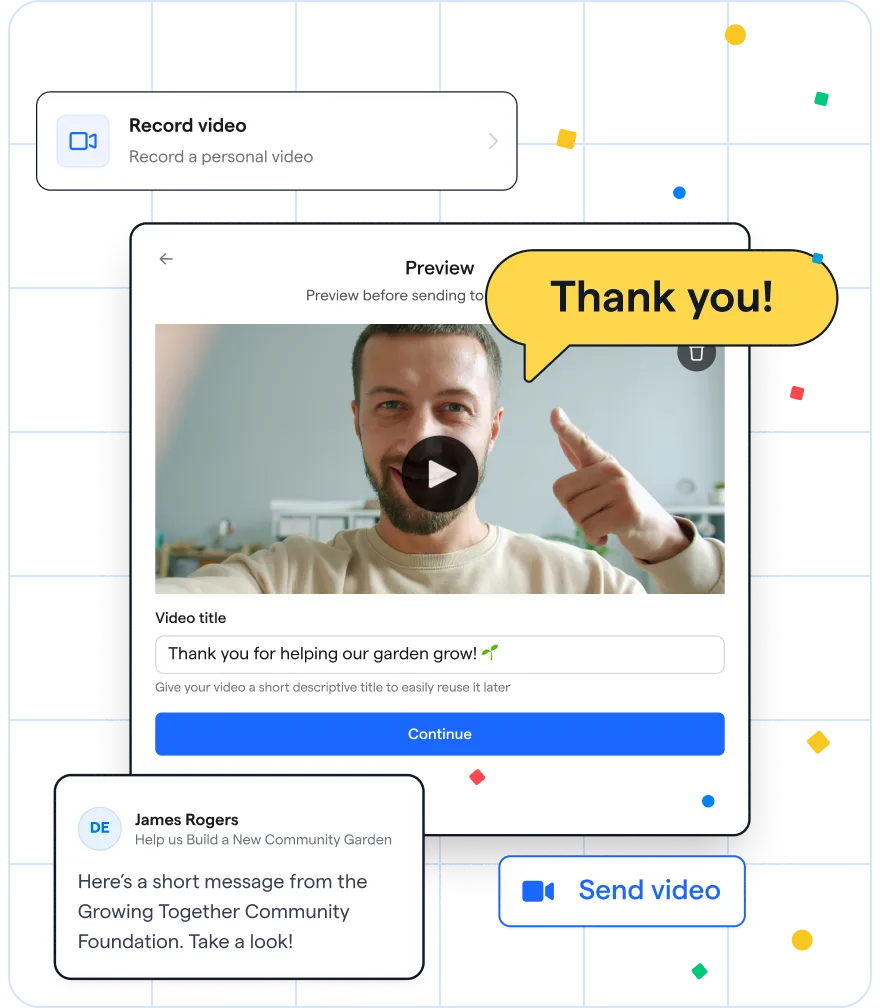
Connect with donors through personal video messages
Your community already has stories worth sharing. Get started with Givebutter and give supporters a closer look at the mission they help make possible.
FAQs about nonprofit video storytelling
What makes a good nonprofit storytelling video?
A good nonprofit storytelling video centers on a specific experience, an authentic voice, and a clear takeaway. Ask open-ended questions, let participants speak in their own words, and show how their story connects to your mission. Thoughtful editing should support their message and preserve its meaning.
How do nonprofits use video storytelling?
Nonprofits use video storytelling for fundraising campaigns, donor thank-yous, social media, and their websites. Testimonials can introduce your mission, transformation stories can show what donations helped accomplish, and day-in-the-life videos can give supporters a closer look at your work.
How do I help a nervous beneficiary feel comfortable on camera?
Meet without a camera first, explain where the video will appear, and get permission before recording. Let them skip questions, take breaks, or decline entirely. Offer a chance to review the final edit, and keep the interview conversational so they can share their experience without pressure to perform.
Share this article







.svg)
.svg)