.svg)
.svg)
.svg)
.svg)
.svg)
.svg)
.svg)
.svg)
.svg)

.svg)
.svg)
.svg)
.svg)
.svg)
.svg)
.svg)
.svg)

.svg)
.svg)
.svg)

.svg)

.svg)
.svg)
.svg)
.svg)
.svg)


.svg)
.svg)
.svg)
.svg)
.svg)
.svg)
.svg)




.svg)


%20(1).png)

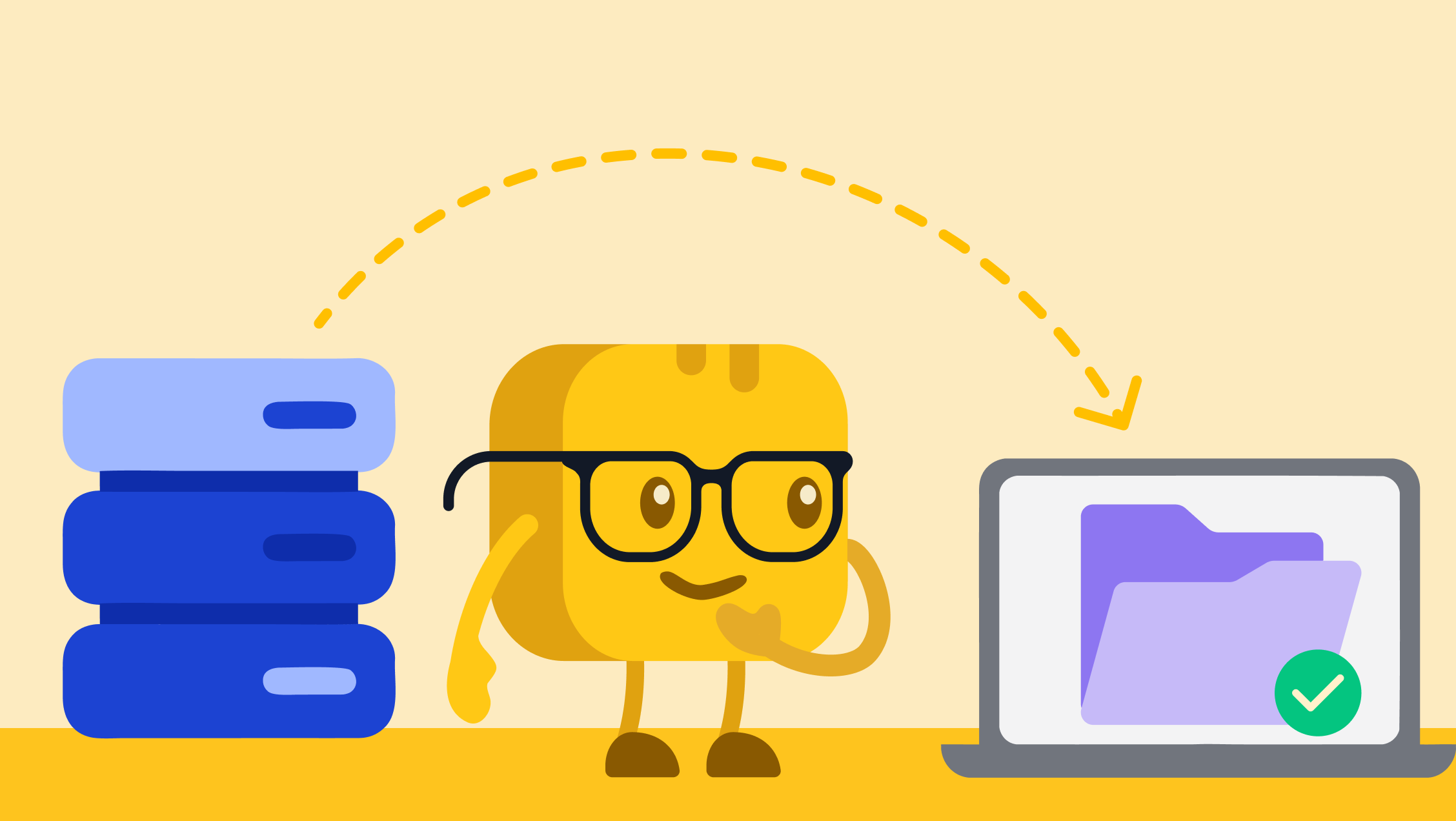
The thought of moving years of donor data from one CRM to another is enough to make even the most seasoned nonprofit pro break into a cold sweat. Duplicate records, lost giving history, lapsed recurring gifts: the what-ifs pile up fast.
But the import itself is the easy part. Most of the work happens before you move a single record. Once your data is prepped, a nonprofit data migration can wrap up in just a few days.
This guide breaks down CRM data migration best practices into six simple best practices, from auditing and cleaning your data to mapping, importing, and verifying it. Follow along to build a CRM migration plan that protects your donor history and sets your team up for success.
Key takeaways
- Start with an audit 📒 Review the data in your current CRM and export a full master backup before you change anything.
- Clean your data 🧽 Merge duplicate profiles, fill in missing fields, and standardize formatting before you migrate.
- Map your data fields 🗺️ Build a field-mapping spreadsheet that matches each field in your old CRM to its new home.
- Start small 🌱 Import 20–30 contacts first to test your data mapping before completing the full migration.
- Migrate recurring giving 💸 Plan a separate step for recurring donors so their gifts keep going without interruption.
- Double-check your data 👀 Confirm your contact count, gift totals, and recurring plans match your backup, then spot-check a handful of donor profiles.
- Choose a platform that makes migration seamless 🧈 Givebutter makes CRM migration smooth as butter with import templates and automatic mapping, or you can opt for Magic Migration and let Givebutter do the heavy lifting.
What is CRM data migration?
CRM data migration is the process of moving your donor records, giving history, recurring gift plans, and other supporter data from one CRM to another. Unlike starting from scratch, a nonprofit CRM migration preserves the relationships and history your team has built, so you can pick up where you left off.
Most migrations follow the same path: audit your data, clean it, map it to the new system, import it, and verify the results.
CRM data migration best practices for nonprofits
A new CRM means moving years of donor relationships, giving history, and hard-won stewardship. It's a big job, and it's also a chance to start fresh with data your team can trust.
When it comes to database migration for nonprofits, the more organized your data is going in, the smoother the move will be. These six best practices will help your nonprofit make the switch without the stress.
1. Audit your data & back it up first 🔍
Before you move anything, get a clear picture of what you're working with. Take note of:
- Your total number of contacts
- How many duplicate records you may have
- How many active recurring donors you have
- Which custom fields your team still uses
Then export a full master copy of your CRM data before making any changes. This backup protects your donor history if anything needs to be restored later. Givebutter's import and migration resources include templates that can help guide your audit.
2. Clean your data before you migrate 🧹
Cleaning your data is the most important part of any CRM migration. Duplicates and inconsistent formatting follow you into a new system, so time spent here saves your team hours of cleanup after launch. Focus on:
- Merging duplicate donor records
- Standardizing names, addresses, and date formats
- Filling in missing required fields, like first names and email addresses
- Archiving lapsed donors instead of deleting them, so their history stays on record
Clean records also lay the groundwork for strong nonprofit database management long after the move is done.
💡 Pro tip: Givebutter automatically merges contacts with matching names and the same email or phone number, and it flags potential duplicates for you to review.

3. Map every field before you import 🗺️
Data mapping is the process of deciding where each piece of information lives in your new CRM. Every field in your old system needs a matching destination.
For example, a "Full Name" field might need to split into "First Name" and "Last Name." Custom fields your team relies on may also need to be created in your new CRM before you import. A simple spreadsheet that lists each old field next to its new match keeps everything organized.
💡 Pro tip: For additional hands-on support with your move, explore Givebutter's Magic Migration services and let us do the heavy lifting for you.
4. Test a small batch, then import in order 🌱
Start by importing 20–30 contacts. Check how their custom fields and giving history look in your new CRM, then adjust your mapping if anything looks off. You can delete a test import and start again as many times as you need.
Once your test batch looks right, import your data in this order:
- Contacts: Individuals and companies
- Transactions: Including offline gifts, so each donor's full donation history comes with them
- Soft credits: So every gift is credited to the right people
This order makes sure every gift links to the correct donor profile. Givebutter's importing and migration tools include templates, automatic mapping, and a chance to review everything before you import.
5. Give recurring donors their own plan 💳
Recurring donors are some of your most loyal supporters, and protecting those gifts deserves its own step. A smooth handoff keeps their giving on track without asking them to start over.
- If your current platform runs recurring gifts through Stripe, you can move those recurring giving plans to Givebutter without asking donors to re-enter payment info. Some platforms require a request to their support team or charge a fee, so check with your current provider first.
- If your platform doesn't use Stripe, ask your processor whether it can release donor payment tokens to a Stripe account. If it can't, ask recurring donors to set up a new gift on Givebutter.
Before the switch, send recurring donors a quick note letting them know the name on their bank or card statement will change.
💡 Pro tip: Recurring plans on your old platform won't cancel automatically. Cancel them before activating plans in your new CRM so no donor is charged twice.
6. Verify your data before you go live ✅
Before your team starts sending appeals or event invites, confirm everything transferred correctly. Check that:
- Your total contact count matches your backup, minus any duplicates you merged
- Your gift count and giving totals match your original export
- Your recurring plans appear correctly
- A sample of 10–15 donor profiles matches your records
Once everything checks out, you're ready to rebuild your donor segments and make your new CRM your team's source of truth.

Download your free CRM data migration checklist
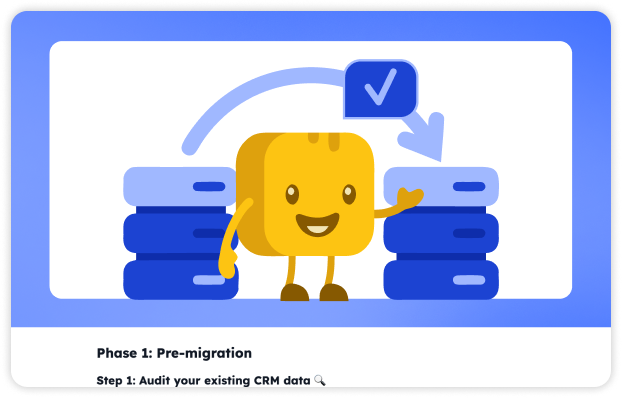
Keep every step on track with Givebutter's free CRM migration checklist. It organizes the process into 3 phases, so your team always knows what comes next:
- Pre-migration: Audit, clean, and map your donor data
- Migration: Run a test import, bring over your data in the right order, and move recurring plans
- Post-migration: Verify your records before your team goes live
Print it out or share it with your team, and check items off as you go!
Give your donor data a fresh start
If you've been putting off a CRM switch because migration feels daunting, you're in good company. The import itself is often the quickest part. The real work happens before you move a single record, and every hour spent auditing, cleaning, and mapping your data pays off in your new system.
Start with one small step this week: export a full backup and take stock of what you have. That first move makes the rest of your CRM migration strategy easier to plan, whichever platform you choose.
When you're ready, Givebutter supports you every step of the way with self-service import tools and additional hands-on support through Magic Migration. You'll also have all your fundraising tools in one place, from your nonprofit CRM to donation forms, events, and recurring giving. Your team can spend less time juggling systems and more time with donors.
Start your CRM migration to Givebutter today
Sign up for your free Givebutter account today and bring your donor data home.
FAQs about CRM data migration
How long does a CRM data migration take?
For nonprofits with clean, organized data, the import itself usually takes one to two days of active work. Preparation takes longer. Auditing, cleaning, and mapping can stretch the full project to several weeks, especially with a large database, years of duplicates, or recurring gifts to move.
Build that prep time into your plan from the start. Once your files are ready, data imported into Givebutter is ready to view in minutes.
What data should I migrate to a new CRM?
Migrate the data your team needs for fundraising, stewardship, reporting, and record-keeping. That typically includes contact records, giving history, active recurring plans, and the custom fields you still use. Leave behind unused fields, outdated codes, and clutter from past workflows.
A nonprofit database migration is also a chance to declutter, so archive inactive or incomplete records in a secure export instead of deleting them. A simple test helps: if a record or field doesn't support a current workflow, required report, or retention need, archive it rather than import it.
Should I clean my data before or after migrating?
Clean your data before you migrate. Duplicates, inconsistent formatting, and missing fields carry over into your new CRM, and they're harder to fix once they're mixed in with new activity. Cleaning first also makes the import itself faster and smoother.
Focus on merging duplicates, standardizing names and addresses, and filling in missing required fields. Givebutter automatically merges contacts with matching names and the same email or phone number, and it flags potential duplicates for review. Cleaning first catches what automation can miss, like nicknames or outdated addresses.
How do I avoid data loss during a CRM migration?
Three habits protect your data: export a full backup before you change anything, test with a small batch of 20–30 records before the full import, and verify your results afterward. Together, these give you a safety net, an early warning system, and proof that everything landed correctly.
When you verify, compare more than contact counts. Check gift totals, recurring plans, and a sample of individual donor profiles against your backup. Keep access to your old CRM until everything checks out.
How do you migrate recurring gifts when switching CRMs?
It depends on your payment processor. If your current platform uses Stripe, donors' payment details can be copied over to another Stripe-based platform, so they won't need to re-enter their card info. If it doesn't use Stripe, you may need to ask donors to set up a new recurring gift.
Givebutter offers a free recurring plan migration for Stripe-based platforms, plus an email template for asking donors to switch if you're coming from another processor. Cancel plans on your old platform before activating new ones so no one is charged twice.
What's the difference between CRM migration & CRM integration?
CRM migration is a one-time move of your existing data from an old system into a new one. CRM integration is an ongoing connection that keeps data flowing between your CRM and other tools, like your accounting software or email platform.
Do we need outside help for a CRM migration?
Many small-to-mid-sized nonprofits can handle a CRM migration themselves with clean data, a clear plan, and dedicated time. Outside help makes more sense if you have a large or complex database, messy data, many connected tools, or limited staff capacity to lead the project.
Before deciding, sketch a simple CRM migration project plan: estimate how much cleanup your data needs and who on your team can own the work. Givebutter offers self-service import tools and templates, plus additional hands-on support through Magic Migration.
When can we stop using our old CRM?
Keep your old CRM until you've verified your migrated data, rebuilt your key reports, and confirmed that recurring gifts and integrations are working.
Plan a short validation window after go-live, then archive a final export before closing the old account. That way, your full donor history stays accessible even after the switch.
Share this article


.webp)


.svg)
.svg)