.svg)
.svg)
.svg)
.svg)
.svg)
.svg)
.svg)
.svg)
.svg)


.svg)
.svg)
.svg)
.svg)
.svg)
.svg)
.svg)
.svg)

.svg)
.svg)
.svg)

.svg)

.svg)
.svg)
.svg)
.svg)
.svg)


.svg)
.svg)
.svg)
.svg)
.svg)
.svg)
.svg)




.svg)


%20(1).png)

You start a new development role, open the CRM, and find duplicate donor profiles, missing emails, inconsistent tags, and years of records spread across spreadsheets and other platforms. Before you can send an appeal or prepare a board report, you have to determine which data you can trust.
The problem rarely comes from one bad decision. It builds gradually as staff members change, records move between platforms, and different people follow different data entry habits. Eventually, no one fully trusts the donor database—and no one wants to tackle the cleanup.
This guide breaks nonprofit database management into six practical steps for auditing your records, correcting common issues, and establishing a sustainable nonprofit data management routine. You’ll also get a free nonprofit database cleanup checklist to guide your first audit and keep your donor data tidy over time.
Key takeaways
- Start with a full audit 🔍 Export and review your donor data before making changes so you understand the size and scope of the cleanup.
- Prioritize high-impact issues 📋 Address duplicate records, missing contact details, invalid information, and inconsistent formatting first.
- Set shared data standards 📐 Create clear rules for names, contact information, custom fields, and tags so the same problems don’t return.
- Make maintenance a habit ⏰ Review new records monthly, conduct a deeper audit quarterly, and check your database before major appeals.
- Stay organized with Givebutter 🧈 Its nonprofit CRM centralizes donor records, while Givebutter Plus helps automate data hygiene.
What is nonprofit database management & why does it matter?
Nonprofit database management is the ongoing practice of organizing, cleaning, and maintaining contact records so your donor database remains useful for fundraising and reporting. It covers donor details, giving history, activities, relationships, tags, custom fields, and communication preferences.
Without a consistent system, duplicate records can trigger repeated appeals, invalid emails can hurt campaign performance, and incomplete giving histories can make donor counts and board reports unreliable. Regular database maintenance helps your team prevent these problems before they affect supporter relationships or fundraising decisions.

6 steps for better nonprofit database management
Database cleanup can feel a little like opening an overstuffed junk drawer: You know there’s valuable information in there, but first, you need to see what you’re working with.
Whether you’re staying with your current platform or migrating to a new one, these six steps will help you audit your records, fix common issues, and build a maintenance routine that keeps the mess from creeping back.
1. Export & review your contact list 📋
Start by exporting your full contact list from your CRM. Save an untouched copy as a backup, then note your total number of records so you have a baseline for your audit.
Scan your list for obvious issues like test entries, missing emails, names entered in the wrong fields, and inconsistent organization names. Don’t worry about fixing everything at once—your goal is to understand what needs attention.
💡 Pro tip: Switching CRMs doesn’t have to mean rebuilding your database from scratch. Magic Migration takes the heavy lifting off your plate by extracting and mapping your donor data for Givebutter.
2. Identify & merge duplicates 🔍
Duplicate contacts happen. A supporter may donate with one email address, register for an event with another, or enter their name slightly differently the second time around.
Sort or search by name, primary email, and phone number to surface likely matches. Before merging two records, review both and choose which information should remain primary.
💡 Pro tip: Givebutter automatically flags potential duplicate individual contacts so you can review and merge them in one place.
3. Check for missing or inconsistent data ⚠️
Donor information has a habit of hiding in newsletter sign-up sheets, event registrations, email inboxes, and the occasional sticky note. Review the places where your team collects information and add any verified details missing from your database.
Prioritize each supporter’s name, at least one reliable way to contact them, and an accurate giving history. Then, standardize the records you keep. For example, use “John Smith” instead of mixing “John Smith” and “Smith, John,” and choose one format for phone numbers, state names, and capitalization.
💡 Pro tip: Not every field needs to be perfect or complete. Clean, consistent, and useful beats filling in information your team doesn’t actually need.
4. Review your custom fields & tags 🏷️
Custom fields and tags should make your database easier to use—not leave your team wondering what “Donor-V2-Final” was supposed to mean.
List the fields and tags currently in use, then look for duplicates, unclear labels, and categories that no longer serve a purpose. If your team hasn’t used a tag in six months, review it before removing it. It may still support an active segment, report, workflow, or campaign.
For everything you keep, write a one-line definition so your team knows exactly when and how to use it. Clear CRM data standards make donor segmentation more accurate and help prevent clutter from returning.
5. Validate contact information ✅
Bounced emails and outdated phone numbers are more than database clutter—they can prevent important messages from reaching the people who care about your cause.
Correct or suppress bounced and invalid email addresses, review phone numbers and mailing addresses, and only replace information when you have a verified update.
💡 Pro tip: With Givebutter Plus, primary email addresses, phone numbers, and mailing addresses are automatically checked in the background. The tool flags potential issues so your team can review and correct them.
6. Schedule your next update ⏰
Database cleanup isn’t one and done—but future you will be grateful you didn’t let another year of records pile up.
Set aside 30 minutes each month to review new contacts, resolve duplicates, and address missing or flagged information. Schedule a deeper audit each quarter and another review before major fundraising appeals.
💡 Pro tip: Assign an owner to each task so your donor data management routine doesn’t disappear when responsibilities shift. A few small, consistent habits can save your team from another mountain of cleanup later.
Nonprofit database management best practices
Cleaning your database once is a win. Keeping it clean is where the real magic happens. These habits will help your team replace stressful, reactive audits with more manageable nonprofit data management.
- Establish data standards 📐 Set consistent formats for names, addresses, organization names, and gift types. A one-page guide is enough—just make sure everyone who enters data can find it.
- Merge duplicates regularly 🔄 Make this a checklist item after imports and before major appeals so each supporter receives the right communication only once.
- Use tags and segments strategically 🎯 Use tags for details like interests, affiliations, and volunteer roles. Use segments for giving behavior, such as current, major, recurring, or lapsed donors.
- Update household and relationship records 👥 Keep addresses and relationships current to support personalized major gift outreach, household communications, and accurate year-end receipts.
- Train your team 📚 Share your CRM data standards during onboarding so everyone follows the same approach to nonprofit data management from day one.
- Audit before major appeals 🪙 Along with monthly maintenance and quarterly audits, review your database before an important campaign. Your future inbox—and your donors—will thank you.
- Keep your tools connected 🧈 Givebutter brings fundraising, events, and donor records into one nonprofit CRM, while Givebutter Plus helps keep contact information accurate.
Download your free nonprofit database cleanup checklist
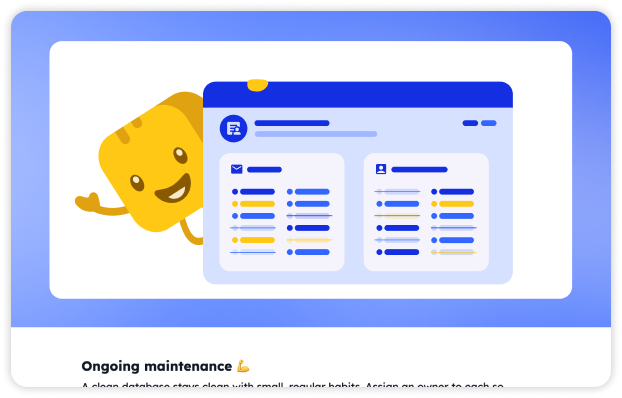
Ready to give your donor data a fresh start? This free checklist turns the six-step audit into a practical to-do list you can work through at your own pace.
You’ll also get an ongoing maintenance schedule with space to assign owners, plus customizable data entry standards to help your team keep records consistent long after the initial cleanup.
Put your clean donor data to work
Your database doesn’t need to be perfect to become useful again. Once you’ve cleaned the highest-impact issues and established clear standards, quick monthly check-ins and quarterly reviews can keep your donor data from sliding back into chaos.
Givebutter keeps contacts, giving history, campaigns, and event activity together in one nonprofit CRM. Use donor segments and custom fields to organize the details that matter, while Givebutter Plus helps you maintain accurate contact information.

Keep your donor data organized with Givebutter
Sign up for a free Givebutter account and start managing donor relationships with confidence.
FAQs about nonprofit database management
How do I clean my nonprofit database?
To clean your nonprofit database:
- Export your contact list from your CRM or fundraising platform
- Identify and merge duplicate contacts
- Check for missing or inconsistent information
- Review your custom fields and tags
- Validate email addresses, phone numbers, and mailing addresses
- Review new data monthly and conduct a deeper audit quarterly
How often should nonprofits audit their database?
A quarterly database audit is a useful starting point, along with shorter monthly check-ins to review new information. You should also review your data before importing records or launching a major fundraising appeal.
Givebutter automatically flags potential duplicate individual contacts, while Givebutter Plus flags potential issues with primary contact information for your team to review.
Share this article





.webp)


.svg)
.svg)