










Your next appeal is going to the same big list, even though some supporters gave last month, some joined through an event, and others haven’t heard from you in a while. How can you make the message relevant to each group without rebuilding lists by hand?
Donor segmentation helps you group supporters by giving, engagement, or relationship so you can tailor your outreach. This guide includes a cheat sheet of common segments, examples, and steps to build segments that update automatically.
Key takeaways
- Treat segments as rules, not labels 📏 Define exactly who counts as new, major, or lapsed, and decide what your team does when someone moves from one group to another.
- Start with a few goal-driven segments 🎯 Map out three to five well-defined segments, each with a clear goal, message, and owner.
- Use different data for different segments 🧩 Giving history, engagement, and relationship details (like affinities and communication preferences) help you identify which supporters to reach and how.
- Segment by how donors give, not just how much 💳 Recurring donors, event attendees, and sponsors each respond to different messages, regardless of gift size.
- Clean your data before you segment 🧹 Merge duplicates, standardize tags, and update contact and gift records so donors don’t end up on overlapping lists or receive the wrong appeal.
What is donor segmentation & why it matters
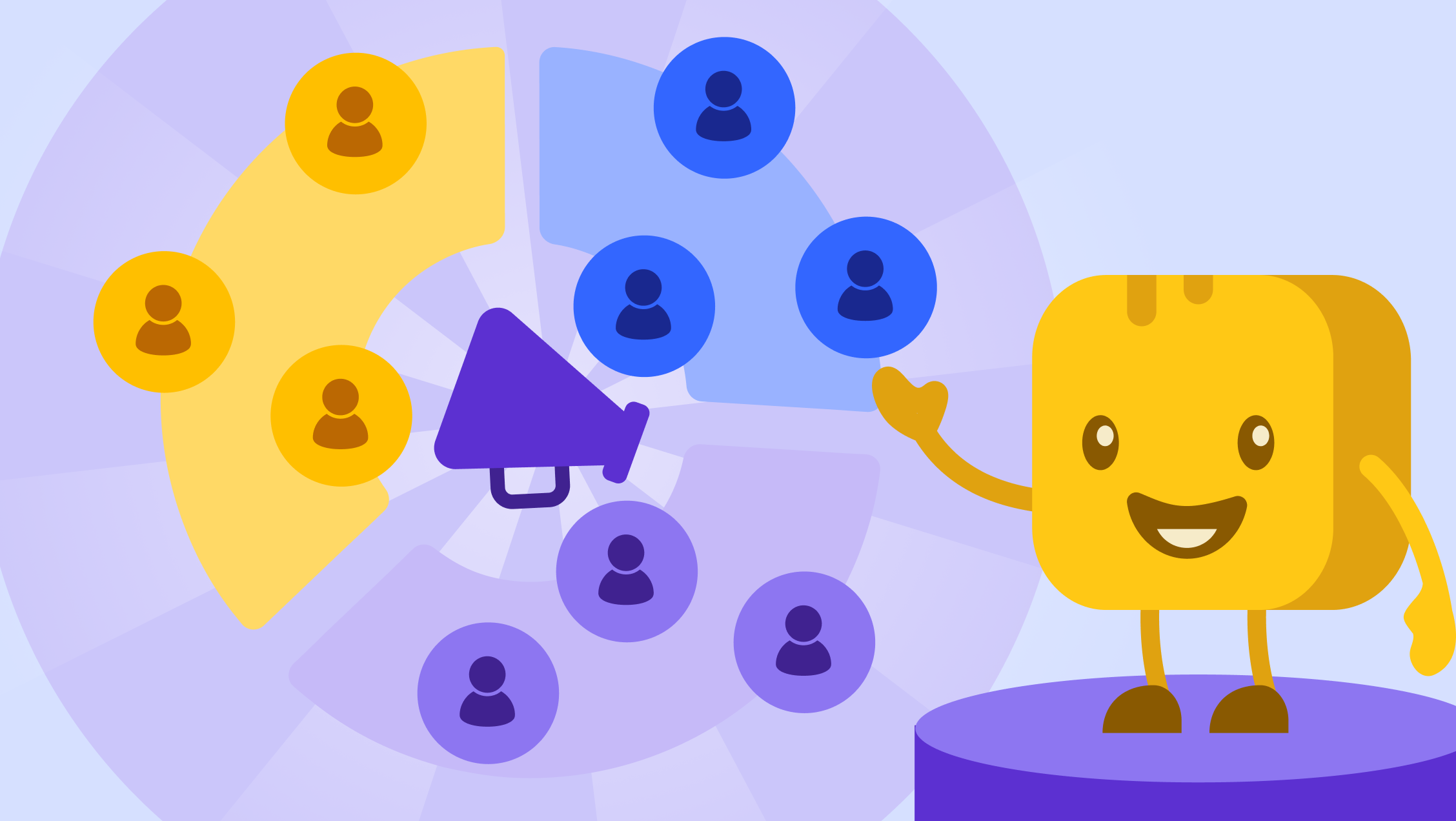
Donor segmentation is the practice of grouping donors by shared traits, such as giving history, engagement, demographics, and relationship to your organization. These segments help nonprofits tailor appeals, updates, and stewardship so each audience receives outreach that is most relevant and engaging.
Effective donor segmentation can help nonprofits:
- Build better relationships 💛 Donors who receive a customized message instead of a mass one are more likely to engage with your organization. According to M+R Benchmarks 2026, only 24% of new online donors gave again the following year, compared with 66% of multi-year donors.
- Save time and effort ⏰ With donor segments, nonprofit teams can spend less time searching for the right message recipients.
- Boost funds 💸 When nonprofits create tailored messaging for different types of donors (whether first-time givers or major donors), they’re more likely to increase donations.
Many assume donor segmentation in fundraising is only for large nonprofits with sophisticated data tools, but that’s not true. Even small teams can use simple segmentation, like distinguishing between one-time and recurring donors, to build stronger relationships and increase retention.
5 donor segmentation strategies
Nonprofits can segment donors and supporters in several ways. Some approaches are especially useful because they help organizations understand how donors give, how they engage, and who they are.

Consider segmenting your support base into these donor categories.
1. Demographics 👥
Nonprofits often distinguish donors from one another based on metrics like age, location, and gender.
By doing this, nonprofits can tailor their fundraising ideas to specific audiences. For example, a nonprofit running a disaster relief effort might target donors in affected regions with localized appeals, while social media campaigns might instead target younger supporters living outside the area.
2. Donation behavior 💸
Analyzing donor giving patterns helps nonprofits identify high-value donors and those who may need renewed outreach. Wealth screening tools like DonorSearch can provide additional insight into donors’ giving capacity.
A common approach is RFM segmentation (Recency, Frequency, Monetary value), which scores donors based on when they last gave, how often they give, and how much they contribute.
Once every donor has a score, combine the scores to identify your segments. A donor who scores 3-3-3 is a strong candidate for major gift outreach. In contrast, a 1-3-3 (a loyal, generous donor who hasn’t given recently) is a priority for a personal re-engagement call.
3. Engagement level 🎟️
Donors often engage with nonprofits beyond giving money—some volunteer, attend events, or advocate for your cause.
Segmenting by engagement can help you recognize these contributions and build stronger relationships. For example, supporters who attended your annual gala might receive special updates or invitations to exclusive events.
4. Communication preferences 💌
Every donor has a preferred way to stay connected. Some are more inclined to read emails, while others respond best to texts or direct mail. Honoring these preferences improves open rates and donor satisfaction.
For example, segmenting email-only donors ensures they receive relevant newsletters and not unnecessary direct mail appeals.
5. Causes & affinities 💛
Align donors with campaigns or programs they’re most passionate about. If a donor consistently supports scholarship funds, target them with updates and donation appeals related to your education initiatives.
You could also group donors by shared interests or affiliations. Alumni donors, faith-based supporters, and corporate donors may respond best to messaging that highlights their specific connection to your cause.

Donor segmentation cheat sheet
Use this nonprofit donor segmentation cheat sheet as your starting point. Pick three to five rows to focus on first, rather than trying to use every segment at once.
💡 Pro tip: Create a small set of templates by donor type with merge fields, rather than building fully custom outreach for each donor.

How to segment donors in 3 steps
A clear, step-by-step process built on donor segmentation best practices ensures you’re targeting the right donors with the right messages, without wasting time or resources.
1. Clean & organize your donor data 🧹
Clean donor data helps prevent mistakes, like sending the wrong message to a donor or spending hours fixing information in Excel.
Start by gathering and organizing your donor information:
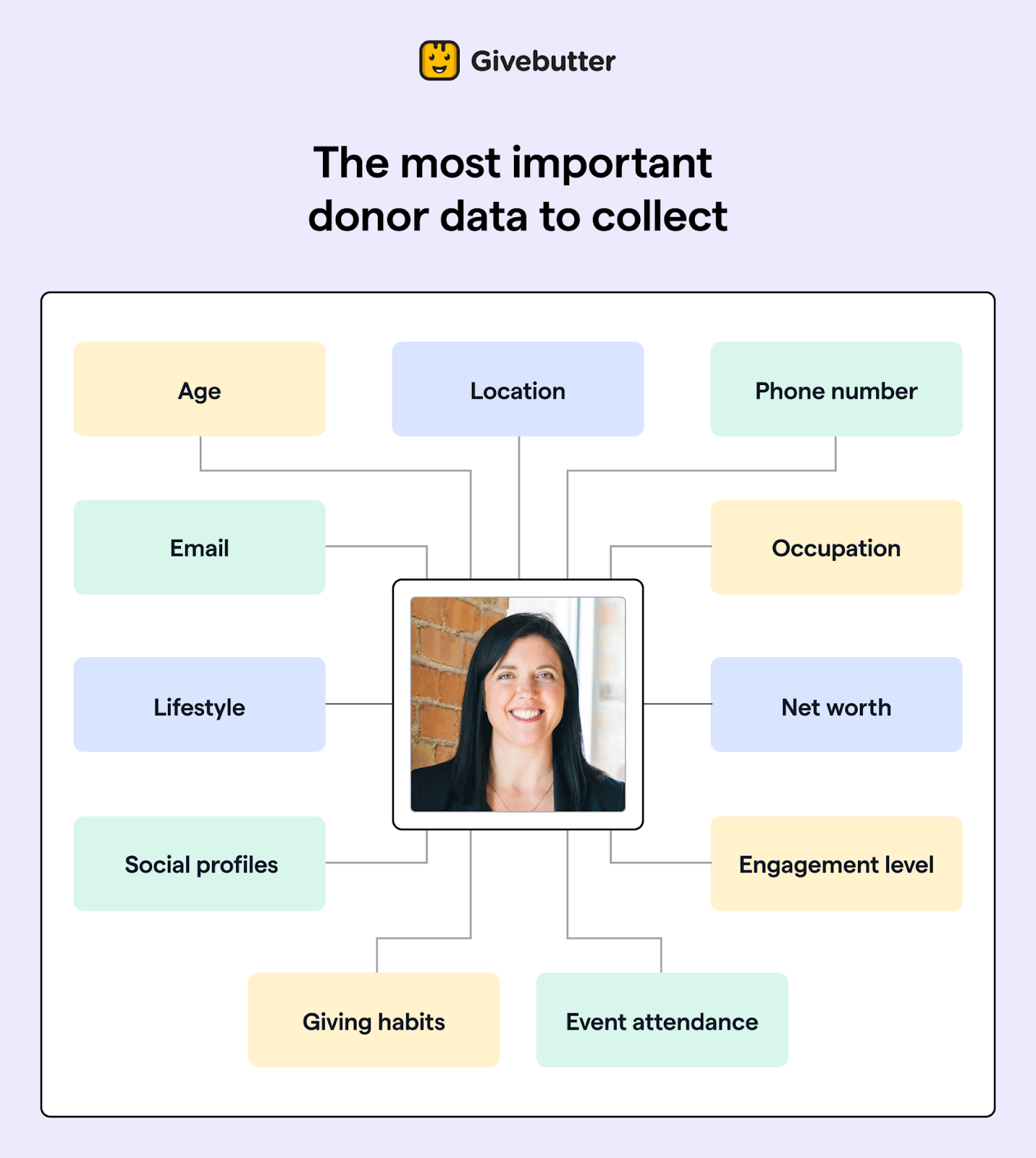
- Collect 💡 Obtain donor information through surveys, signup forms, event registrations, and communication history.
- Store 🖥️ Keep all of your donor data in a central location. Most nonprofits use a donor management CRM to store data within individual donor profiles.
- Clean it up 🫧 Remove duplicates, standardize tags, update contact details, and verify donation records. Use a CRM with data hygiene tools to delete duplicate records and automatically update contact profiles based on donor activity changes.
💡 Pro tip: Givebutter’s contact profiles show each donor’s giving summary, recurring gifts, upcoming tickets, and communication preferences at a glance, so you’re always working with a full picture.
2. Set goals & build your segments 🎯
You can group donors in countless ways. However, it’s best to start with three to five segments, set a clear goal for each segment, and name one person responsible for it.
Some common goals for segmentation include:
- Reactivate lapsed donors ⚡ If you’re looking to re-engage lapsed donors, focus on how recently they gave. With Givebutter, nonprofits can access default segments for LYBUNT, SYBUNT, new, and recurring donors.
- Increase event attendance 🎉 Segment past event attendees or major donors who may be interested in attending future events.
- Make a year-end appeal 💸 Target donors who have given during the holiday season in the past or who haven’t donated at all this year.
When you build your lists, set rules for who belongs in each segment and who doesn’t, so the same donor doesn’t end up getting two different appeals at once.
You’ll also want to decide in advance what happens when a donor moves between segments. For example, when a new donor makes a second gift, move them out of your welcome series and into your regular stewardship flow, and when a major donor lapses, flag them for a personal call.
Givebutter makes this easy! Saved segments automatically update as donors meet or stop meeting the criteria your nonprofit has defined, so you don’t have to move supporters from one segment to another manually.
Smart filters let you describe the group you’re looking for in plain language, then save the segment to revisit or refine it as your outreach changes.
💡 Pro tip: With Givebutter Plus reporting, nonprofits can access ready-made donor reports showing changes in new, active, and lapsed donors. Identify who needs attention, then build a segment for that group.
3. Personalize outreach, then review & refine 🔄
Once you’ve created your donor groups, you can craft customized communications and campaigns. For example, you might send gratitude-focused emails to first-time donors and impact reports to recurring givers.
To accomplish this step, here’s what you’ll need:
- Automated outreach and templates 📝 Choose a platform that offers automated donation receipts, templates for different segments, and multi-channel outreach options to connect with supporters based on their preferences (email, text, direct mail, etc.).
- Workflows 💌 Tools for personalized email workflows (a Givebutter Plus feature), automated thank-you messages, donation reminders, and targeted fundraising campaigns help simplify your communication process.
- Integrations ⚒️ Connecting tools like Mailchimp, QuickBooks, and Salesforce keeps your communications and reporting in sync.
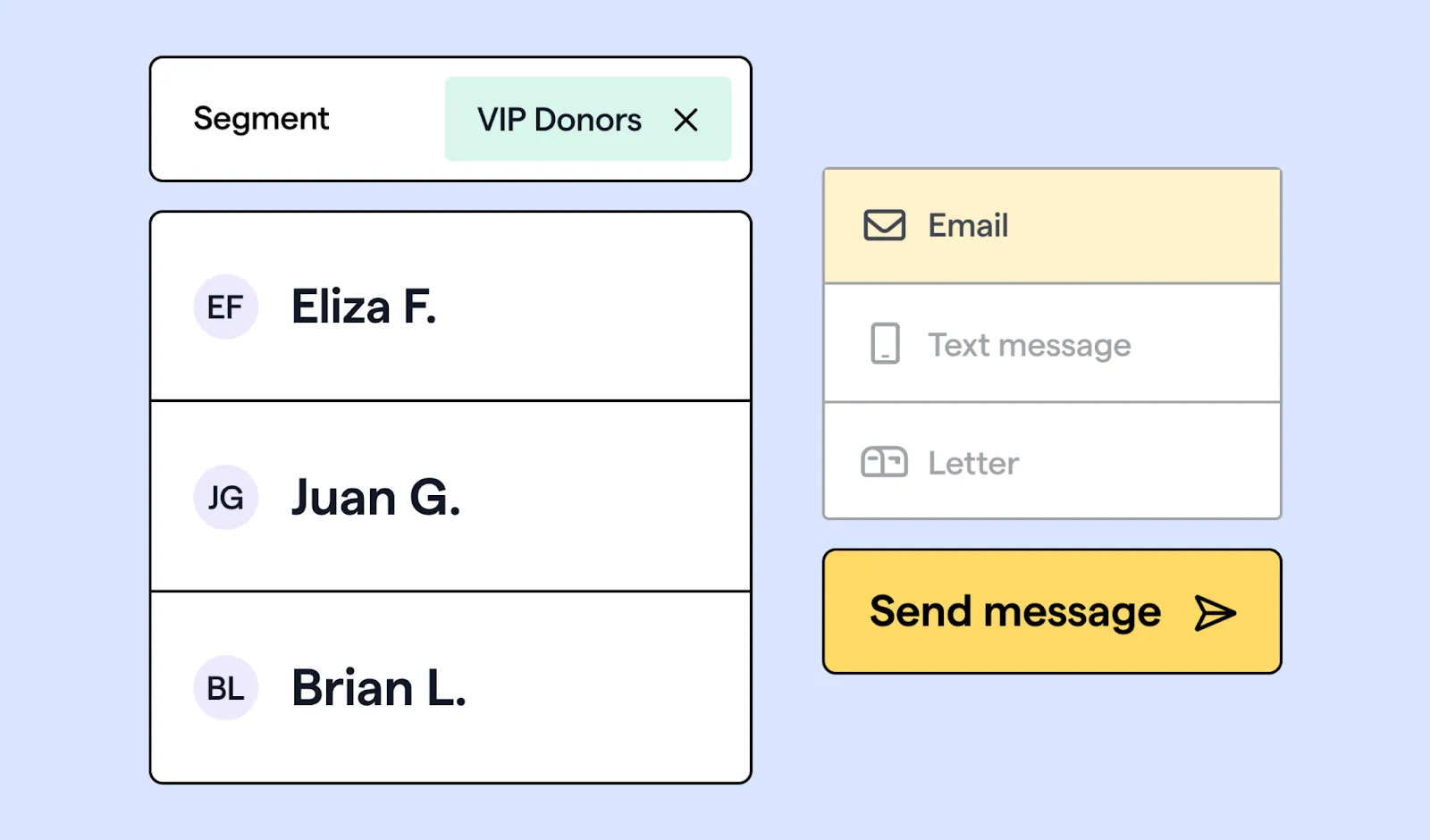
Of course, like any great fundraising strategy, the work doesn’t end once you press send.
Monitor engagement and donation patterns over time to see whether your segments are working. Key metrics to assess include:
- Donor retention rate 🔄 Compare the number of donors who continue giving after implementing segmentation versus before. A rising donor retention rate suggests that your personalized outreach is strengthening donor relationships.
- Donation growth & conversion rates 💰 Measure whether segmented donors give more frequently or increase their gift amounts. Track conversion rates for key transitions, like turning first-time donors into recurring givers or upgrading small donors to major donors.
- Engagement metrics 📩 Assess how segmented donors interact with your content. Higher email open rates, click-through rates, social media engagement, and event participation indicate that your messaging is working.
- Response to your communication strategies 🎯 Compare the success of segmented campaigns versus broad, one-size-fits-all appeals. If targeted donor groups respond better to personalized asks, your segmentation is improving engagement and fundraising effectiveness.
- Upgrade & reactivation rates 📈 Track how many donors move to higher giving levels after personalized outreach and how many lapsed donors return after targeted re-engagement efforts. A strong segmentation strategy helps donors feel valued and increases their likelihood of upgrading or renewing support.
- Donor feedback & satisfaction 💛 One of the best signs your stewardship is working is when donors tell you so! Conduct surveys or gather informal feedback to see if your donor base feels recognized and appreciated.
If certain segments aren’t responding as expected, and donor relationships aren’t improving, adjust your criteria or messaging and try again.
From one big list to a few smart segments
Segmentation turns donor information into more relevant outreach. Use giving history and engagement to build a few clear groups—such as first-time, recurring, or lapsed donors—then decide what each group should hear and what action you want them to take. Track responses and update the criteria as donor behavior changes; useful segments stay focused on what your team can do next.
Givebutter’s CRM brings contact records, filters, and saved segments together. Because segments update as contacts meet or stop meeting your criteria, your team can quickly find the right supporters and use those lists in outreach without rebuilding them each time.

Build donor segments that update on their own
Sign up for Givebutter for free and transform your supporters into long-term champions of your mission.
FAQs about donor segmentation
What are the three categories of donors?
Donors are commonly grouped by giving level (small, mid-level, major). Another common three-way split is new donors, repeat donors, and lapsed donors.
How do you segment a donor list?
To segment a donor list, clean and organize your data, set segment goals, personalize your outreach, and adjust your segments and messaging based on donor responses over time.
What are the five main types of segmentation?
The main types of segmentation are demographic, donation behavior, communication preferences, engagement level, and causes and affinities.
Share this article