










Your CRM can show what a supporter gave, but it may not tell you what they care about or which messages help them feel connected. When every appeal sounds the same, it’s hard to make outreach feel personal.
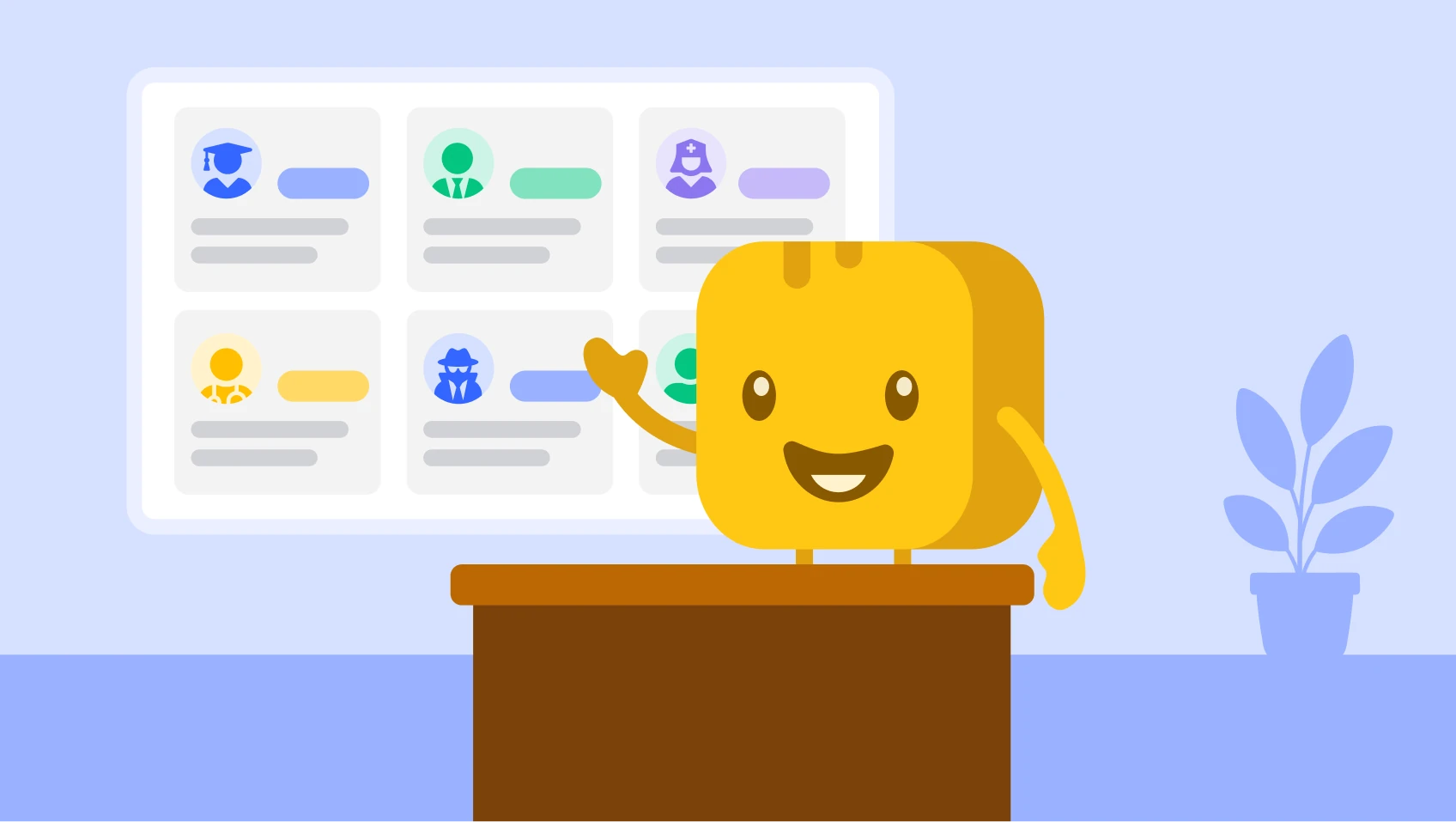
Donor personas help you turn patterns in supporter data into clearer, more relevant communications. This guide shows how to build practical personas, use them in your fundraising, and get started with a free template.
Key takeaways
- Gather your data 📊 Export donor data from your CRM, including donation history, total gifts, and event attendance.
- Look for patterns 🔎 Review your data for groups of donors who give in similar ways.
- Start small 🌱 Opt for two to four data groupings as the foundation for your donor personas.
- Define demographics ✍️ Identify group demographics, such as age range, profession, and location, for each persona.
- Include qualitative data 📝 Survey donors from each group to learn more about their motivations for giving, interests, and personal connection to your mission.
- Map touchpoints 📣 Create engagement strategies and workflows for each donor persona.
- Simplify with the right tools 🧈 With Givebutter’s CRM, it’s easy to collect, store, and export the data you need to create donor profiles that reflect your support base.
What is a donor persona?
A donor persona is a fictionalized identity that represents a specific section of your support base. Based on your nonprofit’s real data and research, it combines demographics, giving behavior, motivations, values, and preferences to create a clear image of the donors in that group.
Nonprofits use donor personas to understand what matters to different donor groups. This helps them craft fundraising appeals that resonate, build lasting relationships, and improve fundraising efficiency.
💡 Pro tip: Donor personas are different from donor segments. Segments filter donors based on measurable characteristics like gift size, while personas go deeper to help you understand each group more fully.

What to include in a donor persona
Every donor persona is unique to your organization because it’s built from your nonprofit’s data. But each persona follows a similar structure, bringing together key information about the donor group.
The table below outlines what to include for each persona, along with examples and ways to source the data.
🎬 See it in action: Here’s one of many donor profile examples a nonprofit could build from the table above:
“Recurring Rachel is an early-career professional living in a neighboring state. She first donated through a peer-to-peer campaign and now makes small monthly donations. She is interested in volunteering and peer-to-peer fundraising, but doesn’t yet have the financial capacity to make a major gift.”
Download your free donor persona template
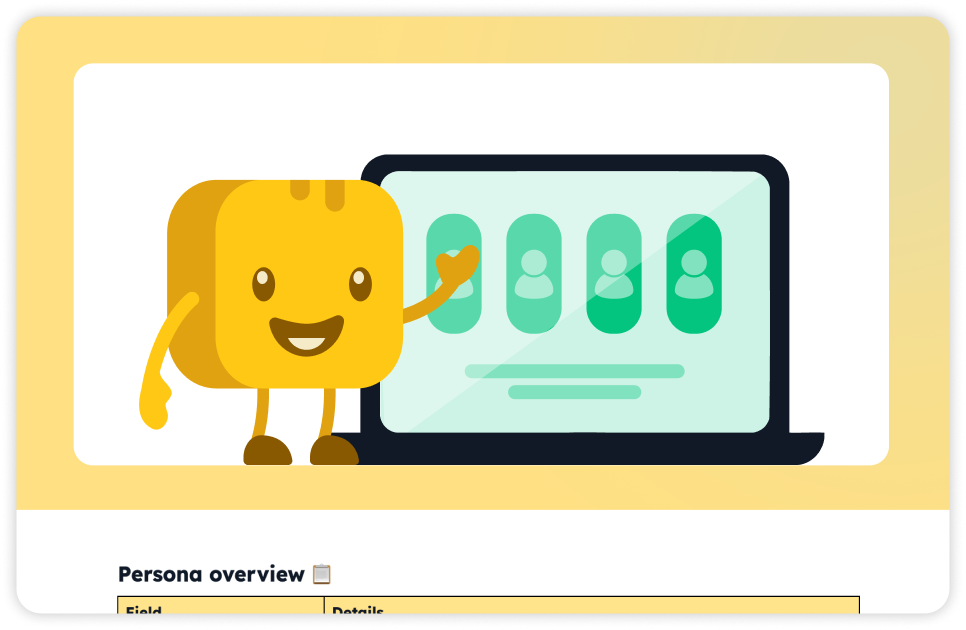
We’ve created a donor persona template that walks you through what to include, from demographics and giving behavior to motivations, values, and fundraising implications. Use it to organize your data and craft a donor persona you can put into action.
Just download and customize the template using your nonprofit’s data and research for each donor persona.
How to create donor personas in 6 steps
Building a donor persona starts with the data you already have. Here are the six steps to building a donor persona and turning your nonprofit data into an actionable fundraising strategy.
Step 1: Pull your donor data 📈
Start by reviewing your existing donor data, including giving history, event attendance, email open rates, and average gift size.
If you’re using Givebutter Plus, open a ready-made report, such as “giving overview” or “recurring giving,” to instantly view your donor data, or complete a full data export from your CRM to capture these details:
- Name
- Total giving
- Number of gifts
- Last gift date
- First donation
- Where your donor was acquired
Don’t panic if you don’t have all this information. Start with the data you do have. You can always fill in any gaps later.
💡 Pro tip: Givebutter is an all-in-one fundraising, event management, and CRM platform that automatically tracks donor data and stores it in detailed profiles. So when you’re ready to build your donor personas, you’ll already have a strong foundation to work from.
Step 2: Look for natural clusters 🫐
Once you’ve exported your data, sort by gift size, frequency, and recency. Look for natural groupings and clusters that will form the foundation of your donor personas (some teams call this an ideal donor profile).
Here are some common patterns you might find in your giving data:
- Loyal, small-dollar donors
- Lapsed annual major donors
- Event-only givers
- First-time online donors
Try using Givebutter’s AI connectors to find groups you might have missed, such as donors who gave last year but not this year.
Step 3: Build each donor persona 👷♀️
Once you’ve identified two to four core groups, craft your donor personas using these sections:
Uncovering motivations and emotional connections often requires qualitative data. Send short surveys to your donors and incorporate this information alongside your CRM data to build your donor personas.
Step 4: Map personas to your communications 🗺️
Match each persona with the channels and messages that reach them best, so the right message gets to the right people.
Here’s what that might look like:
- Event-only giver 🕺 Event invitation, gratitude sequence, impact report, recurring giving appeal
- First-time online donor 🫶 Gratitude sequence, impact report, event invitation, recurring giving appeal
- Recurring donor 🪙 Gratitude sequence, event invitation, impact report, volunteer opportunity
Measure the success of each donor persona communication sequence by tracking the number of donor upgrades from each group. You can adjust your approach over time.
Step 5: Put your personas to work 👩💼
There’s more than one way to use your donor personas to boost fundraising. Here are three key opportunities to put them to work:
- Appeals 🙏 Craft your fundraising appeals for each persona, using their emotional connection to your mission as the hook.
- Gratitude 💛 Make your acknowledgment specific to their motivations and interests, not just the gift amount.
- Upgrade asks 🌟 Use your persona data to determine who’s ready for an upgrade and who fits your major donor profile.
💡 Pro tip: Reduce the lift with Givebutter Plus. Use workflows to automate sequences like showing gratitude or running fundraising campaigns.
Step 6: Review personas annually 👀
A donor persona created three years ago may not accurately represent your nonprofit’s current donor base. Review your donor personas annually so they evolve with your organization.
Compare your existing donor data with your donor profiles to identify shifts in demographics and giving behavior. Adapt your existing donor personas or create new ones to better reflect your donor base.
💡 Pro tip: Connect ChatGPT or Claude to your Givebutter data with free AI connectors, then ask which donors have moved between groups since your last review.
Build your donor personas with Givebutter
Generic fundraising appeals work in a pinch, but donor personas give you a more strategic way to tailor your communication to different groups of supporters. Because they’re built from data your nonprofit already has, you can create messaging that reflects what matters to each group.
With Givebutter’s contact management, you can organize the donor data you need to build your personas. And with Givebutter’s free AI connectors, you can ask ChatGPT or Claude about your donor data to spot new trends.

Use donor data to shape your outreach
Sign up for your free Givebutter account and turn your data into a strategy.
FAQs about donor personas
How many donor personas should a nonprofit have?
Small to mid-sized nonprofits should aim for two to four donor personas to capture the key groups within their support base. You don’t need one for each of the 7 types of donors you’ll see online. With more, it’s harder to maintain and act on your strategy.
What’s the difference between donor personas and donor segmentation?
Donor segmentation groups donors based on measurable data such as gift size, giving frequency, or channel.
Donor personas go deeper. They uncover donor motivation, identity, values, and connections to your mission. They’re a tool nonprofits use to craft communications and appeals that resonate and increase donor retention.
What should a donor profile template include?
Every donor template should include these seven key categories:
- Donor demographics
- Giving behavior
- Motivations & values
- Communication preferences
- Fundraising implications
Givebutter’s free donor persona template doubles as a donor research profile template, breaking these categories down so you won’t miss anything. Simply download and start customizing with your data to reflect your organization’s support base.
Share this article