.svg)
.svg)
.svg)
.svg)
.svg)
.svg)
.svg)
.svg)
.svg)

.svg)
.svg)
.svg)
.svg)
.svg)
.svg)
.svg)
.svg)

.svg)
.svg)
.svg)

.svg)

.svg)
.svg)
.svg)
.svg)
.svg)


.svg)
.svg)
.svg)
.svg)
.svg)
.svg)
.svg)




.svg)



%20(1).png)

You sent this week's school newsletter at 4:47 p.m. on Friday. Half the parents opened it. You're not sure why the other half didn’t, but you’re concerned they could miss out on important information.
It's hard to know what to put in a school newsletter that actually lands, and template-first sites don’t always answer the content question.
Whether you’re in charge of an elementary school newsletter or a district-wide send, we’ve compiled 12 section ideas taken from the best school and classroom newsletters, plus real-world examples and a free template you can easily duplicate week after week.
Key takeaways
- Lead with the calendar 📅 It's the single most-read section, helping parents, staff, and students stay informed and organized.
- Mix evergreen + timely sections 🔄 Pair recurring blocks (calendar, spotlights, asks) with 1–2 current features per issue.
- Stay consistent, not perfect ⏰ Send it on the same day and time each week.
- Always include a call to action 📣 Give parents one clear next step per newsletter (volunteer, donate, RSVP, read).
- Use a template 📝 Grab our free template so you don't have to rebuild from scratch every Friday.
- Go beyond comms 💫 Your school newsletter is also a fundraising and engagement channel. Use it to help your school succeed in more ways than one!
What is a school newsletter (& why does it still matter)?
A school newsletter is a recurring email or print communication sent by schools, districts, or PTAs to parents, guardians, and students. They’re typically used to share events, academic updates, fundraisers, and celebrations. Unlike a classroom newsletter, which is grade- or room-specific, a school newsletter is sent to the entire student body and their families.
While school newsletters take effort at first, the payoff can be significant. Recent nonprofit email benchmarks from the M+R Benchmarks Study show that email still drives a meaningful share of online engagement and giving—especially when messages are targeted and easy to scan.

12 school newsletter ideas & sections parents will actually read
If you’re tired of parents skipping over your newsletter, we’ve got just the thing. Here are the top 12 ideas any school can mix and match for their newsletter. While not every newsletter needs all of these sections, we suggest including at least 3–5 of them.
1. Calendar & upcoming dates 📅
The most-read section of a school newsletter is often the events calendar. A simple, clear calendar that’s front and center helps parents immediately plan and conceptualize all school events.
Be sure to include dates like:
- Early release days
- Parent-teacher conferences
- Picture day
- Field trips
- Fundraisers
2. Principal's or teacher's note ✍️
Include 2–4 sentences of warm, personal voice from school leadership speaking directly to your readers, such as a quick win from the week or a reminder about an upcoming event. Like most other sections, keep this short so parents can quickly skim.
3. Classroom or grade-level updates 🏫
Provide a snapshot of what each grade is learning, with conversation starters parents can use at home. This might look like:
- A third-grade reading update with prompts like "Ask your child what their favorite part of the story was."
- Subject-specific highlights of recent projects, experiments, or discussions
4. Student & staff spotlights ⭐
Feature 1–2 students or staff members per issue, with a short bio or fun fact to build connection and community.
Be sure to rotate through grades or departments, so everyone gets a chance to shine.
5. Photos from the week 📸
Collect 3–6 photos from field trips, in-class projects, or spirit days to highlight in the newsletter with captions that briefly explain what’s happening.
💡 Pro tip: Ensure you have media releases on file before publishing student photos. If you can't confirm a release for a student in a photo, leave them out or use a back-of-head shot. For public schools, student photos used in official communications can fall under FERPA, which requires written consent before images are shared.
6. Fundraising & donation asks 💵
Add a "ways to support" block with a link to your donation form, volunteer signup form, Amazon wishlist, or another PTA ask. This prevents parents from having to search for your page or donation link, reducing friction in completing the ask.
7. Event recaps 🎉
Recap last week's back-to-school night, read-a-thon, book fair, or game in 3–5 sentences with a photo. And, if you have a landing page for the event, link to it so parents can learn more!
8. Volunteer opportunities 🙋
Include a recurring block naming 2–3 volunteer opportunities ("We need 4 parents for the book fair on Friday"). Be specific. Detailed asks convert better than generic "we need volunteers!"
9. Parent education & home-learning tips 📚
Position the school as a partner, not just a sender of announcements, with a short section that offers a practical exercise or resource, such as:
- Tips for practicing math skills during everyday activities
- A book suggestion for families to read together
- Mental-health resources
10. Athletics & extracurricular highlights 🏀
If your school offers sports or recreational activities, update parents on those, too! Send game results, upcoming matchups, and spirit-week spotlights.
11. Student-created content 🎨
Include a recurring block that features student artwork, book reviews, poems, or interviews. This is especially effective for middle school and high school newsletters because it helps deepen student ownership.
12. One clear call to action & "how to reach us" 📞
Close each issue with a single action you want readers to take (RSVP, donate, sign up, read), along with a deadline and contact info to make getting involved easy for parents.
How to send a school newsletter that parents actually open
Now that you know all the sections you need, here’s how to format them in a way that effectively engages readers.
1. Pick a cadence & send day you can stick to ⏰
For busy parents and teachers, a predictable, scannable weekly overview is more valuable than a beautifully designed monthly magazine. That's because consistency builds habit. When parents know to expect your email every Friday, they're more likely to open it, read it, and act on it.
The easiest way to stay consistent: Duplicate last week's template, swap in the new dates, information, and photos, and hit send. You're not rebuilding it. You're simply updating it.
💡 Did you know? The most popular time to send a marketing email is Tuesday at 12 p.m.
2. Lead with the essentials & make it easy to scan 🎯
Parents typically open a school newsletter looking for the calendar and announcements. Put those at the top, where they’re easy to find and act on.
Keep the rest of your newsletter easy to scan with clear headers, short sections, bullets, and photos. Aim for 2–3 sentences per block, limit your color palette and font styles, and let visuals do the heavy lifting.
💡 Subject line starters that work:
- "📅 [Week of Oct 6]: Field trip, picture day + one ask"
- "This Friday: 3 things every [School Name] family should know"
- "[School Name] weekly—calendar inside 👀"
- "Quick read: what's happening this week at [School Name]"
3. Send via the channels parents use most 📨
One of the biggest drawbacks of printed school newsletters is that they tend to go into a “read later” pile, which, often, never gets sorted through. Instead, opt for a multi-channel approach:
- Email: About 41% of email views come from mobile devices, making it your best option for getting eyes on your newsletter.
- Text: Reserve this for urgent follow-ups or reminders tied to newsletter content.
- Paper: A print backup ensures families without reliable internet access aren't left out.
💡 One tool for all of it: Platforms like Givebutter manage mailings, signup forms, and texting, all in one place.
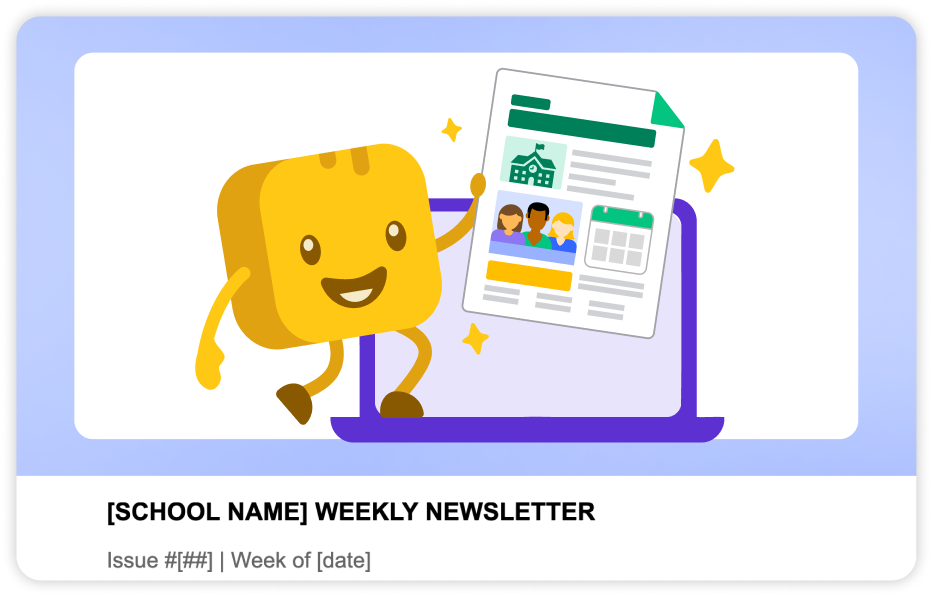
Download your free school newsletter template
Now for the best part: the free newsletter template!
Use this freebie, pre-loaded with the sections discussed above, to build and customize your newsletter. Duplicate it weekly and update what changed. It also works great for an annual back-to-school newsletter send.
3 school newsletter examples we love
To help you get started, here are three examples that are engaging, informative, and fun to read.
1. A quarterly school newsletter 🎨
Saint Mary's School’s quarterly newsletter is a polished example of consistency and sustainability in action.
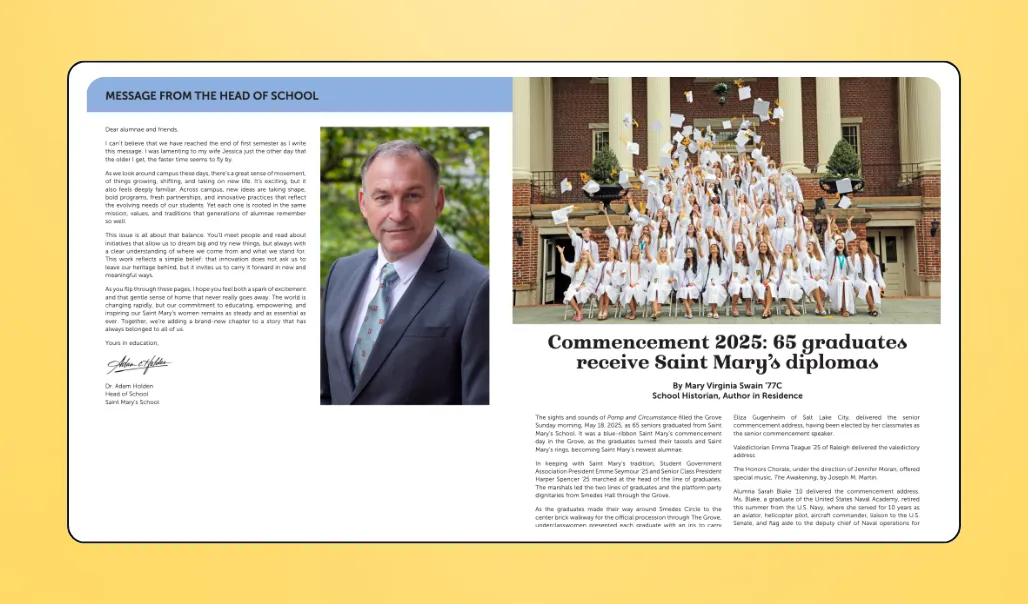
⭐ Best for: Private schools
💛 What parents love: Student spotlights, events, and club updates
2. A school-wide weekly send 🏫
The Swallow School District’s weekly newsletter is a masterclass (pun intended!) in consistent, scannable content that keeps parents informed, engaged, and connected.
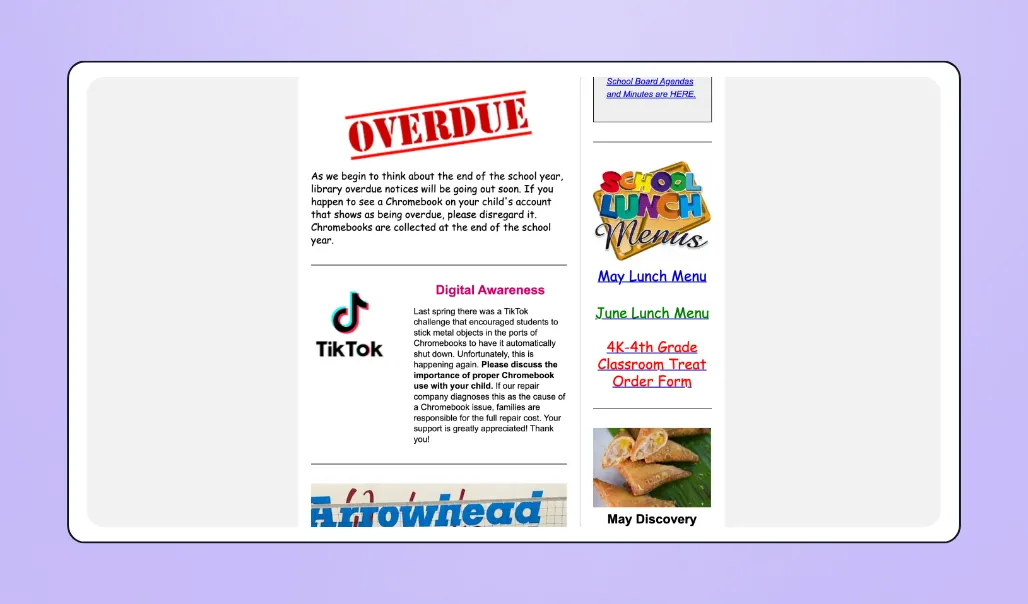
⭐ Best for: Large K-12 schools
💛 What parents love: One source of truth for the week that covers essentials like reminders, events, and top things to be aware of.
3. A school live feed newsletter 📣
While this “newsletter” is a bit unconventional, West Middle School’s innovative live feed offers parents an easy way to stay connected with a clear view of daily school activities.
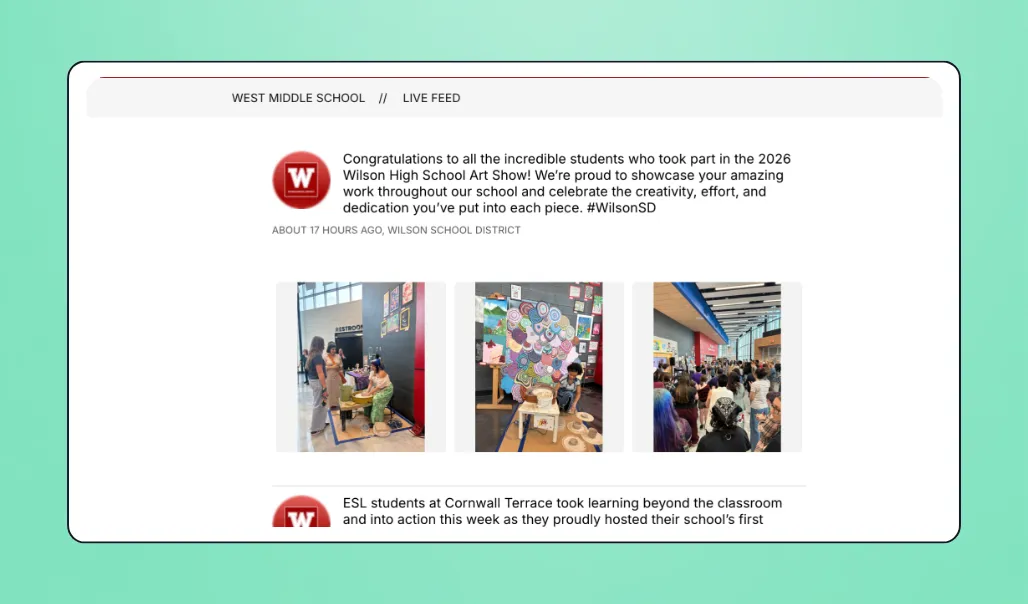
⭐ Best for: Large private or public schools
💛 What parents love: Quick, scannable updates with photos

Run your school newsletter & fundraising in one place
A great school newsletter is consistent, scannable, and always gives parents a clear next step. The harder part is finding time to send one every week without juggling four different tools to do it.
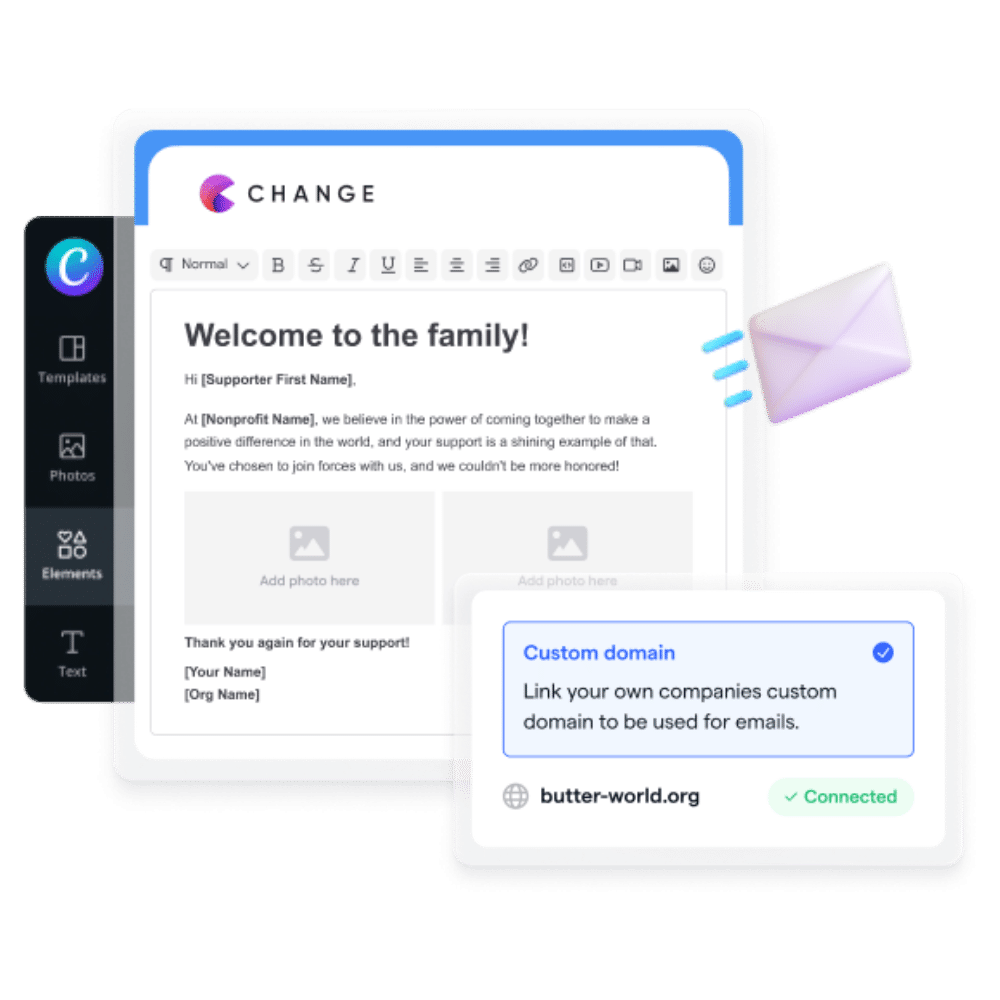
Givebutter's mailings and signup forms work together in one place, so you can send your weekly newsletter and collect parent contact info without switching tabs. Newsletter donation asks link directly to your fundraising page, turning every send into a quiet giving opportunity. Givebutter Plus adds an advanced email editor and texting for schools that want even more flexibility.
With everything in one place, it's easier to keep families informed, engaged, and excited to support your school week after week.
Send school newsletters for free with Givebutter
Sign up for Givebutter free and send your first school newsletter in minutes.
FAQs about school newsletters
What should I put in a school newsletter?
Lead with the calendar. It's the most-read section every time. From there, pick 5–7 sections per issue to keep it manageable: a principal or teacher note, student and staff spotlights, classroom or grade-level updates, fundraising and volunteer asks, photos from recent events, and a "how to reach us" block. Rotate the rest based on what's happening that week.
How often should a school send a newsletter?
Many schools send a weekly or biweekly newsletter, but consistency matters more than frequency. Pick a cadence you can stick to and send on the same day every time.
For timing, mid-week tends to perform best: Tuesday or Thursday, around 9–11 a.m., aligns with when parents are between school drop-off and their workday. If your newsletter is action-heavy (forms, RSVPs, payments), an early evening send on Tuesday or Thursday can also work well, when families are home and less rushed. Start with Tuesday at 10 a.m. and adjust based on your own open and click data from there.
What's the difference between a school newsletter and a classroom newsletter?
A school newsletter is school- or district-wide and covers events, fundraisers, and announcements for the whole community. A classroom newsletter covers what one specific class is learning, doing, and celebrating, typically sent by the teacher directly to that grade's families.
How do I get parents to actually read the school newsletter?
Lead with the calendar, keep sections short and scannable with clear headers, include photos of students, and send on a consistent day so parents know when to expect it. Always include one clear action item per issue, and pair urgent updates with a text reminder. SMS gets seen faster than email.
Where can I find free school newsletter templates?
Canva, Adobe Express, and Smore offer free school newsletter templates worth bookmarking. Givebutter also offers a free template pre-loaded with all the sections in this article, and combines email, texting, and fundraising tools all in one place.
Can I use one tool to send newsletters, emails, and texts to parents?
Yes, Givebutter's mailings, signup forms, and texting tools work together from one dashboard, with contacts, fundraisers, and events already synced.
Share this article







.svg)
.svg)